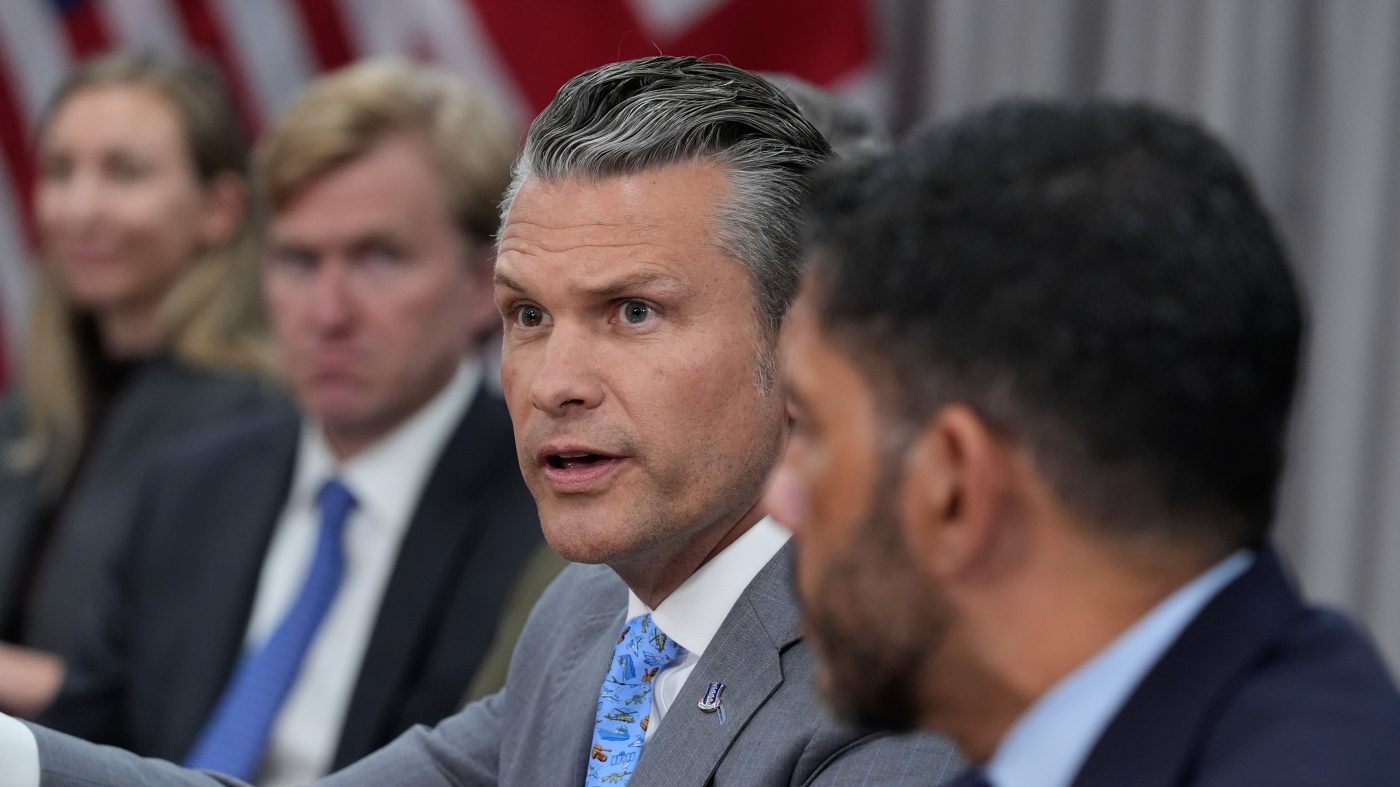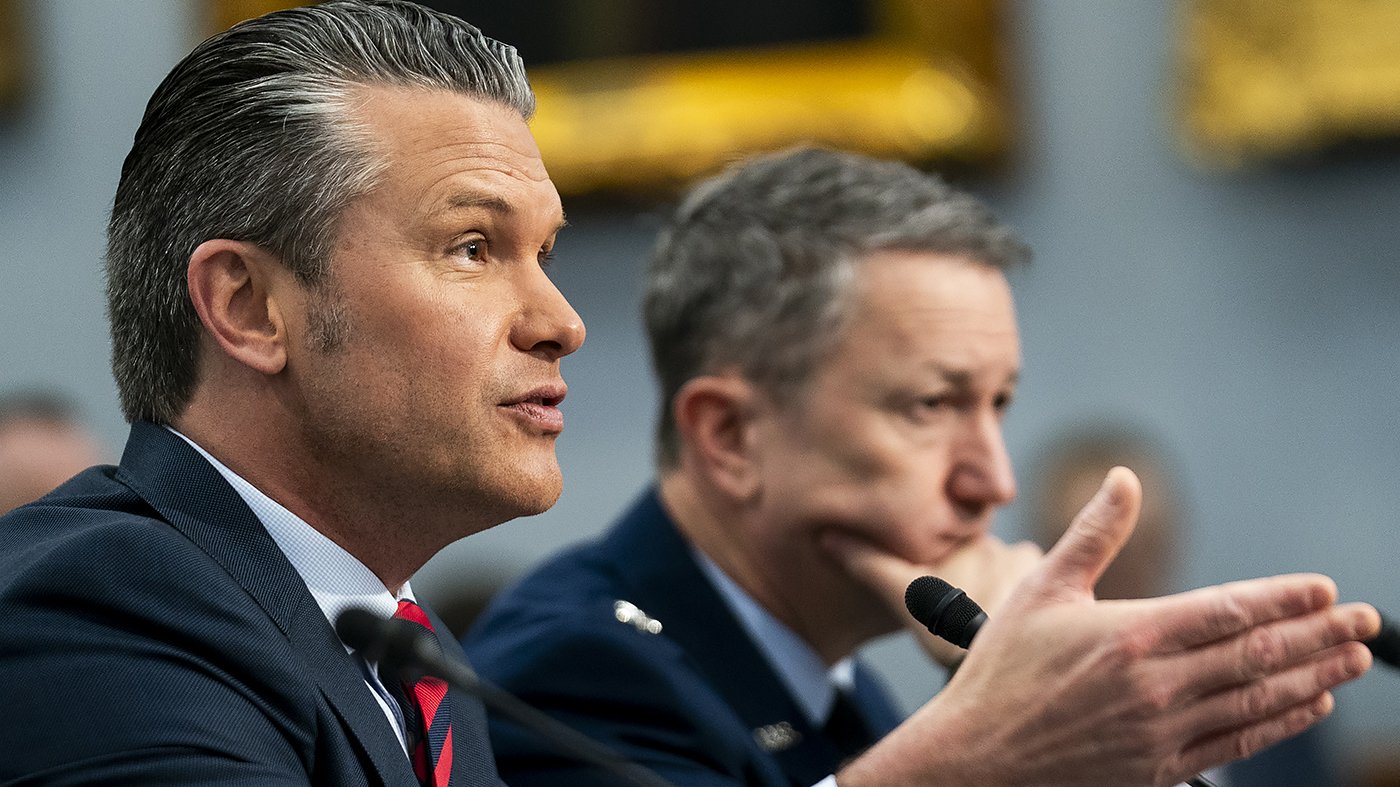
Republican lawmakers on Tuesday vented their frustration with the Pentagon, using two consecutive hearings to challenge Defense Secretary Pete Hegseth on the ongoing Iran war, President Trump's unconventional plan to fund the Defense Department, spending priorities, and America's shrinking munitions reserves. The sessions came as the U.S.-Israeli military campaign in Iran entered its eleventh week, with the Strait of Hormuz still closed and no clear exit strategy in sight, even as Trump pursues a peace deal.
Here are the key takeaways from the House and Senate Appropriations subcommittee hearings.
Republicans Question Pentagon Funding Plan
Lawmakers in both chambers pressed Hegseth on Trump's massive $1.5 trillion Pentagon budget request, expressing skepticism about the proposal to fund $1.1 trillion through regular appropriations and another $350 billion via a reconciliation bill. Budget reconciliation would allow Republicans to bypass a Democratic filibuster in the Senate, but it is a difficult and time-consuming process, and many Republicans had already voiced doubts about passing a third such bill after using their second shot for immigration enforcement funding.
Rep. Ken Calvert (R-Calif.), chair of the House Appropriations subpanel, noted that “questions persist.” He added, “The subcommittee needs to understand how the resources requested in this budget translates into real, measurable improvements in warfighting capability,” expressing “serious concerns” about the Pentagon's funding method. Hegseth responded, “There’s a reality in this town of what can get done and how it gets done. In a perfect world, everything would get done in regular order with a $1.5 trillion topline, but there are a lot of challenges and dynamics, some of which I don’t control.”
House Appropriations Committee Chair Tom Cole (R-Okla.) echoed similar worries about using reconciliation for the next fiscal year. “I don’t have any concerns about the amount. I am worried about the ability to sustain that number through the reconciliation process. At some point, the money disappears,” Cole said. At the Senate hearing, Chair Mitch McConnell (R-Ky.) hammered Hegseth, objecting to leaving critical programs like the Golden Dome missile defense system, munitions, the F-35 fighter jet, and drone production outside the normal reconciliation process. “Political realities will not always allow a party-line budget reconciliation, and if the department’s top priorities aren’t built into annual appropriations, we’re actually taking a big risk,” McConnell said. “These key lines of effort only work if we put them on solid fiscal footing.” For more on this, see McConnell's challenge to Hegseth on budget strategy and alliance strains.
Hegseth and Caine Stay Vague on Iran and Hormuz Strategy
Under intense questioning from several senators, both Hegseth and Gen. Caine repeatedly declined to offer any details on U.S. strategy in Iran or plans to address the closure of the Strait of Hormuz. Sen. Susan Collins (R-Maine) noted, “It seems there has been a different plan almost daily with dealing with this problem.” After Hegseth claimed the U.S. “ultimately” controls the vital shipping corridor, Sen. Chris Coons (D-Del.) pressed him on how to reopen it. “If we control it, how do we reopen it?” Coons asked. Hegseth shot back that Coons was being “highly disingenuous” and ignoring “incredible battlefield successes.”
Later, Sen. Chris Murphy (D-Conn.) asked Hegseth if the U.S. had military means to open the strait. Hegseth said it “most certainly” did but declined to elaborate. “Why haven’t you done it if that’s true? And that’s not what has been testified to us in private briefings,” Murphy said. Hegseth responded that the U.S. prefers a long-term strategy but “we certainly have a lot more military pressure we can bring to bear if the president were to choose to do so.”
When Murphy questioned Caine about how many missiles Iran still possesses, pointing to Trump's claim that Tehran had maybe 18 to 19 percent capacity left, Caine refused to answer, citing classification. U.S. intelligence agencies reportedly found Iran still has 70 percent of its missile and drone capability. “How do we or the American public assess the success of the mission when you’ve stated publicly the purpose is to destroy their missile and drone capability?” Murphy asked. Caine replied, “All of our battle damage assessment matters are classified, and it would be inappropriate for me to comment in this forum on that.” Hegseth also declined to say when the Pentagon would provide Congress an estimate for future war costs.
Iran War Price Tag Hits $29 Billion
One new piece of information emerged: the latest estimated cost of the Iran war. Pentagon acting chief financial officer Jules Hurst III said the total is nearing $29 billion. The hearings also highlighted the alarming depletion of U.S. weapons stockpiles, a topic explored in depth in the Hegseth vs. Kelly feud over weapons depletion. Meanwhile, House GOP leaders have pressed Hegseth on the $1.5 trillion budget and Iran war costs, as detailed in this report.