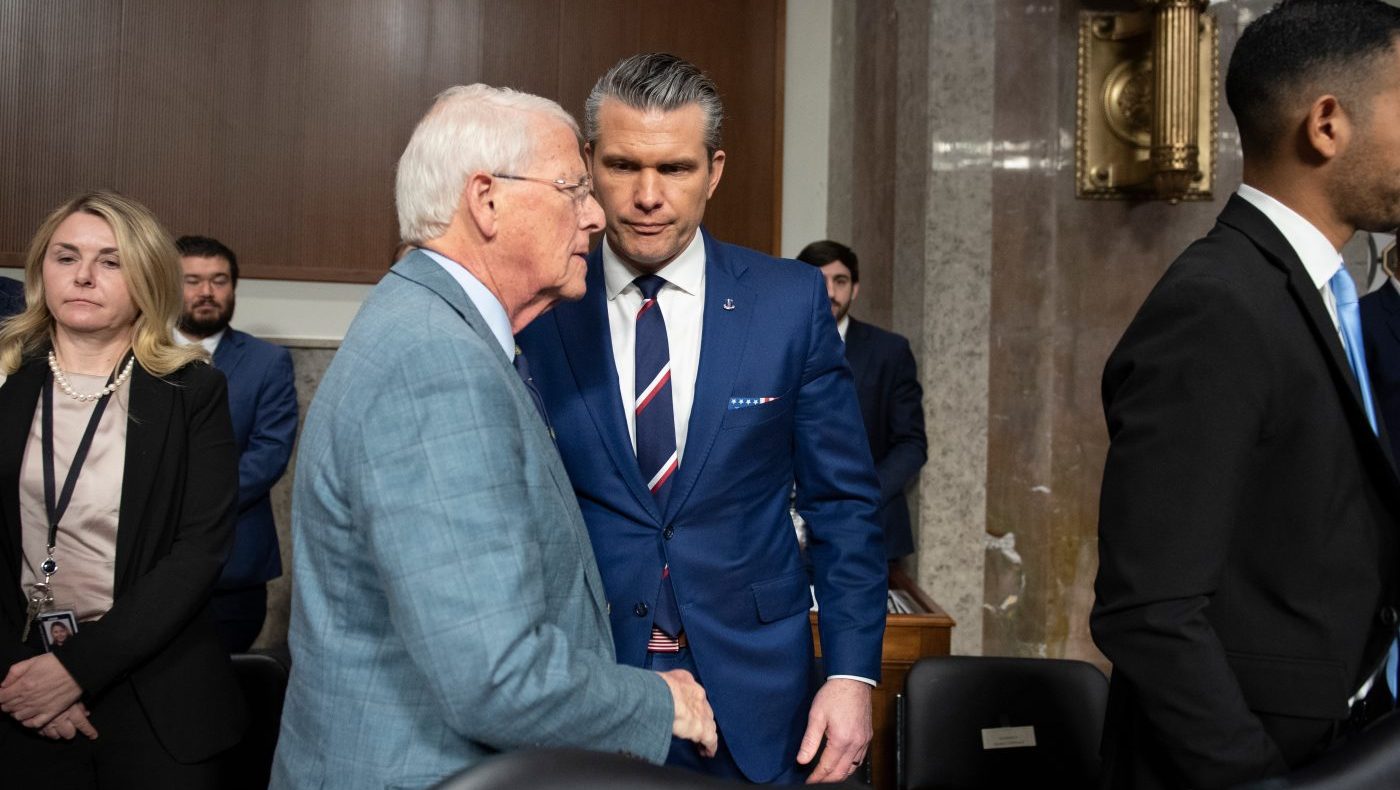
Defense Secretary Pete Hegseth's back-to-back appearances before House and Senate appropriators on Tuesday failed to resolve a growing bipartisan dispute on Capitol Hill: whether the U.S. military's weapons stockpiles are dangerously depleted and just how much offensive capability Iran still possesses.
Democratic lawmakers emerged from the hearings deeply skeptical of Hegseth's insistence that the U.S. arsenal remains robust after more than two months of conflict with Iran. The Pentagon chief has gone on the offensive against critics, dismissing concerns as overblown, but his reassurances have not convinced many on the other side of the aisle.
Sen. Jeanne Shaheen (D-N.H.) offered a blunt assessment when asked if Hegseth's testimony eased her worries about stockpile levels. “No,” she said.
Sen. Richard Blumenthal (D-Conn.) called Hegseth's claims “absolutely ludicrous,” pointing to military leaders' own public statements and citing intelligence that Iran still holds more than 1,000 missiles and roughly 70% of its prewar mobile launchers and missile stockpile—figures first reported by The New York Times. “There's no question that Iran still has more than 1,000 missiles,” Blumenthal said.
The administration's assertion that Tehran's missile capability is all but destroyed has been undercut by intelligence assessments. Hegseth, however, told appropriators the munitions issue has been “foolishly and unhelpfully overstated,” adding, “We know exactly what we have. We have plenty of what we need.”
Republicans on the Hill struck a more measured tone. Sen. Rick Scott (R-Fla.) said he spoke with Hegseth and is “comfortable” with current stockpile levels, expressing confidence they will be replenished. Sen. Mike Rounds (R-S.D.) acknowledged the U.S. has enough munitions “right now,” but cautioned, “we should never say we have too much.” Sen. Kevin Cramer (R-N.D.) noted munitions are “getting spent down for sure,” but said leadership assures him the essentials remain adequate.
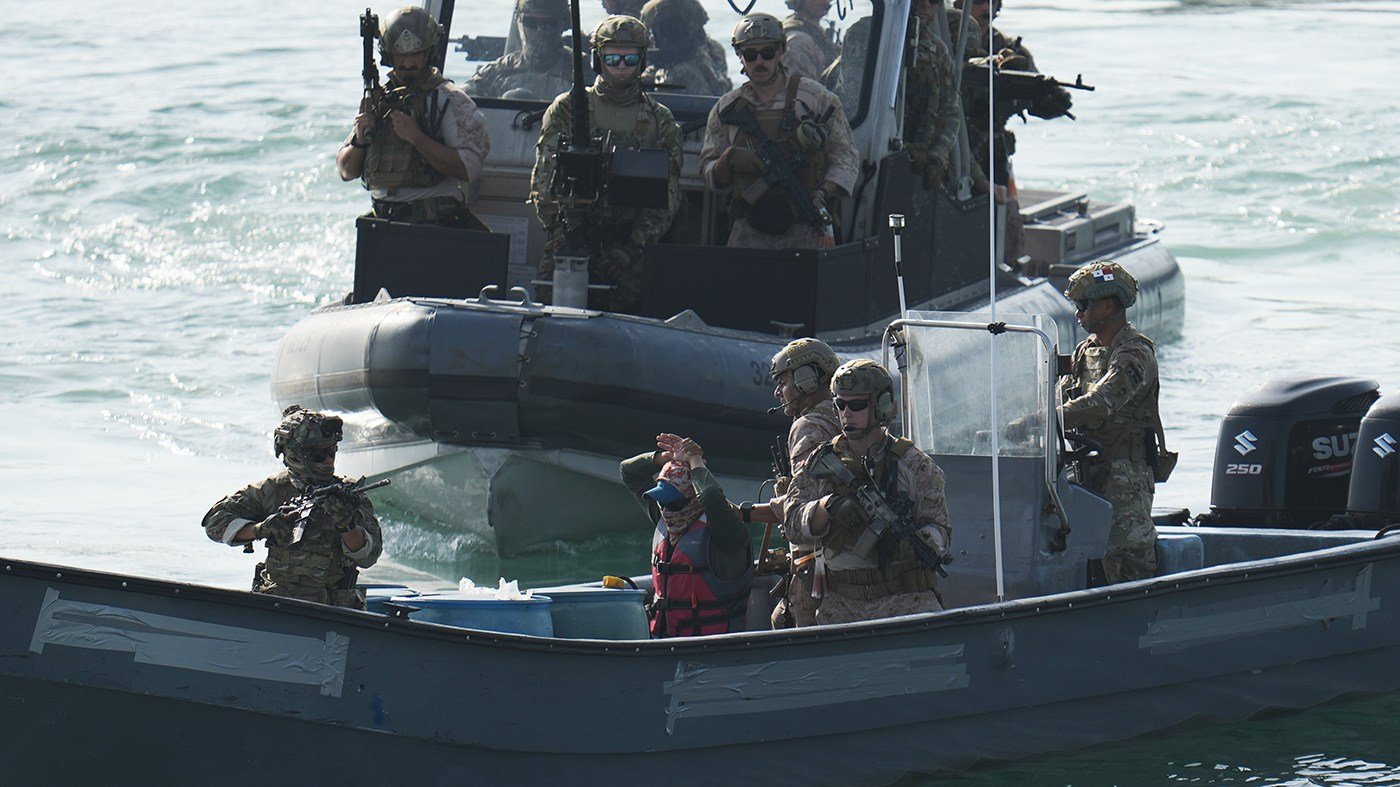
Yet the Pentagon's own budget tells a different story. The department's $1.5 trillion request for next fiscal year includes tens of billions for restocking missiles and interceptors, and the White House is preparing to ask Congress for an $80 billion to $100 billion supplemental to backfill weapons expended in the now eleven-week conflict, which has settled into a tense ceasefire since early April. The U.S. has reportedly burned through most of its long-range stealth cruise missiles, Tomahawks, Patriot interceptors, and Precision Strike and ATACMS ground-based missiles.
Mark Cancian, a senior adviser at the Center for Strategic and International Studies and a retired Marine colonel, described U.S. stockpiles as “reduced.” He noted that while the military still has large numbers of shorter-range ground attack missiles, using them would require forces to “penetrate more deeply into an adversary's defensive zone,” leading to significantly higher losses. That finding was reinforced by a recent U.S.-China wargame using current inventories, he said.
Sen. Mark Kelly (D-Ariz.) amplified the issue on Sunday, stating it's “shocking how deep” the U.S. has drawn from stockpiles, based on a Pentagon briefing to senators. He accused President Trump of entering the war “without a strategic goal, without a plan, without a timeline.” Hegseth has since accused Kelly of leaking classified information.
Rep. John Garamendi (D-Calif.), a senior member of the House Armed Services Committee, said Hegseth and Trump have been providing “misleading and inaccurate information” since the conflict began. “It defies logic to claim that our munitions are not depleted,” he said.
Meanwhile, the debate over Iran strategy continues to simmer. For more on the political fallout, see Platner's criticism of Collins for sidestepping Iran questions during the hearing. The broader budget fight also reflects these tensions, as detailed in GOP lawmakers' pushback on Hegseth's war strategy and the $1.5 trillion Pentagon budget. And the issue of congressional authorization remains unresolved, as Hegseth continues to reject the need for a congressional green light on military action.