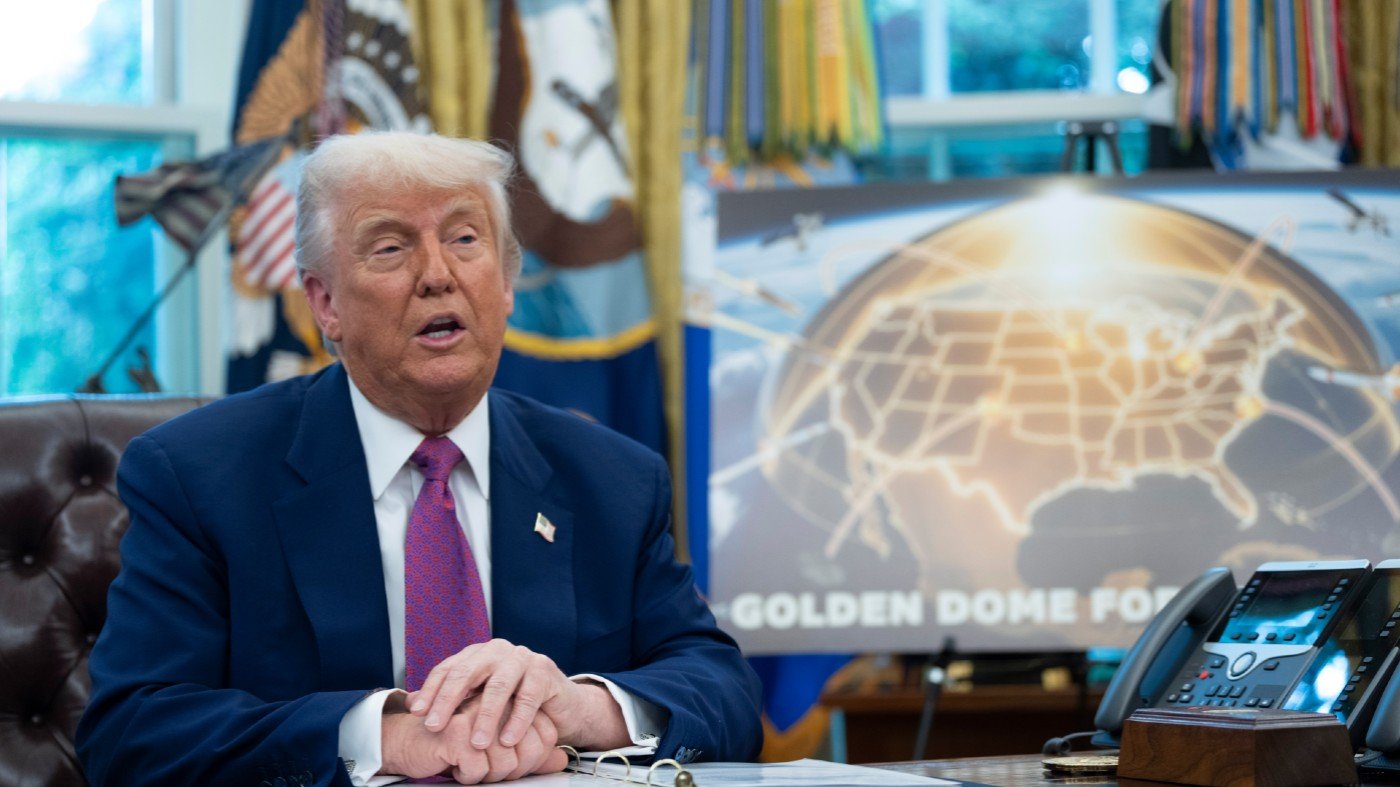
The Congressional Budget Office released a sobering assessment Tuesday, projecting that the Trump administration's Golden Dome missile defense system will cost approximately $1.2 trillion to develop, deploy, and sustain over the next two decades. The nonpartisan watchdog's 12-page report pegs acquisition costs alone at more than $1 trillion, a figure that includes interceptors, space-based sensors, research and development, and system integration improvements.
According to the CBO, the space-based interceptor layer represents the lion's share of the price tag—roughly 70% of acquisition costs and about 60% of the total system cost. This finding underscores the technological ambition and financial risk of the project, which aims to create a layered shield capable of defending the U.S. homeland against missile attacks.

The new estimate stands in stark contrast to earlier projections from Air Force Gen. Mike Guetlein, director of the Office of Golden Dome for America, who in March put the cost at $185 billion. Republicans in Congress have already allocated $25 billion for the program through the One Big Beautiful Bill Act, signed into law by President Trump last July. The Pentagon is now seeking an additional $17 billion via reconciliation, and defense officials have indicated that $750 billion of the administration's record $1.5 trillion defense budget request for fiscal 2027 is tied to missile defense, drones, artificial intelligence, and industrial base buildup.
The wide gap between Guetlein's estimate and the CBO's suggests that the Pentagon's envisioned architecture may be more limited than what the CBO modeled, or that the Defense Department expects to pull significant funding from other accounts to cover costs. The CBO report notes that both factors could be at play, leaving lawmakers to grapple with the true scope and expense of the program.
The administration has pitched Golden Dome as a 'layered defense of the homeland' that 'keeps Americans safe, while using innovative program management and acquisition approaches to prudently employ taxpayer dollars.' But the CBO struck a cautious tone, acknowledging that while the system would be far more capable than current defenses, it 'would not be an impenetrable shield or be able to fully counter a large attack of the sort that Russia or China might be able to launch.' The report added that such a system might deter smaller raids but could also provoke adversaries to increase their arsenals.
Sen. Jeff Merkley (D-Ore.), ranking member of the Senate Budget Committee, who requested the CBO analysis, seized on the findings. 'Golden Dome is nothing more than a massive giveaway to defense contractors paid for entirely by working Americans,' Merkley said Tuesday. 'It will do little to advance American national security.' He vowed to 'continue to work with my colleagues in the Senate to prevent another dime from flowing to this racket.'
The cost controversy comes as Congress debates broader defense spending priorities. Senate Republicans have pressed Pentagon officials on budget strategy and alliance strains, while House GOP leaders have questioned the $1.5 trillion Pentagon request and potential Iran war costs. Meanwhile, Oxfam has warned that the administration's defense plan amounts to a war budget, not a defense budget.
With the CBO's $1.2 trillion estimate now on the table, the political battle over Golden Dome is likely to intensify, pitting national security ambitions against fiscal reality and raising fundamental questions about how much the U.S. is willing to spend to defend against missile threats.