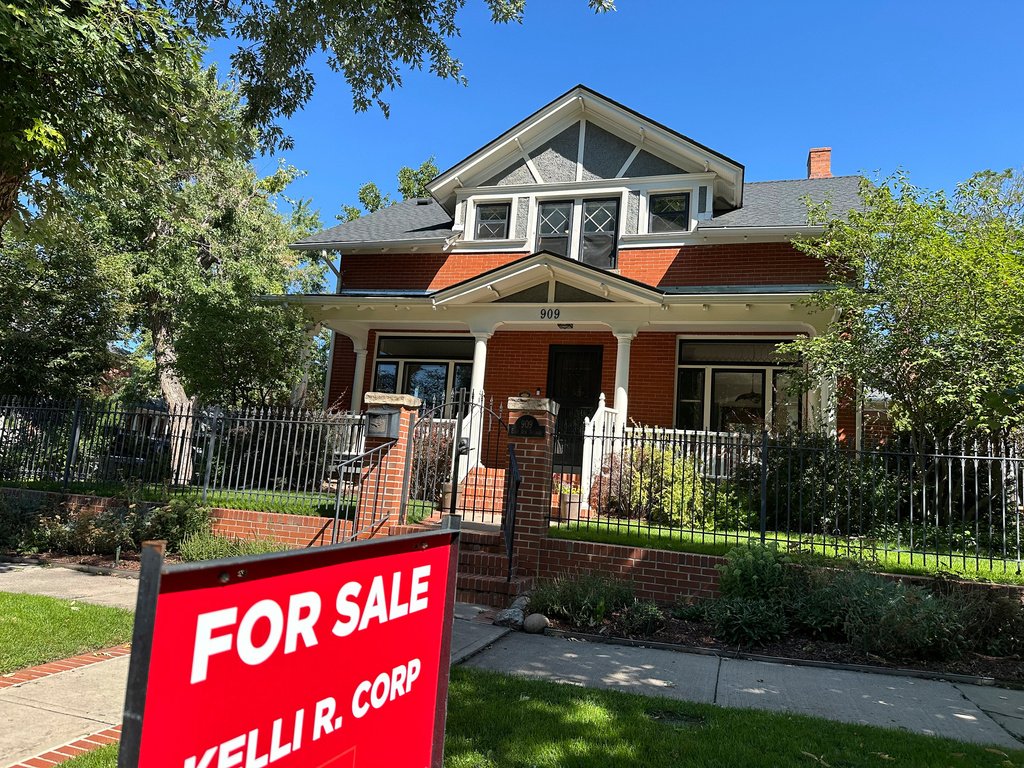
Interest rates for American home loans have surged to a seven-month peak, according to new data from mortgage financier Freddie Mac. The average rate for a 30-year fixed mortgage climbed to 6.38% this week, while the 15-year fixed rate rose to 5.75%. This marks the highest level for both benchmarks since early September, reversing a brief period of relief for prospective buyers earlier this year.
A Steady Climb Amid Global Uncertainty
The upward trajectory has been consistent over the past month. After dipping below 6% in late February—the lowest point in three years—the 30-year rate had already rebounded to 6.11% by mid-March. Analysts point directly to the ongoing military confrontation between the United States and Iran as the primary catalyst, noting that the conflict is sending destabilizing waves through the global economy.
"Mortgage rates this week averaged 6.38%," stated Sam Khater, Freddie Mac's chief economist. "The housing market continues to show gradual improvements compared to a year ago amid recent rate volatility. Purchase and refinance applications are up year-over-year, and rates remain lower than last year when they averaged 6.65%." Despite the weekly increase, Khater's commentary suggests the market is absorbing the volatility better than during last year's sharper hikes.
Federal Reserve Holds Firm as Energy Markets Roil
The rate increase comes as the Federal Reserve maintains its benchmark interest rate in a range of 3.5% to 3.75%, a decision made under the pressure of continuing U.S. military operations. The central bank's stance reflects a balancing act between inflationary pressures and economic stability.
Parallel to the mortgage market, global energy prices have skyrocketed. Iranian counterstrikes targeting Gulf states have severely hampered shipping through the critical Strait of Hormuz, a chokepoint for roughly one-fifth of the world's daily oil consumption. This disruption has sent crude prices soaring: Brent crude, the international benchmark, traded around $110 per barrel, while U.S. benchmark West Texas Intermediate approached $97.
The ripple effects are immediate for American consumers. According to AAA, the national average price for a gallon of standard gasoline hit $3.98, a full dollar increase from just one month ago. Diesel prices have seen an even steeper jump, reaching $5.30 per gallon compared to $3.76 a month prior. These spikes contribute directly to broader inflationary concerns that influence long-term borrowing costs like mortgages.
Corporate and Government Responses
Corporate leaders are issuing stark warnings. The CEO of BlackRock cautioned that oil reaching $150 per barrel could trigger a global recession, while the head of United Airlines said his company is preparing for oil to remain above $100 per barrel into 2027. In response to the crisis, the Trump administration has announced a multi-pronged effort to mitigate the economic impact. President Trump stated the U.S. would pause strikes on Iranian energy infrastructure into April as peace negotiations proceed, noting Iran had permitted ten oil-carrying ships to pass through the Strait.
Additional administrative measures include temporarily lifting sanctions on the sale of Iranian, Russian, and Venezuelan oil already at sea, tapping the U.S. Strategic Petroleum Reserve, encouraging increased domestic oil production, and temporarily loosening shipping regulations. These steps mirror other federal actions to manage cascading crises, such as when the State Department issued a worldwide travel advisory due to the conflict. The economic strain also manifests in other sectors, reminiscent of operational challenges like those faced by the TSA during previous budget crises.
The convergence of geopolitical strife, energy market disruption, and monetary policy is creating a complex financial landscape for consumers. With mortgage rates sensitive to these macro forces, the path for the housing market remains tightly linked to diplomatic and military developments thousands of miles away. The situation underscores how domestic financial instruments are increasingly exposed to international flashpoints, a reality that policymakers and regulators must navigate carefully.