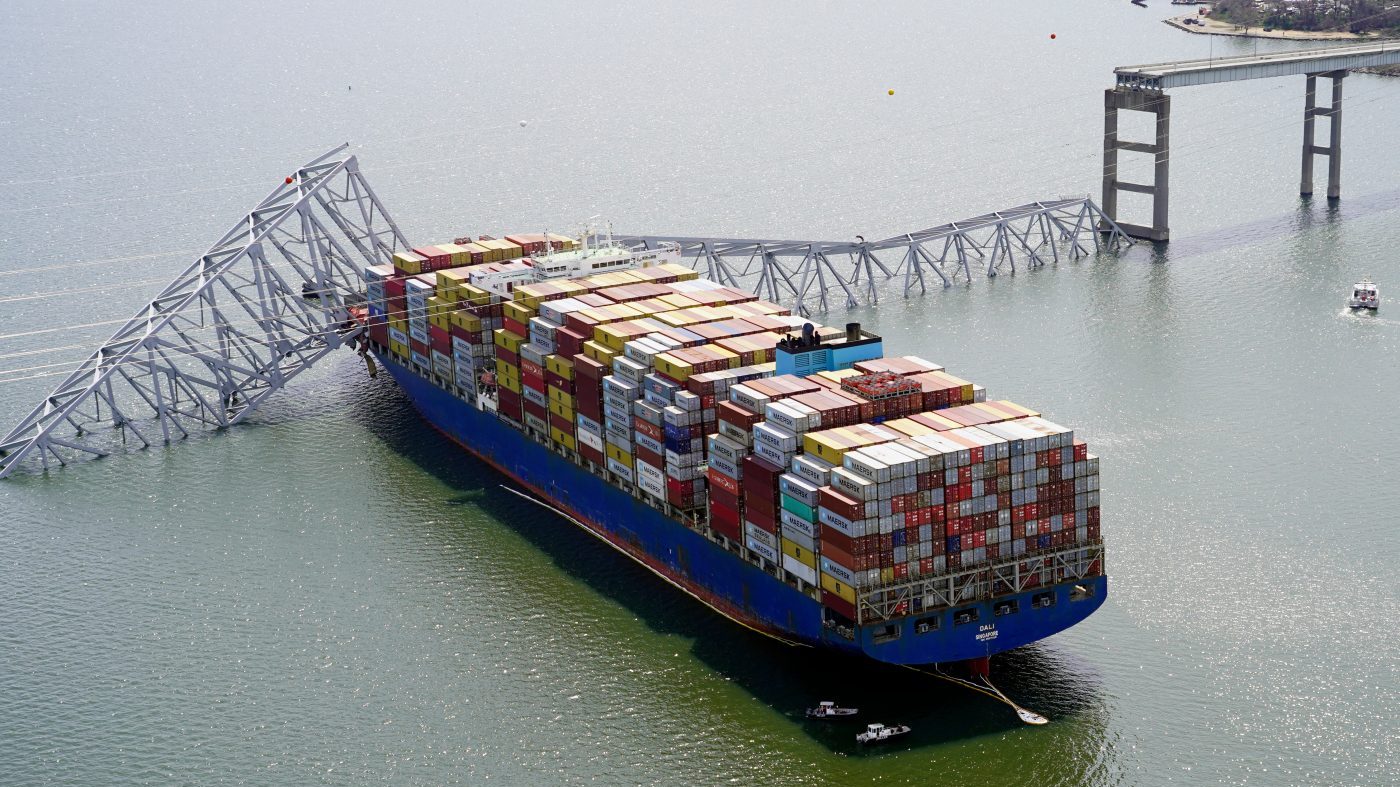
Federal prosecutors unsealed a 47-page indictment Tuesday charging the operator of the cargo ship that slammed into Baltimore's Francis Scott Key Bridge, marking the first criminal charges in a disaster that left six dead and caused an estimated $5 billion in damages. The indictment targets Singapore-based Synergy Marine, its Indian affiliate Synergy Maritime, and the vessel's technical superintendent, Radhakrishnan Karthik Nair, on 18 counts including conspiracy, misconduct by ship officers resulting in death, obstruction, false statements, and violations of the Clean Water Act.
The M/V Dali lost power twice in the early hours of March 26, 2024, before crashing into the bridge's main support pier, triggering a catastrophic collapse that killed six construction workers and shut the Port of Baltimore for 77 days. The National Transportation Safety Board's November 2024 report found that Synergy had “inappropriately” used a flushing pump to power two of the ship's generators instead of the standard supply pumps, a configuration that could not automatically restart after a blackout.
Prosecutors allege that Synergy failed to perform adequate safety checks on the alternative pump system and concealed its use from the U.S. Coast Guard. “Unlike the pumps designed to service these generators, the flushing pump could not automatically restart following a blackout,” the indictment states, pointing to a critical design flaw that likely contributed to the vessel's loss of propulsion.
The charges also include failure to report hazardous conditions and neglect of duty, reflecting what federal officials say was a systemic disregard for maritime safety protocols. The indictment follows a broader federal push to hold corporate operators accountable for infrastructure disasters, even as the Trump administration continues to face legal setbacks on trade and regulatory fronts.
In a statement after the NTSB report, Synergy said it had “fully cooperated” with investigators and supplied the board with requested information. The company noted the NTSB's observations about the bridge's vulnerability and aspects of the vessel's electrical arrangements, adding that “these matters will be reviewed in detail with our technical teams, the vessel owner and counsel.” The Hill has reached out to Synergy for comment on the new charges.
Last October, the Justice Department secured a $103 million civil settlement with Synergy and the ship's owner, Grace Ocean Private Unlimited. A separate trial scheduled for this summer will determine whether the companies should be held liable for the full cost of the disaster, including the multibillion-dollar effort to rebuild the 1.6-mile bridge, a project expected to take years.
The criminal indictment adds a new layer of legal peril for Synergy, which already faces intense scrutiny over its safety practices. Critics argue that the case underscores the need for stricter oversight of foreign-flagged vessels operating in U.S. waters, a debate that has gained urgency as the administration pushes to tighten procurement rules and reduce reliance on foreign operators.
For the families of the six victims, the charges bring a measure of accountability but little solace. The bridge collapse, one of the deadliest infrastructure failures in recent U.S. history, has also sparked broader questions about the resilience of aging American bridges and the regulatory gaps that allow foreign shipping companies to operate with minimal oversight.
As the case moves forward, prosecutors are expected to argue that Synergy's cost-cutting decisions directly led to the loss of life and billions in damage. The outcome could set a precedent for how federal authorities handle maritime disasters involving foreign entities, particularly as legal battles over executive power continue to reshape the regulatory landscape.