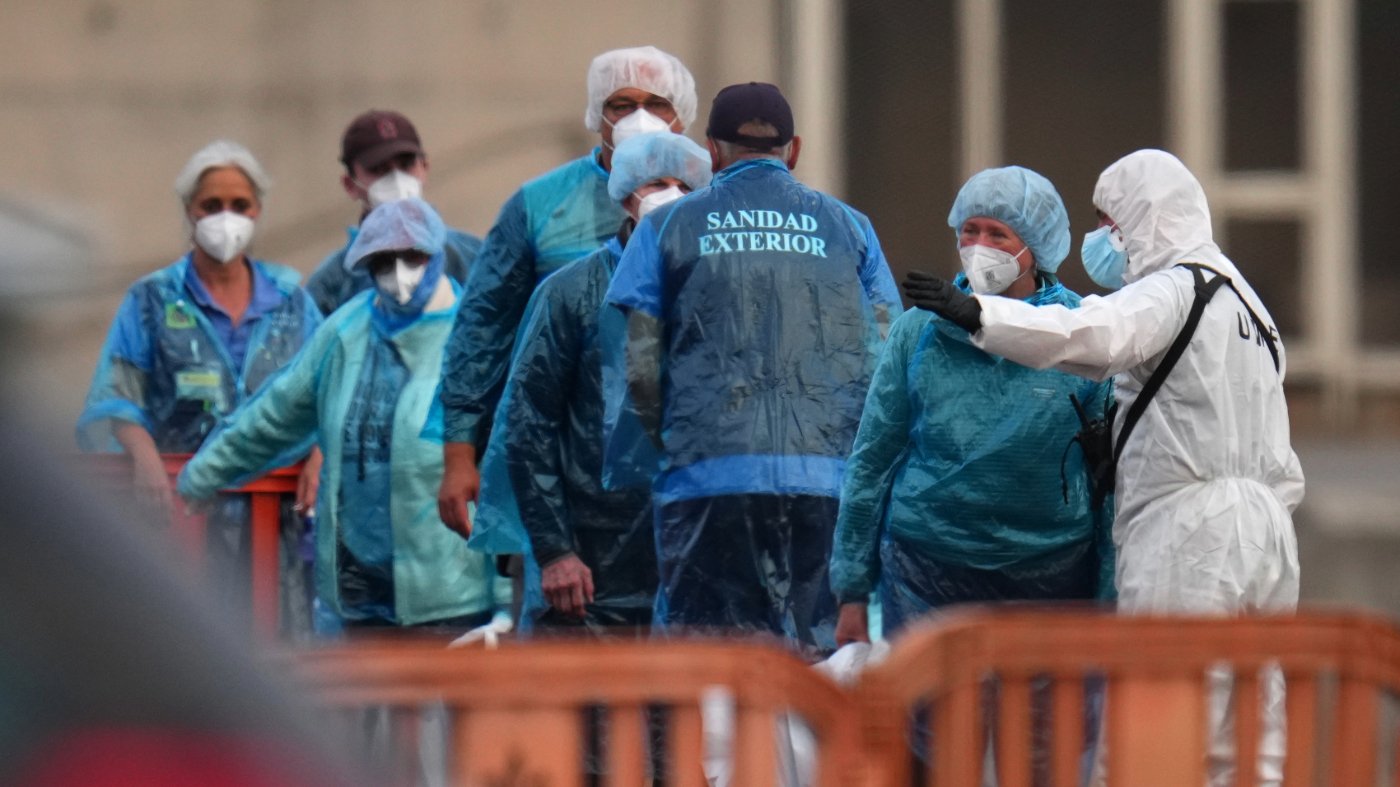
The World Health Assembly convenes in Geneva next Monday, and this year's meeting could mark the last opportunity for the United States to reverse its planned withdrawal from the World Health Organization. For one former critic of the agency, the WHO's response to the ongoing hantavirus outbreak has been a game-changer.
Dr. Marc Siegel, a professor of medicine at NYU Langone Health, initially slammed the WHO during the early days of the COVID-19 pandemic, accusing the organization of being too close to China. But the agency's handling of the hantavirus cases—first confirmed on May 2 in a passenger aboard a Dutch-flagged cruise ship that departed from Argentina—has shifted his view. "I have changed my mind, as I would urge President Trump to do now," Siegel writes.
The outbreak, traced to the Andes strain of hantavirus, has prompted a multinational response led by the WHO. The virus, which is difficult to transmit between humans—with only about one percent of household contacts and 17 percent of sexual contacts becoming infected—has still required careful coordination across borders. The WHO has deployed experts to the ship in Cabo Verde, working with Dutch officials and the European Centre for Disease Prevention and Control.
Dr. Maria Van Kerkhove, an American infectious disease epidemiologist and the WHO's interim director of pandemic management, has been a key figure in the response. She told Siegel that the WHO is developing step-by-step guidance for safe disembarkation and onward travel of passengers and crew. "They are conducting a medical assessment of everyone on board and gathering information to assess their risk of infection," she said.
The U.S. is not immune to the outbreak. Quarantine measures are underway in Texas, New Jersey, Georgia, California, Virginia, Arizona, and Nebraska, and American health officials are relying on data from the WHO. Van Kerkhove noted that the WHO has received no evidence of mutation in the virus, which is reassuring. She added that early, high-quality supportive care can save lives, and the U.S. Army Medical Research Institute of Infectious Diseases is developing monoclonal antibodies.
Van Kerkhove emphasized the broader lesson: "WHO's rapid, multi-national response to the hantavirus cases demonstrates the organization's critical importance to keeping the world safe, and of the need for global collaboration for global health security. Solidarity is the best immunity."
Siegel now believes the WHO's acknowledgment of the U.S. as a crucial global health ambassador is stronger than before. He argues that the agency's "eyes and ears" help protect Americans from emerging infectious diseases. As the debate over U.S. membership intensifies, the hantavirus response offers a case study in why global cooperation matters—especially when viruses don't respect borders.
For President Trump, who has long criticized the WHO, this may be a moment to reconsider. The World Health Assembly could be the last chance for the U.S. to remain a member, and the stakes are high for pandemic preparedness and international health security.