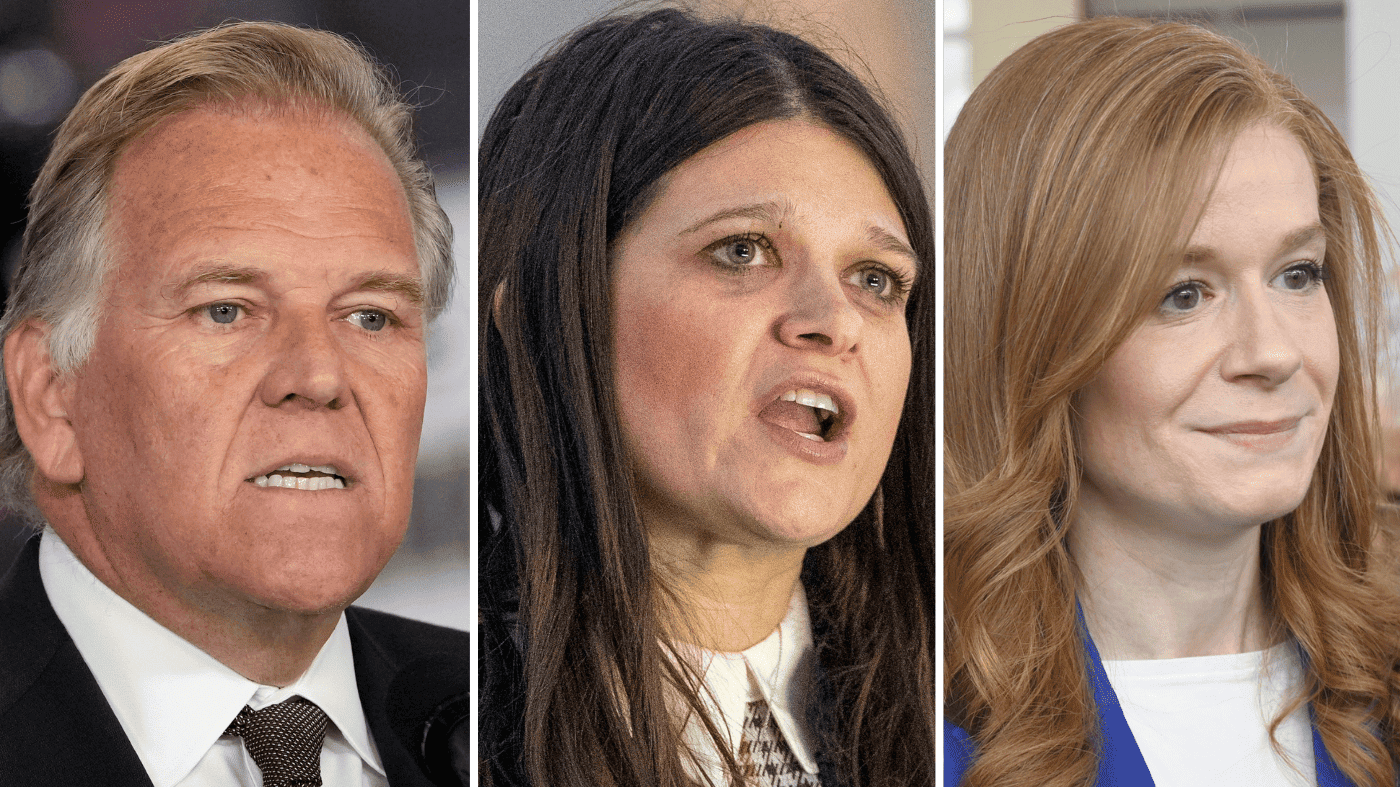
A fresh survey from the Glengariff Group reveals a razor-thin contest for Michigan's open Senate seat, with former Republican Representative Mike Rogers holding a marginal lead over two top Democratic contenders. The poll, conducted among 600 likely general election voters, shows Rogers at 43.8 percent against Representative Haley Stevens at 41.5 percent — a gap of just 2.3 points, well within the 4-point margin of error.
In a matchup against state Senator Mallory McMorrow, Rogers garners 42.8 percent support to McMorrow's 40.7 percent, a nearly identical spread. More than 14 percent of voters remain undecided in both head-to-head scenarios, underscoring the fluidity of the race.
The open seat follows Senator Gary Peters' decision not to seek a third term, setting the stage for a competitive battle in a state that has trended Democratic in recent cycles but remains a key battleground. Rogers, a former FBI agent and House Intelligence Committee chair, is the clear frontrunner in the GOP primary, while Democrats face a three-way primary fight among Stevens, McMorrow, and former Wayne County health director Abdul El-Sayed.
Rogers also leads El-Sayed 44.7 percent to 39.8 percent, with 15.5 percent of voters undecided, according to the poll. The survey was conducted by phone from April 28 to May 1 and carries a 4-point margin of error.
On the Democratic side, an Emerson College Polling/WOOD-TV survey from last month found El-Sayed and McMorrow tied at 24 percent each among likely primary voters, with Stevens at 13 percent and a large 36 percent undecided. El-Sayed has the backing of Senator Bernie Sanders, while McMorrow is endorsed by Senator Elizabeth Warren. Stevens, meanwhile, has secured the endorsement of former Michigan Senator Debbie Stabenow, a move that could bolster her establishment credentials.
Fundraising numbers from the Federal Election Commission show all four candidates with substantial war chests. As of the end of March, Rogers had over $4.2 million on hand, while McMorrow led Democrats with $3.6 million, followed by Stevens at $3.3 million and El-Sayed at $2.5 million.
The candidates are actively courting blue-collar voters in a state that ranks fourth nationally in manufacturing jobs. Rogers recently released an ad focused on reviving shop classes in high schools, saying, "Let's put shop class back in every high school and train our kids for real jobs. Jobs AI can't eliminate, jobs China can't steal." All three Democratic candidates have voiced support for striking nurses at Corewell Health in Southeast Michigan, who are unionized with the Teamsters.
Early voting for the Michigan primary runs from July 25 through August 2, with Election Day on August 4. With the race in a dead heat and many voters still making up their minds, both parties are gearing up for an intense final push.