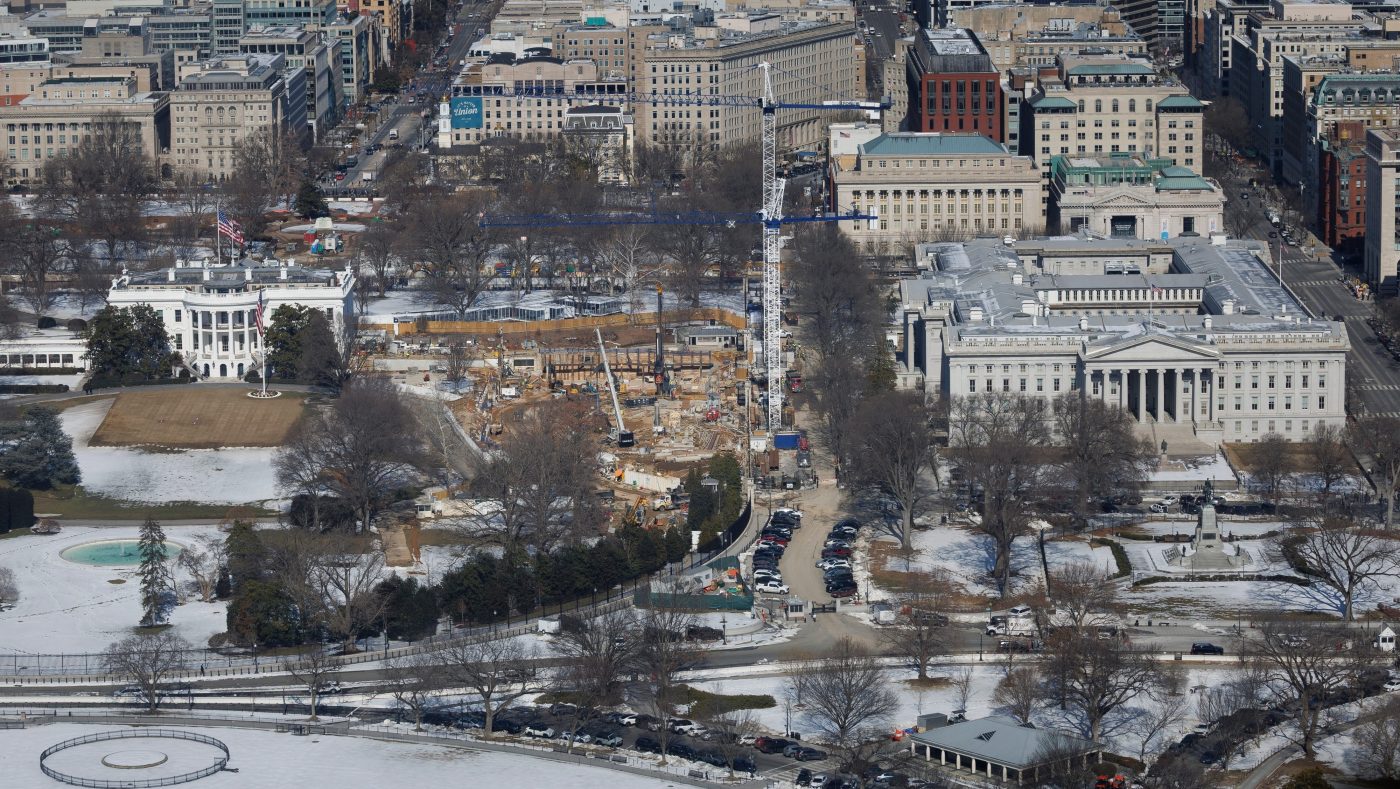
A federal judge has sharply limited the scope of President Donald Trump's proposed $400 million White House ballroom, confining construction to underground work and explicitly rejecting the administration's assertion that the entire project constitutes a security imperative.
U.S. District Judge Richard Leon, appointed by former President George W. Bush, issued a clarified ruling that permits only "below-ground construction" to continue. This includes work on bunkers, bomb shelters, military installations, or medical facilities deemed essential for the safety of the White House and the president. The ruling represents a significant judicial pushback against the administration's broader interpretation of a security exception.
Security Claims Rejected as Overreach
Judge Leon's decision, detailed in a ten-page order, directly counters the Trump administration's position that the complete ballroom project must advance for security purposes. He stated the administration's interpretation sought to turn his limited security exception "on its head," adding he "cannot possibly agree" with that expansive reading.
"The injunction does not permit above-ground construction of the proposed ballroom," Leon wrote definitively. He did allow for minimal above-ground work strictly necessary to "cover, secure and protect" the underground facilities, but this carve-out does not extend to the ballroom structure itself.
Legal and Political Context
The ruling follows a prior order from last month and comes after a higher court asked Judge Leon to clarify the boundaries of the security exemption. The legal battle over the ballroom is one of several contentious disputes involving major construction projects proposed for White House grounds, which critics argue prioritize grandeur over precedent and prudent use of resources.
Judge Leon temporarily paused the order's effect for one week, citing government "concerns," potentially allowing time for an appeal. The case sits at the intersection of executive authority, national security justifications, and oversight, echoing tensions seen in other high-profile clashes between the judiciary and the executive branch.
The administration's argument that the ballroom in its entirety is a security requirement had been viewed skeptically by legal observers. The judge's narrow framing suggests the judiciary is scrutinizing such claims with increased rigor, a trend also apparent in other federal cases where national security arguments are central.
The ruling effectively halts the visible, above-ground progress of a signature Trump project, casting its future into legal uncertainty. It underscores the ongoing checks on presidential ambitions, even for projects framed under the banner of security. The decision may also influence debates around federal spending and propriety, as the administration continues to pursue other ambitious architectural proposals for federal spaces.
With the one-week stay in place, the administration must now decide whether to accept the constrained construction parameters or escalate the legal fight. The outcome will signal the strength of judicial limits on executive projects justified by security claims during this presidency.