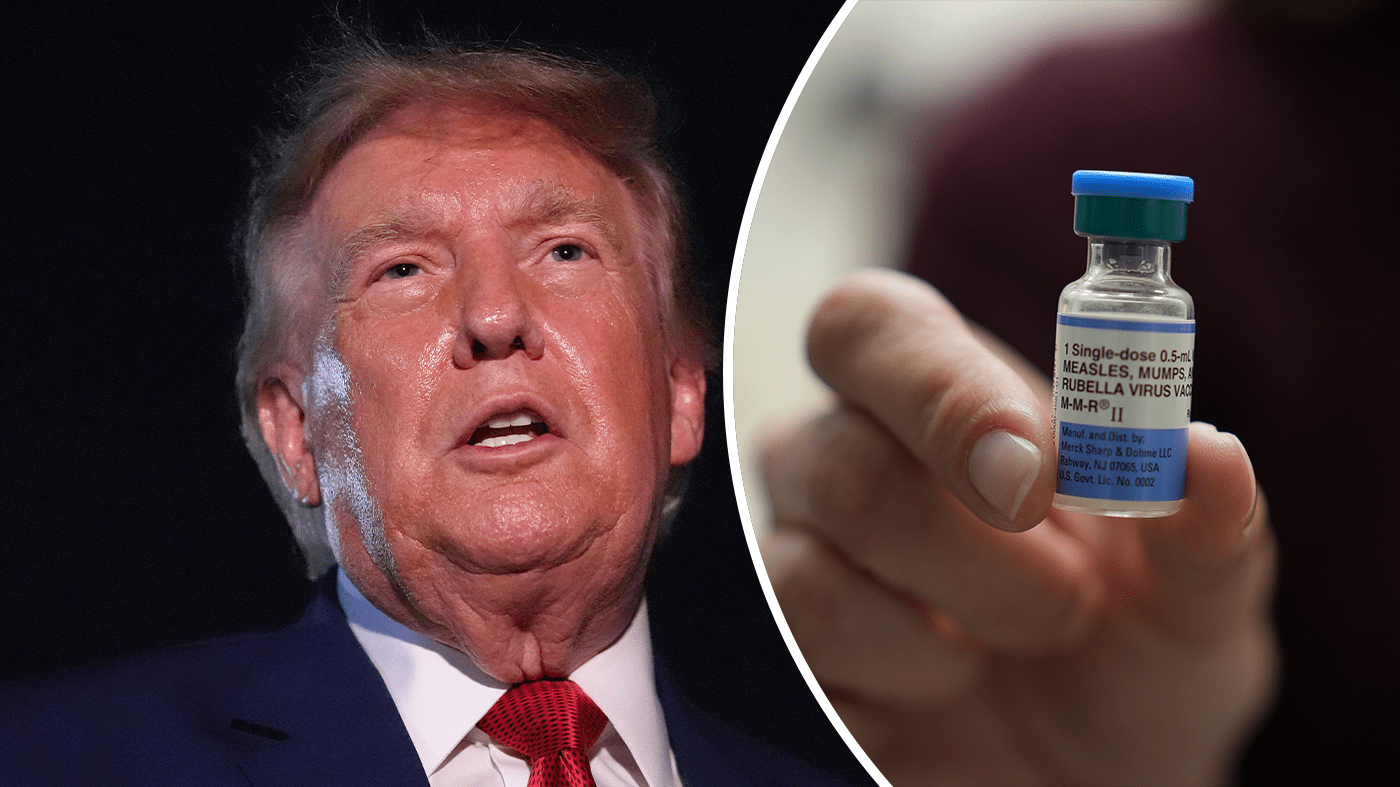
President Trump's executive order urging the separation of the measles, mumps, and rubella (MMR) vaccine into three distinct shots has met with strong resistance from the pharmaceutical industry. Drugmakers and trade groups argue that the directive lacks scientific justification and could undermine public health efforts at a time when measles cases are surging.
The administration offered no new data to support breaking up the combined vaccine, which has been in use for over five decades. Instead, industry leaders quickly criticized the move, pointing to the highest measles rates in the U.S. in more than 30 years. Splitting the vaccine would likely require six separate doctor visits to complete the full schedule, compared to the current two-dose regimen.
Dr. Ronald G. Nahass, president of the Infectious Diseases Society of America, warned that complicating vaccination could backfire. "At a time when measles outbreaks are already threatening communities across the country, making vaccination more complicated and burdensome risks further reducing vaccination rates and leaving more children vulnerable to a highly contagious and potentially deadly disease," he said in a statement.
Trump has argued that "nothing bad can happen" from separating the shots, but critics counter that additional co-pays and missed appointments would likely lower compliance. The combined MMR vaccine has been a cornerstone of pediatric immunization since its development in 1971.
The two major U.S. manufacturers, Merck and GSK, currently produce only the combined version. Bringing three separate single-antigen vaccines to market would require years of regulatory approval and billions in investment. "Currently, no single-antigen measles, mumps, or rubella vaccines are approved in the U.S.," a source familiar with vaccine manufacturing told The Hill. "This means it would take years to bring those to market if they were separated."
Even if approved, establishing new production lines could take five to ten years and cost billions, according to the Pharmaceutical Research and Manufacturers of America. Financially, vaccines are not major profit centers for drugmakers, a point highlighted by the International Monetary Fund during the pandemic, which noted the "considerable risk of unprofitability even for successful vaccines." The federal Vaccines for Children program already purchases roughly half of all childhood vaccines at discounted rates.
When asked what incentives companies would have to comply, White House officials offered no concrete plan. One official said the HHS task force would "work through that with the companies," adding that "a lot of American parents want to see additional options" and that "in a market-based solution, their desire for those options will help inform the manufacturer's decisions." The executive order gives federal agencies 90 days to propose a plan.
Both Merck and GSK have publicly rejected the premise. Merck stated, "To date, there has been no published scientific evidence that shows any benefit in separating the combination MMR vaccine into three individual shots. Use of the individual components of combination vaccines increases the number of injections for the individual and may result in delayed or missed immunizations." The company added that combination vaccines improve completion and compliance rates. GSK echoed this, saying, "We stand by the safety and effectiveness of our combination vaccines, which are backed by decades of global use and robust scientific evidence."
The pharmaceutical industry's overarching message is that any change must be grounded in science. "Decisions about vaccines must be rooted in science," the source said. "We know the MMR vaccine is safe and effective because it has been used for decades to help prevent infection from measles, mumps and rubella for hundreds of millions of people. In fact, measles was declared eliminated in the United States in 2000, thanks to widespread vaccination with the MMR vaccine."