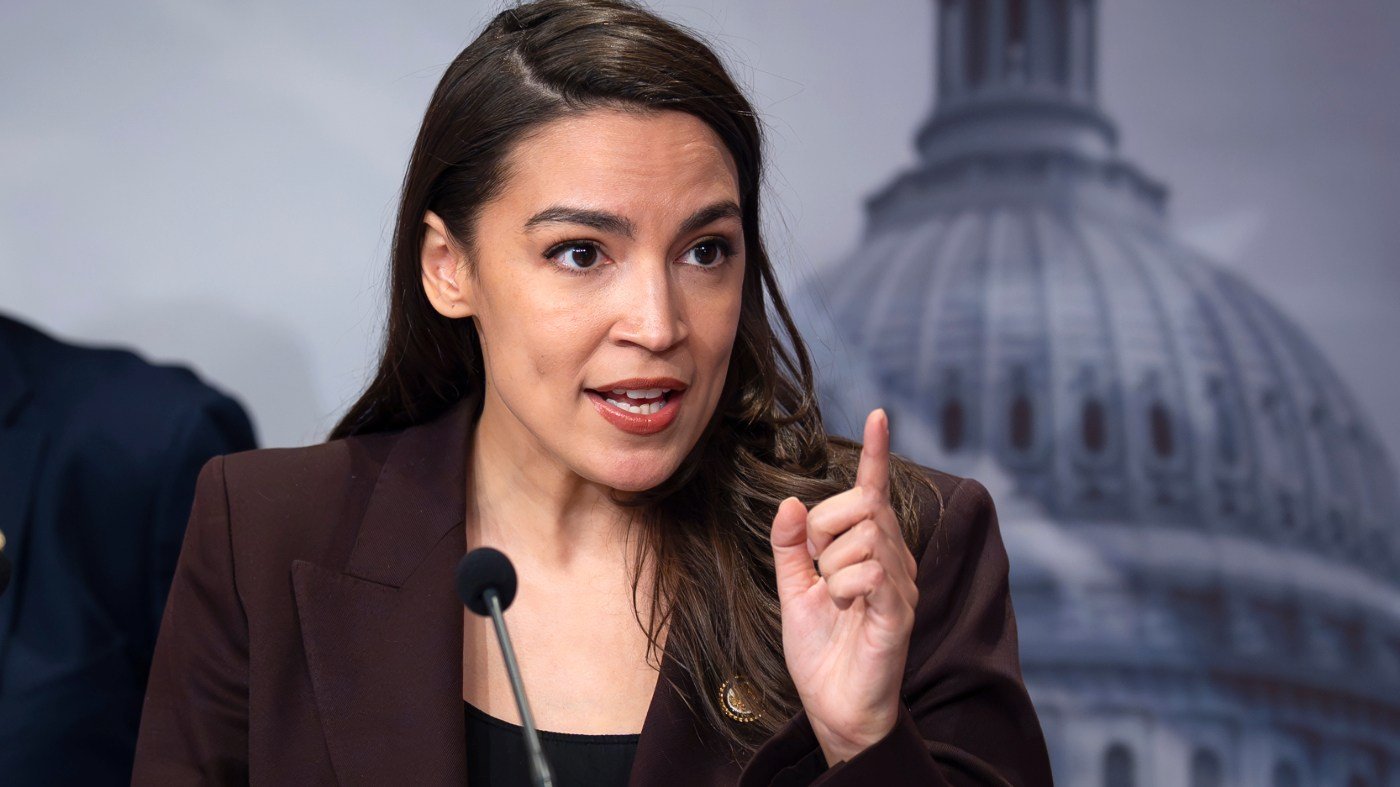
Rep. Alexandria Ocasio-Cortez (D-N.Y.) has for years positioned herself as a champion of environmental health, co-sponsoring legislation to curb forever chemicals in drinking water and securing federal funds to expand access to fresh, unprocessed food. Last month, she extended that portfolio into new territory, meeting with organizers from the Make America Healthy Again movement, including Zen Honeycutt of Moms Across America and Joe Maxwell of Farm Action.
But the reception from MAHA’s institutional wing has been frosty. Tony Lyons, a longtime confidant of Health and Human Services Secretary Robert F. Kennedy Jr. and president of the nonprofit MAHA Action, told The World Signal that Ocasio-Cortez’s motivations are purely political and not substantive.

“She says she wants to fight Big Food, Big Pharma, Big Ag,” Lyons said. “Sounds like Secretary Kennedy. [She] says she wants to protect families, yet she criticizes all the time the very person Trump brought in to fight government agencies because they are harming the public.”
Lyons argued that Ocasio-Cortez is being inconsistent by declining to endorse Kennedy’s push to close a long-standing loophole in the Federal Food, Drug, and Cosmetic Act. Since 1958, that loophole has allowed food manufacturers to self-affirm that additives—preservatives, colorings, and other chemicals—are “generally recognized as safe” without independent review. Kennedy has called for bipartisan legislation to eliminate that provision, a move Lyons says Ocasio-Cortez should support if she is serious about tackling chronic disease.
“If she really wanted to defend children and working families, she would be on board with the whole MAHA agenda,” Lyons said. “If 60 percent have chronic disease, if she is against poverty, then she has to work with Kennedy and Trump and not only hyper focus on one person dying of measles while saying nothing about 1.2 million people dying each year from preventable chronic disease.”
He added that the 2026 midterms will be a referendum on MAHA. “The midterms are about MAHA,” Lyons said. “She can’t get on the MAHA train after blasting and slashing everything Kennedy and Trump represent.”
On specific policy, Lyons called for concrete steps to address the herbicide glyphosate, which many health advocates say is unsafe for the food supply. “We need warnings on packages, to encourage innovation [and] no liability shields while working with farmers to engage in regenerative farming which doesn’t rely on pesticides,” he said. “We need to change the culture.”
To be fair, Ocasio-Cortez has championed farm-to-table supply chains through GrowNYC’s Regional Food Hub, worked to alleviate food deserts, and supported food rescue campaigns through City Harvest with the goal of universal access to healthy food. But Lyons contends that MAHA’s accomplishments have been far greater, including securing pledges from major food companies to phase out petroleum-based artificial dyes, enabling statewide Supplemental Nutrition Assistance Program waivers to restrict junk food purchases, and pushing to improve the nutritional quality of food served in schools and public facilities.
“If you want a better world with more dignity, then you should want to line up with Kennedy in the fight against chronic disease,” Lyons said. “Anything else is just politics and pandering and disingenuous. And voters can see right through it.”
The clash underscores a broader tension within the public health debate: whether the fight against chronic illness can transcend partisan lines, or whether it will remain another arena for political combat. As Congress weighs legislation to close the GRAS loophole, the answer may soon become clearer.