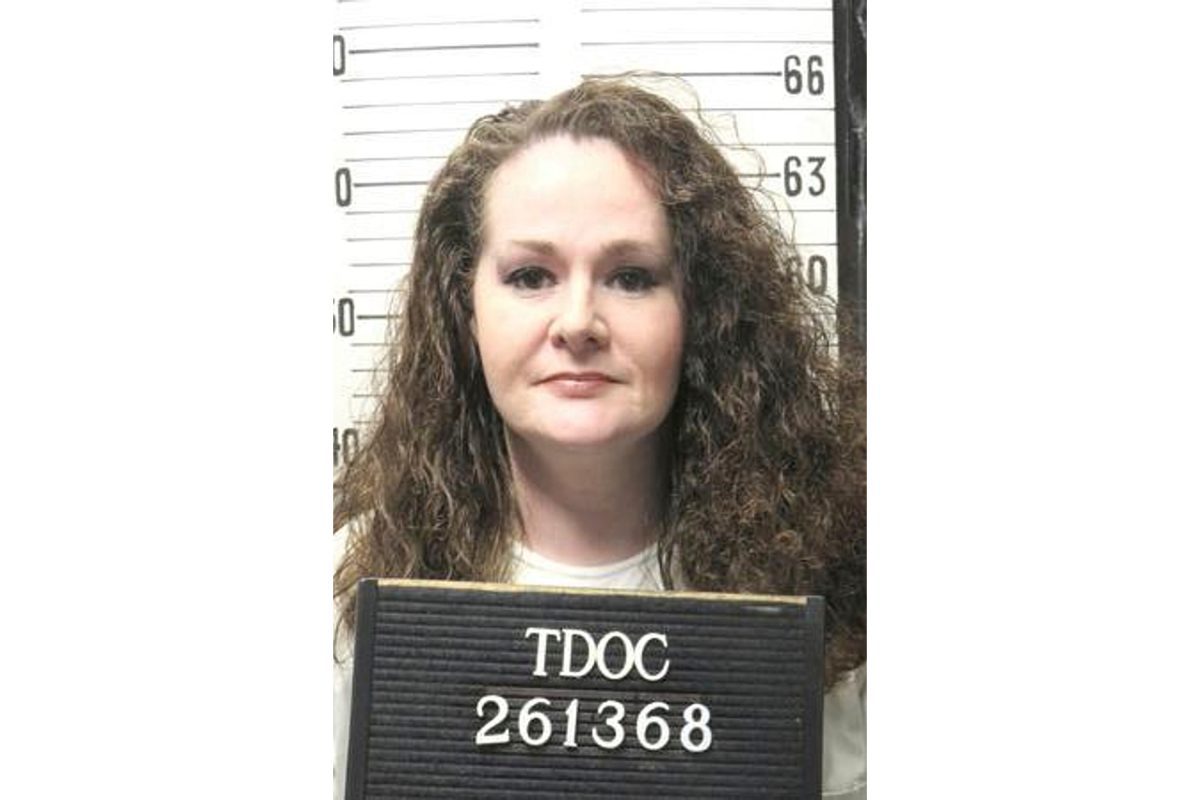
Tennessee's attempt to execute Christa Pike on Wednesday collapsed in a botched lethal injection, leaving the 50-year-old death row inmate alive and breathing, according to media witnesses. The state administered two doses of pentobarbital before officials halted the procedure and transported Pike to a Nashville-area hospital, where her condition remained unknown.
The execution, which had been scheduled for 9 a.m., was delayed for hours after the Sixth Circuit Court of Appeals granted a last-minute stay. The U.S. Supreme Court later overturned that stay, allowing the procedure to proceed. But what followed raised fresh concerns about the state's execution protocol and its transparency.
Witnesses described a harrowing sequence: Pike was strapped to a gurney with an IV in her right arm, complained that her vein felt like it was about to burst, and sang with her spiritual advisor before the first dose was administered. Over the next hour, she took deep breaths, ground her jaw, yawned, and eventually began snoring loudly. At one point, she lifted her head and then arched her body into a V shape. Choking sounds and alarms were heard, and the curtains were closed and reopened multiple times as officials struggled to complete the process.
Her attorneys, Randy Spivey and Kelly Gleason of the Tennessee Office of the Post-Conviction Defender, along with Stephen Ferrell and Luke Ihnen from Federal Defender Services of Eastern Tennessee, issued a sharp statement: "Tonight the State of Tennessee once again failed to carry out a lawful execution. We take no pleasure in being right, but the concerns raised by Ms. Pike proved to be true: difficult vein access, blown veins, degraded pentobarbital, no emergency medical care available when things inevitably go wrong, all under a protocol that remains veiled in secrecy."
Governor Bill Lee (R) responded by ordering a comprehensive third-party review and postponing the state's next scheduled execution, that of Gary Wayne Sutton, originally set for December 3. "Carrying out a lawfully imposed sentence is among the State's most serious responsibilities," Lee said, "and the people of Tennessee expect it to be done in a manner that is not only legal and constitutional, but is effective."
The Tennessee Department of Correction defended its actions, insisting that officials "followed every step of the State's lawful, established execution protocol approved by the Attorney General's Office." The department noted that the protocol does not allow for additional procedures beyond what was carried out and confirmed that Pike had been transported to an off-site medical facility.
This is the second time in 2026 that Tennessee has failed to carry out an execution. In May, officials called off the execution of Tony Carruthers after they could not place an IV. According to the Associated Press, seven people have survived due to vein-access failures, but no one had previously survived after receiving the lethal drugs.
Pike was convicted of the brutal 1995 murder of 19-year-old Colleen Slemmer in Knoxville, a case that involved torture and killing in a wooded area. She would have been the first woman executed in Tennessee in more than 200 years. The botched attempt has intensified scrutiny of the state's lethal injection practices, with critics pointing to the secrecy of the protocol and the lack of emergency medical backup. As the review proceeds, the future of capital punishment in Tennessee hangs in the balance. For more on the broader implications, see this analysis of the protocol's flaws and the state's decision to pause executions.