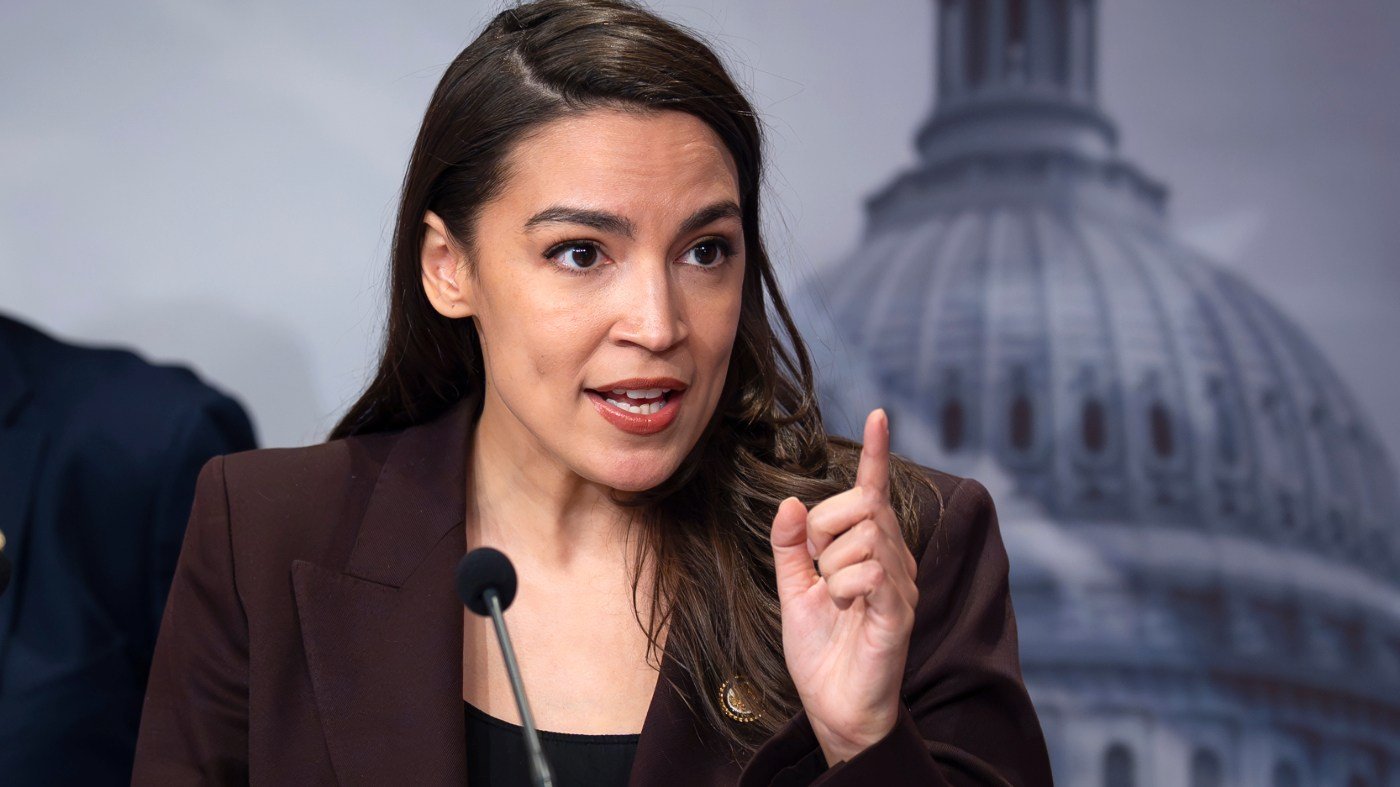
Rep. Alexandria Ocasio-Cortez (D-N.Y.) has recently made overtures to the Make America Healthy Again (MAHA) movement, meeting with prominent activists and expressing concern about toxic chemicals and processed foods. But her efforts are being met with sharp skepticism from a key ally of Health and Human Services Secretary Robert F. Kennedy Jr., who accuses her of political posturing rather than genuine commitment.
Tony Lyons, a longtime friend of Kennedy and president of the nonprofit MAHA Action, told The World Signal that Ocasio-Cortez's motivations are purely political and not substantive. "She says she wants to fight Big Food, Big Pharma, Big Ag," Lyons said. "Sounds like Secretary Kennedy. [She] says she wants to protect families, yet she criticizes all the time the very person Trump brought in to fight government agencies because they are harming the public."
Lyons argued that Ocasio-Cortez is inconsistent because she refuses to defend Kennedy's work to close a loophole tied to dangerous food additives. Under the Federal Food, Drug, and Cosmetic Act, since 1958, food companies have been allowed to "self-affirm" that preservatives, colorings, and other chemicals are safe—a blind spot that Kennedy has said requires bipartisan legislation to fix. "If she really wanted to defend children and working families, she would be on board with the whole MAHA agenda," Lyons said. "If 60 percent have chronic disease, if she is against poverty, then she has to work with Kennedy and Trump and not only hyper focus on one person dying of measles while saying nothing about 1.2 million people dying each year from preventable chronic disease."
Ocasio-Cortez has a record on environmental health issues. She co-sponsored legislation targeting "forever chemicals" in water that impair fertility and are linked to immune dysfunction and cancer. She has also secured funding for access to healthy, unprocessed food and championed farm-to-table supply chains through GrowNYC's Regional Food Hub, efforts to overcome food deserts, and food rescue campaigns with City Harvest.
But Lyons contends that MAHA's accomplishments are far greater, including securing pledges from Big Food to phase out petroleum-based artificial food dyes, enabling statewide Supplemental Nutrition Assistance Program waivers to restrict junk food purchases, and pushing to improve the nutritional quality of food served in schools and public facilities. He also called for concrete steps on the weed-killer glyphosate, such as warnings on packages, encouraging innovation, no liability shields, and working with farmers to engage in regenerative farming that doesn't rely on pesticides. "We need to change the culture," he said.
When asked about Ocasio-Cortez's broader vision, Lyons was dismissive. "She says she wants to build a new world, a better future, where we guarantee the dignity of all of our people," he said, while Kennedy "is fighting every day in the trenches to create that world." He added: "The midterms are about MAHA. She can't get on the MAHA train after blasting and slashing everything Kennedy and Trump represent."
The clash highlights the political fault lines emerging around health policy as the 2026 midterms approach. Kennedy's MAHA agenda has galvanized a coalition focused on chronic disease prevention and food safety, but it has also drawn criticism from Democrats who accuse him of undermining public health institutions. Ocasio-Cortez, a leading progressive voice, has sought to engage with MAHA activists while maintaining her party's traditional skepticism of Trump-era appointees.
Lyons's remarks suggest that the MAHA movement is not ready to embrace Ocasio-Cortez, viewing her outreach as opportunistic. "If you want a better world with more dignity, then you should want to line up with Kennedy in the fight against chronic disease," he said. "Anything else is just politics and pandering and disingenuous. And voters can see right through it."
As the debate over food additives, pesticides, and chronic disease intensifies, the question of whether Ocasio-Cortez can bridge the divide with MAHA remains open. But for now, Lyons and his allies are making clear that they are not buying what she is selling.