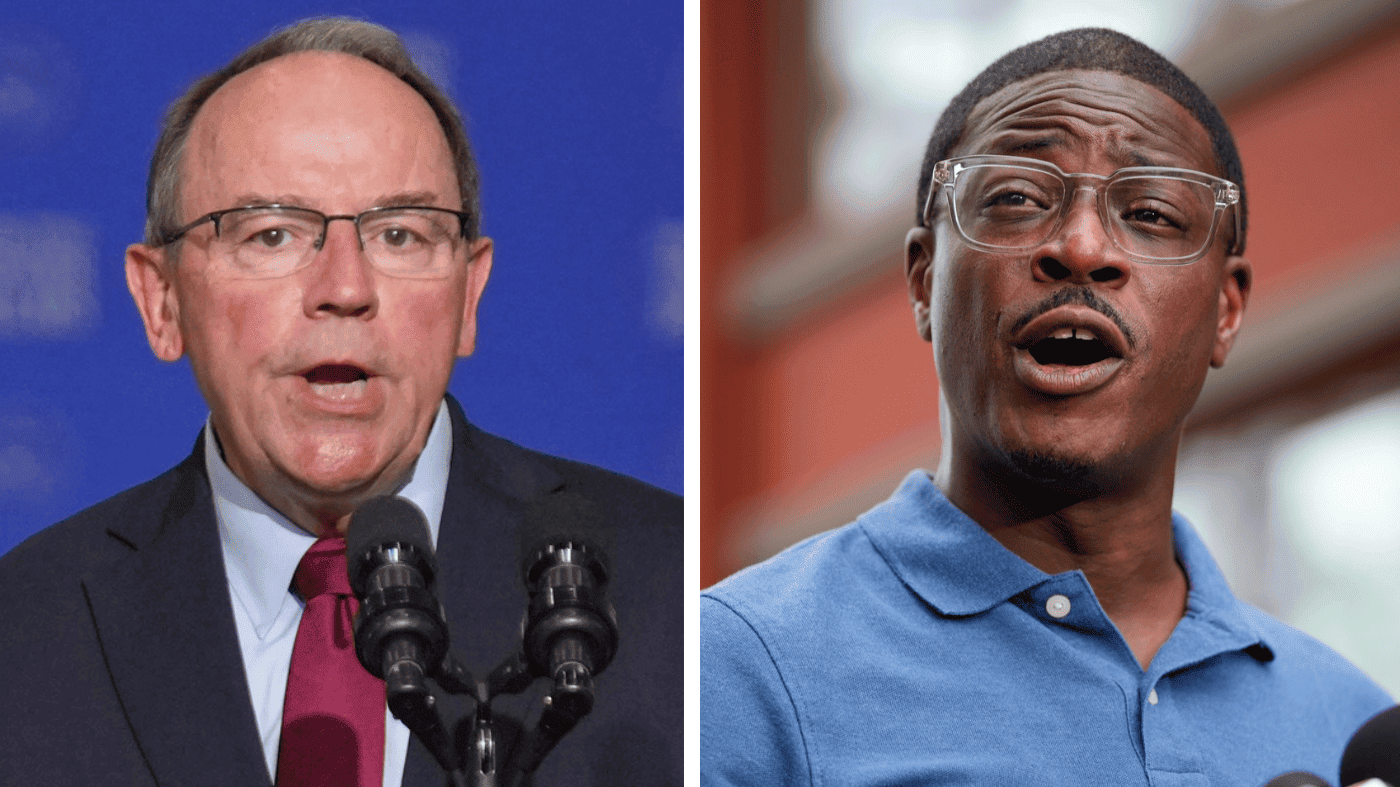
Florida Democratic Senate hopeful Angie Nixon is trying to have it both ways. A dues-paying member of the Democratic Socialists of America, Nixon told Bloomberg that she does not support abolishing prisons—because she wants to see her Republican opponent, incumbent Sen. Ashley Moody, behind bars.
The remark, which surfaced in a Bloomberg interview, exposes a tension at the heart of the DSA's platform: the group champions prison abolition for convicted criminals but appears eager to wield the carceral state against political adversaries. Nixon's comment suggests that for democratic socialists, prisons are not inherently unjust—they are simply reserved for the wrong people.

Nixon has accused Moody of stealing from children, a reference to a minor controversy involving taxpayer funds that were improperly routed to a nonprofit called Hope Florida. A grand jury declined to indict Moody and determined she was not responsible for the misdirection. That did not stop Nixon from using the episode to paint Moody as corrupt, even as she simultaneously rejects the DSA's call to dismantle the prison system.
The broader danger, critics argue, is that Nixon's brand of politics is not an outlier but a preview. If Democrats perform well in the upcoming midterms—and recent polling shows the party poised for significant gains, with states like Ohio and Iowa suddenly in play—the progressive wing will only grow more emboldened. The DSA's agenda, in this view, is merely a starting point.
Republicans are already seizing on the contrast. They point to Nixon's DSA membership as evidence that the Democratic Party is being pulled further left, even as its candidates try to soften their images for general election audiences. The dynamic is playing out in races across the country, from tight House and Senate contests to state-level fights over election rules.
Democrats, meanwhile, are navigating their own internal battles over institutional norms. In Maryland, a ballot measure on gerrymandering has become a test of the party's principles, while on Capitol Hill, Senate Democrats recently blocked a GOP data center bill over concerns about weak environmental standards. These fights underscore the broader ideological tug-of-war within the party.
Nixon's candidacy, however, offers a particularly stark example. She is running in a state that has trended Republican in recent cycles, and her DSA affiliation could be a liability with moderate voters. By distancing herself from prison abolition while calling for Moody's incarceration, Nixon appears to be attempting a balancing act: retain left-wing support while avoiding the most radical implications of her own platform.
Whether that strategy works remains to be seen. But for now, her comments have handed Republicans a ready-made attack line—and renewed scrutiny of the DSA's influence over Democratic candidates nationwide.