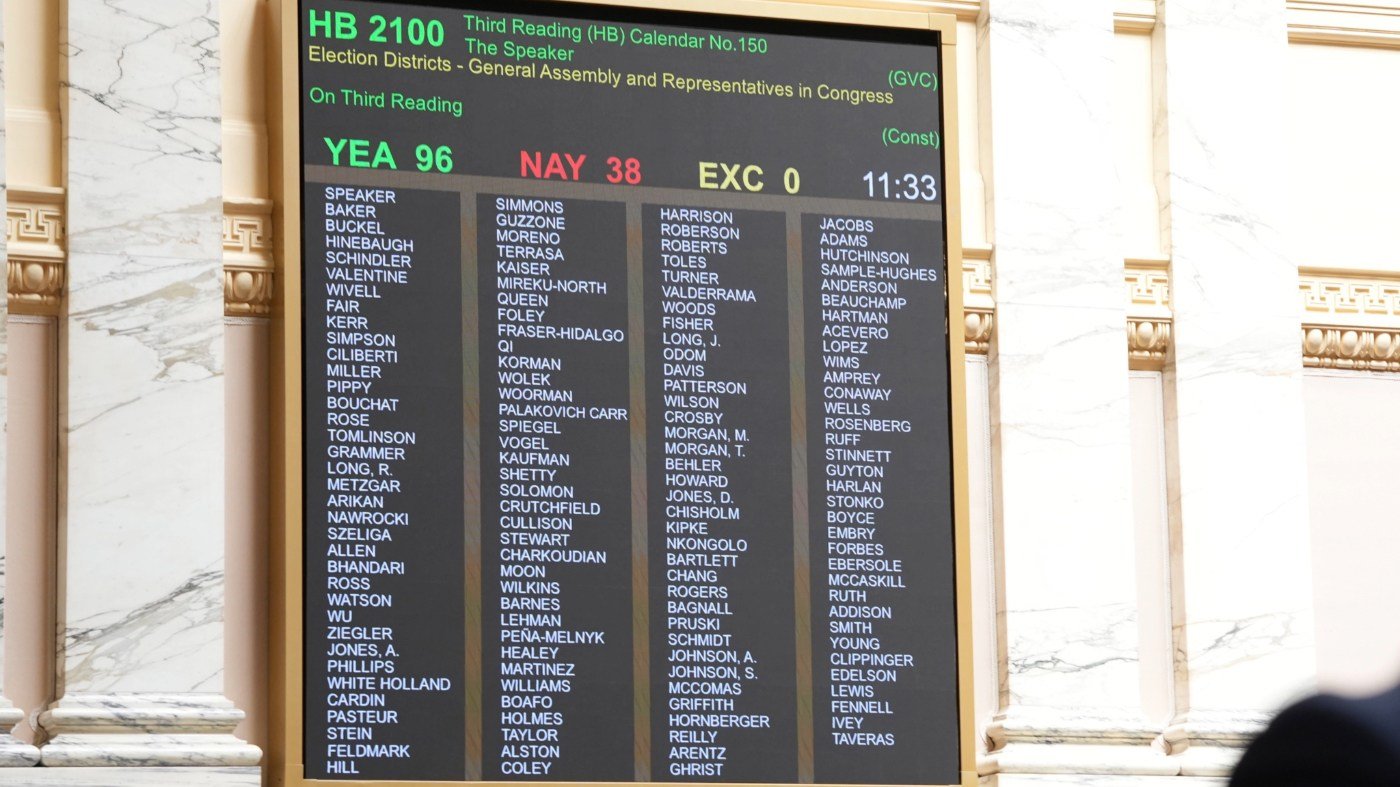
Maryland voters will decide in November whether to adopt a constitutional amendment that would effectively legalize gerrymandering, a move that could eliminate the state's last Republican congressional district. Question 3, as it appears on the ballot, is worded to obscure its true intent: it would strip away requirements that districts be compact, contiguous, and respect geographic boundaries.
If passed, the amendment could lead to absurd configurations, such as linking Cumberland in Western Maryland with Salisbury on the Eastern Shore—two communities separated by the Chesapeake Bay and nearly the entire width of the state. The result would be "polka-dot" districts, where distant neighborhoods are stitched together by narrow corridors to produce favorable voter mixes.

Democratic Governor Wes Moore and legislative leaders are urging voters to support the measure as a counter to President Trump's aggressive redistricting efforts. But their argument is undercut by the party's long history of attempting to gerrymander Maryland's sole Republican-held district, including as recently as 2022, when Trump was out of office and Joe Biden was president.
This is a false choice. Democrats do not need to gerrymander Maryland to oppose Trump. The party is poised to regain control of the House and is competing well in Senate races that once seemed out of reach. Their congressional majority does not hinge on Maryland's map.
Even if Question 3 passes, new maps would not take effect until the 2028 election, potentially giving Democrats a one-seat gain—a delegation that would be all-Democratic, sworn in just 17 days before Trump leaves office. That is hardly a decisive blow against the president.
There are signs that the tide may be turning against gerrymandering. In Indiana, Republican State Senate President Pro Tem Rodric Bray and 20 colleagues defied Trump by refusing to support pro-Republican redistricting, accepting the political cost. The Supreme Court also recently blocked Missouri's new Republican-gerrymandered map for the 2026 election, reinstating the 2022 version.
Maryland's proposal is more extreme than what other states have attempted. Texas, despite its redistricting, still sends some Democrats to Congress. California will return to an independent commission in 2030. But Maryland's amendment would permanently entrench gerrymandering, guaranteeing a one-party delegation far into the future.
Polling shows that most Marylanders are skeptical. A bipartisan poll found only 28 percent support, while a Democratic-only poll put support at 40 percent—still below the threshold for passage. Voters understand that gerrymandering is wrong.
Rejecting Question 3 would set a national precedent. It would demonstrate that not every state is willing to embrace the cynicism that has corrupted political representation. Maryland, an overwhelmingly Democratic state, could prove that principles matter more than partisan advantage.
As Democrats anticipate taking the Senate and narrowing the House gap, this is a moment to act with integrity. Colin Pascal, a retired Army lieutenant colonel and registered Democrat, is a founding member of Protect Maryland Votes, a nonpartisan group fighting the amendment. He argues that Maryland can lead the way toward a more representative and honorable politics.