The Justice Department is asking a federal appeals court to reinstate criminal charges against Kilmar Abrego Garcia, pushing back against a lower court's finding that the prosecution was likely retaliatory. In a filing Monday with the U.S. Court of Appeals for the 6th Circuit, DOJ lawyers called the district court's order “erroneous at every step.”
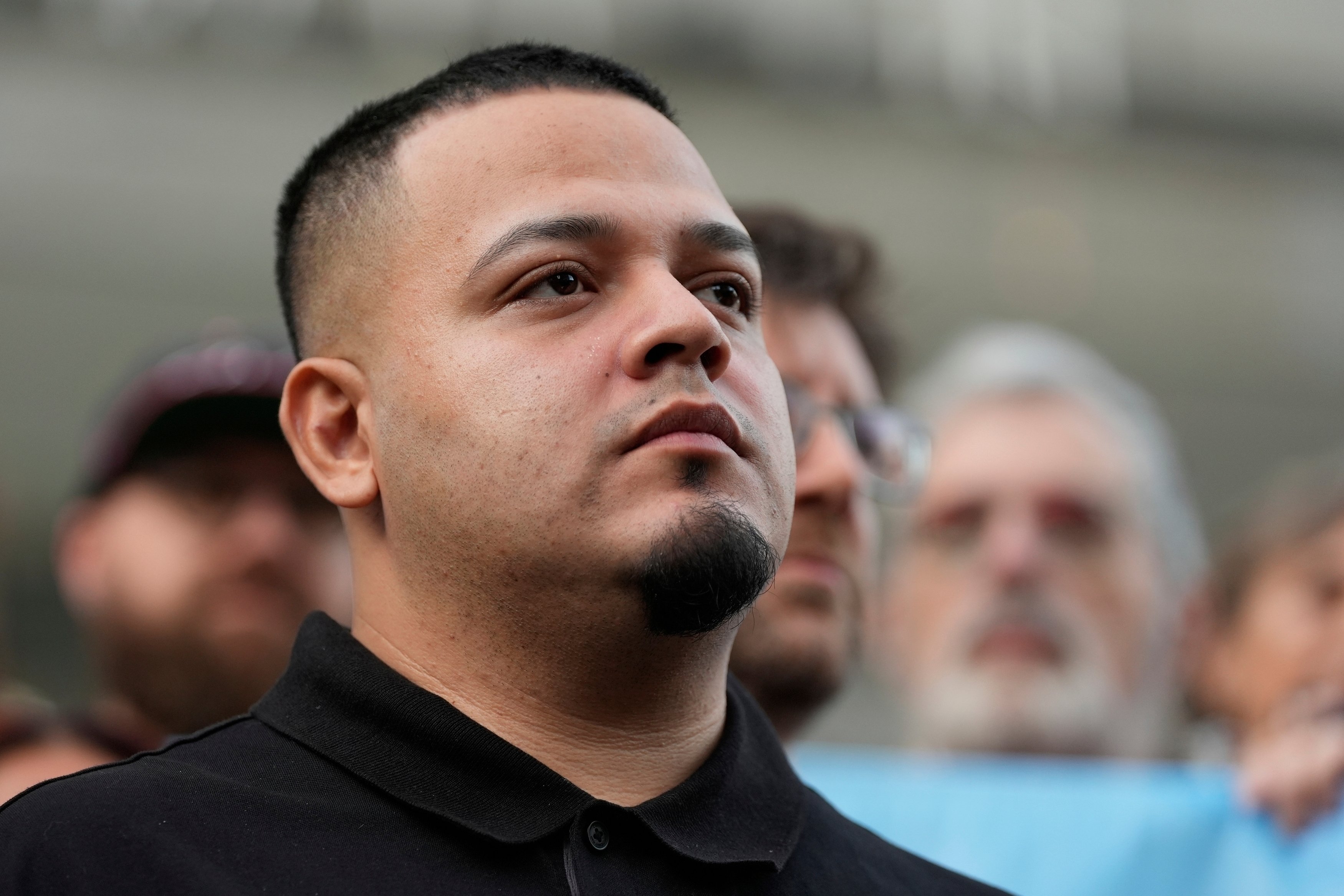
Abrego Garcia, a Salvadoran national, faces two counts of human smuggling tied to a 2022 traffic stop in Tennessee. He was pulled over by state Highway Patrol for speeding and was seen transporting several men without luggage. He has pleaded not guilty.
The charges came after Abrego Garcia challenged his deportation to a notorious megaprison in El Salvador under the Trump administration. The Supreme Court later ordered the administration to “facilitate” his return, and he reentered the U.S. in June 2025.
In its filing, the DOJ argued that the government had a legitimate interest in prosecuting Abrego Garcia after his court-ordered return. “The government had an obvious interest in protecting the public by prosecuting Abrego after courts ordered his return,” federal prosecutors wrote. They added that “there is nothing suspect about electing not to prosecute a criminal alien and instead remove them, but upon their court-ordered return to prosecute them for criminal conduct that poses a risk to public safety.”
U.S. District Judge Waverly Crenshaw ruled in May that the actions of DOJ officials, including public comments by Attorney General Todd Blanche, reflected “an abuse of prosecuting power.” The judge found the timing and circumstances of the charges suggested vindictiveness.
The DOJ rejected that characterization in its appeal, arguing that Blanche's “statements do not suggest animus” and that the charges were brought by career prosecutors. “The United States provided objective evidence that the charges were brought for legitimate reasons by a decision maker who incontestably harbored no animus,” the filing said. It accused the district court of “relying on speculation rather than objective proof, second guessing a prosecutor's actions based on its own subjective reasoning.”
The case has drawn attention amid broader legal battles over executive authority and immigration enforcement. The Supreme Court's recent rulings on presidential power have been a flashpoint, as seen in challenges to expansive White House projects and defiance of court orders. Abrego Garcia's lawyers have not yet responded to the DOJ's filing.
The 6th Circuit will now decide whether to reinstate the charges. Legal analysts say the outcome could hinge on whether the appeals court agrees that the prosecution was a reasonable response to public safety concerns rather than a punitive measure for challenging deportation.
The case also intersects with ongoing debates over prosecutorial discretion and immigration policy. Some conservatives have argued that the government should be free to choose between deportation and prosecution, while civil liberties groups have warned against using criminal charges to punish those who assert their rights.
The Hill has reached out to Abrego Garcia's attorneys for comment.