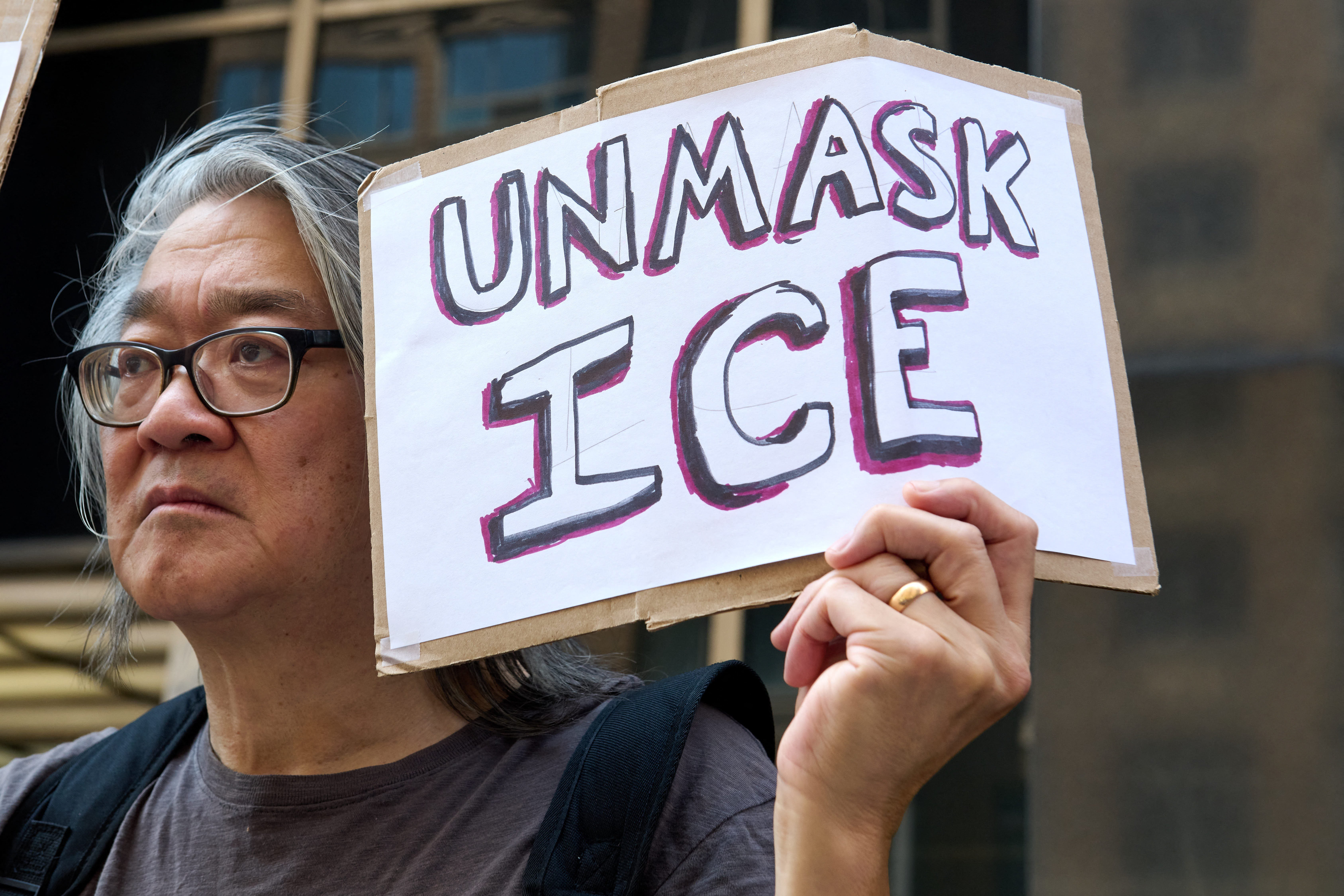
The Justice Department has taken legal action against the state of Maryland and two of its largest counties over newly enacted restrictions that bar federal law enforcement officers from wearing masks while on duty and require them to identify themselves upon request. The lawsuit, filed the same day the measure went into effect, contends that the state and local governments are overstepping their authority by attempting to regulate federal personnel, including agents with U.S. Immigration and Customs Enforcement (ICE).
The complaint argues that such regulations run afoul of the Supremacy Clause of the U.S. Constitution, which establishes that federal law and the operations of the federal government take precedence over state and local statutes. The Justice Department is seeking to block enforcement of the law, which applies to all law enforcement officers within Maryland's borders but has particular implications for federal agents whose work often involves sensitive operations that may require anonymity.
Under the new state law, officers are prohibited from wearing face coverings while performing their duties, except in certain operational scenarios or when using protective equipment. Additionally, they must display their identification on the outermost layer of their clothing and, if asked, provide their names verbally. Violations carry civil fines of up to $1,500 per incident, according to the court filing.
The federal government is also challenging similar restrictions in Montgomery and Prince George's counties. The Prince George's County ordinance is notably harsher, making a violation a misdemeanor punishable by up to six months in jail and a fine as high as $5,000.
Assistant Attorney General Brett Shumate, who heads the Justice Department's Civil Division, said in a statement Thursday that the authority to dictate what equipment federal officers may wear lies solely with the federal government. "The Federal Government, not state and local governments, gets to decide which equipment federal officers may or may not wear when performing their official duties," Shumate said.
The department argues that masks and the ability to keep personal identifying information private are essential to protecting agents from harassment and doxing—the malicious public exposure of personal details—and to preventing suspects from recognizing officers in future operations. The complaint cites specific incidents, including an August case in which a Baltimore-area deportation officer and the officer's spouse were doxed online, illustrating the real-world risks that such restrictions could exacerbate.
The Justice Department made clear that it has no intention of complying with the challenged laws. "Federal law enforcement agents and officers cannot and will not comply with the Challenged Laws, which are unconstitutional and recklessly disregard officer safety, public safety, and federal operational needs," the department's attorneys wrote in the complaint.
This legal clash comes amid broader tensions between the federal government and state and local jurisdictions over immigration enforcement and public safety policies. The outcome of this case could have significant implications for how federal agencies operate in states that seek to impose their own rules on federal personnel. For more on how Maryland has approached contentious governance issues, see Maryland's Question 3 on gerrymandering and the related debate over democratic principles.
Meanwhile, the Trump administration has been pursuing other federal initiatives, such as an AI-powered portal for federal services, which underscores the administration's approach to modernizing government operations despite legal and political challenges.