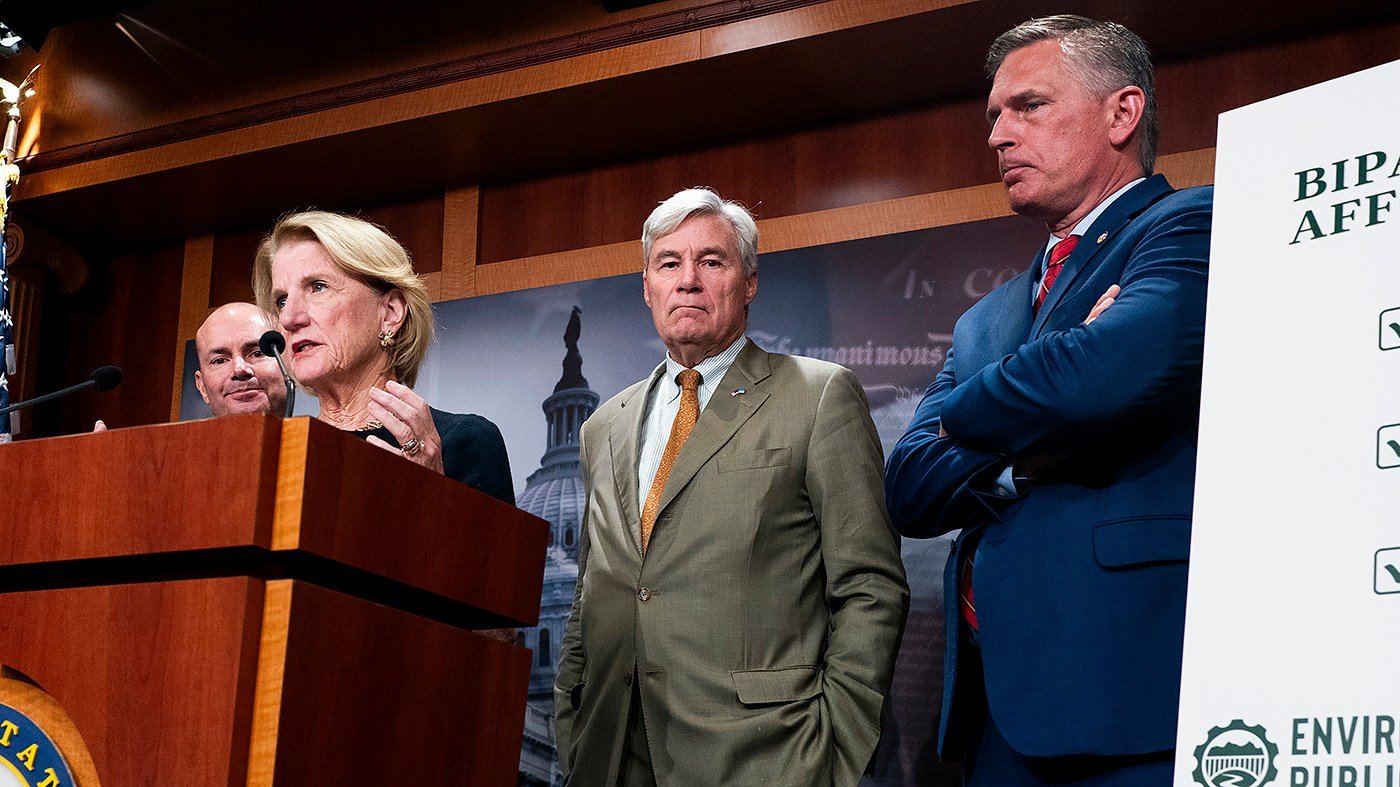
A bipartisan coalition of senators this week rolled out sweeping permitting reform legislation designed to accelerate construction of energy infrastructure and other major projects, setting up a high-stakes fight over environmental regulations and legal challenges.
The bill, dubbed the Bipartisan American Affordability and Jobs Act (BAAJA), has drawn support from leaders in both parties, though its path to becoming law remains uncertain. At its core, the measure seeks to shorten the timeline for approving projects by limiting environmental reviews and constraining lawsuits that can delay construction for years.

One of the most contentious provisions would require legal challenges to be filed within 150 days of a project's approval. It would also restrict who can sue, limiting standing to those who participated in public comment periods and those who can demonstrate direct harm. Backers argue this will prevent late-stage litigation from derailing projects that have already cleared regulatory hurdles. Opponents counter that the short window could shut out legitimate complaints and undermine public oversight.
The legislation also targets state authority under the Clean Water Act, making it harder for states to block pipelines and other projects that cross their waters. It would narrow the reasons states can cite to deny permits, a change that supporters say will prevent parochial interests from stalling nationally significant infrastructure. Similarly, the bill aims to curb the Environmental Protection Agency's ability to veto projects, a power that critics say has been used arbitrarily.
"Current law really gives the EPA administrator more or less carte blanche to cancel projects," said John Nagle, federal policy manager at the libertarian-leaning Pacific Legal Foundation. He praised the bill for reforming the veto authority to provide "the certainty necessary to move forward."
But environmental groups are sounding alarms. Brett Hartl, government affairs director at the Center for Biological Diversity, warned that the changes would make it impossible to stop projects like Alaska's Pebble Mine, which the EPA has fought for decades to block due to its threat to salmon runs. "You would never be able to stop Pebble Mine in the future because of the changes made today," Hartl said.
The bill also modifies the Endangered Species Act, including a new definition of "best available science" that Hartl argues sets an impossibly high bar for protecting threatened species. "It's impossible to meet these standards," he said.
These provisions have sparked opposition from some Democrats and environmentalists. Rep. Jared Huffman (D-Calif.), the top Democrat on the House Natural Resources Committee, wrote on X that Democrats should renegotiate after the election, saying, "We can't throw states, tribes, impacted communities, and threatened and endangered wildlife under the bus."
Supporters, however, insist the reforms are essential to modernizing the nation's infrastructure. Nagle noted that permitting a mine in the U.S. can take nearly three decades, calling the bill a crucial step to "make it easier to build things in America."
The legislation also includes measures to boost power line construction, a priority for Democrats who see it as key to expanding renewable energy. It would allow the Federal Energy Regulatory Commission (FERC) to approve transmission lines if states fail to act, and require regional grid planners to adopt a consolidated process to reduce backlogs.
"The bill overall has a particularly strong impact on getting transmission built," said Rob Gramlich, president of Grid Strategies LLC. He predicted "very significant clean energy growth" if the bill passes, adding that the threat of FERC intervention could push states to approve projects more quickly.
As Congress weighs the package, the debate underscores the delicate balance between accelerating energy projects and preserving environmental safeguards. With data centers and other power-hungry facilities driving up electricity demand, the outcome could shape the nation's energy landscape for years to come.