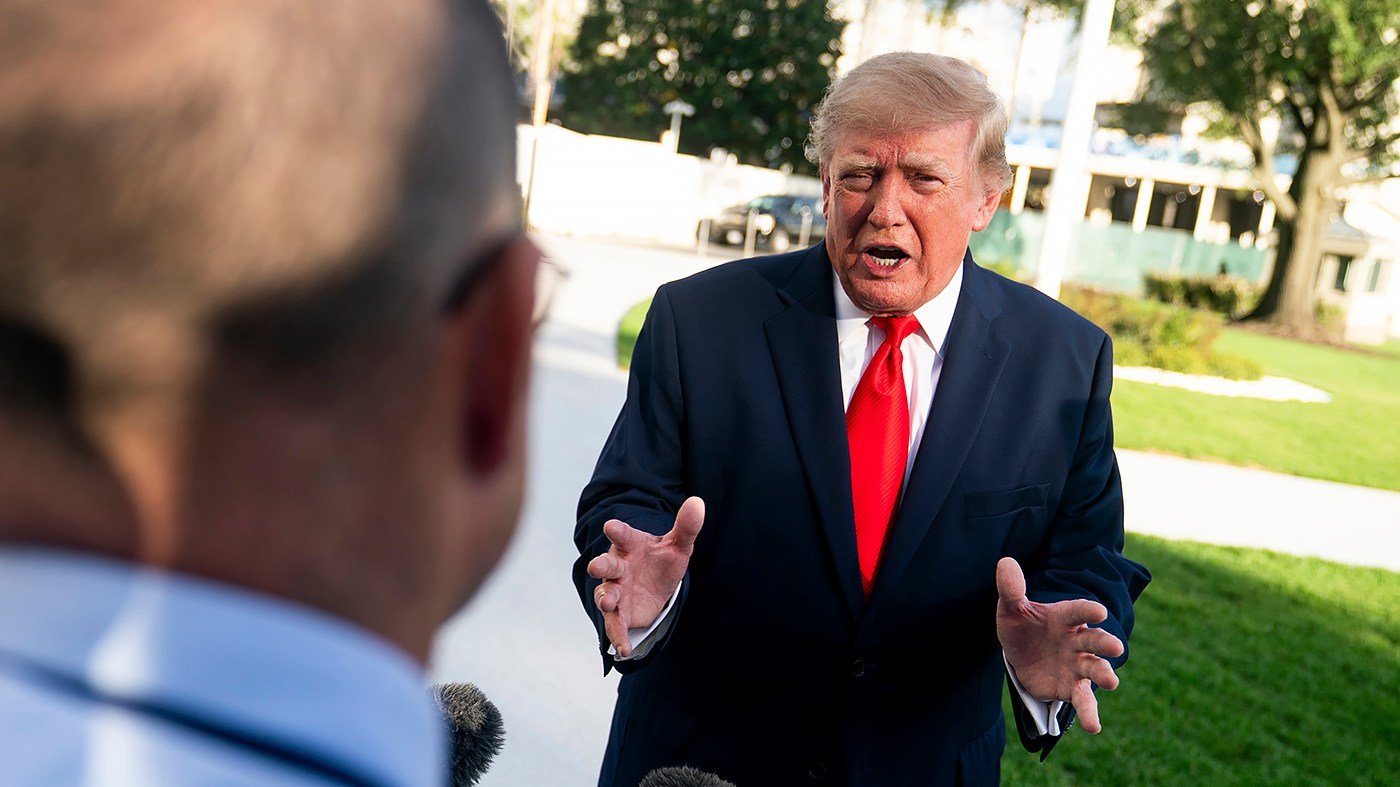
The Department of Justice issued a formal apology late Monday after controversial advertisements featuring President Trump continued to run, even though a federal judge had temporarily blocked them. The apology came in a court filing, where a DOJ attorney acknowledged that the ads were still on the airwaves despite the restraining order.
The legal battle began when Common Cause, along with a coalition of watchdog groups and a congressional candidate, filed a lawsuit against the Trump administration. They argued that using federal funds to produce and air the ads violated campaign finance laws, as the spots appeared to promote the president's re-election efforts. The plaintiffs secured a temporary restraining order on Sunday, but by Monday the ads had not yet been pulled, prompting complaints to the court.
In the filing, the DOJ attorney wrote, "The undersigned apologizes to the Court and the plaintiffs." The attorney explained that the delay was due to some federal employees not having seen the judge's order until the holiday Monday, which slowed the process of canceling the already-purchased ad slots.
The attorney further clarified the administration's understanding of the order: "Defendants understand that they are enjoined from using, disbursing, or transferring funds appropriated to the Department of Homeland Security to develop, create, disseminate, place, distribute, publish, or air the challenged advertisements; Defendants understand that they shall cancel or cause to be cancelled any slot, placement, reservation, or arrangement for the airing or dissemination of the challenged advertisements."
The Democratic National Committee (DNC) has also filed a separate lawsuit over the ads. The spots feature a montage of the president with quotes from speeches criticizing communism, while also taking credit for what he describes as the largest tax cuts in history. Critics have pointed out that the ads blur the line between official government communication and campaign messaging, a concern that has been amplified by the broader political scandals swirling around the midterm campaign trail.
The controversy has drawn sharp rebukes from Democrats and government ethics watchdogs, who see the ads as an abuse of taxpayer money for partisan purposes. The situation has also been complicated by the fact that the artist JMSN, whose song "Love Me" is used in one of the ads, has said the track was used without his permission.
This incident adds to the growing list of legal and ethical challenges facing the administration, which has been under scrutiny for its handling of a Russian diesel deal that has sparked GOP backlash ahead of the elections. The DOJ's apology, while rare, underscores the administration's vulnerability to court rulings that could constrain its actions.
As the legal proceedings continue, the plaintiffs are seeking a permanent injunction against the ads, and the DNC's separate case is also moving forward. The outcome could set a precedent for how federal funds are used in future administrations, particularly in the run-up to elections.
With the midterms just months away, the ad controversy is likely to remain a flashpoint, as Democrats seize on it to argue that the president is prioritizing his own political interests over the public good. Meanwhile, the administration's defense, that the ads are informational and not campaign-related, will be tested in court.