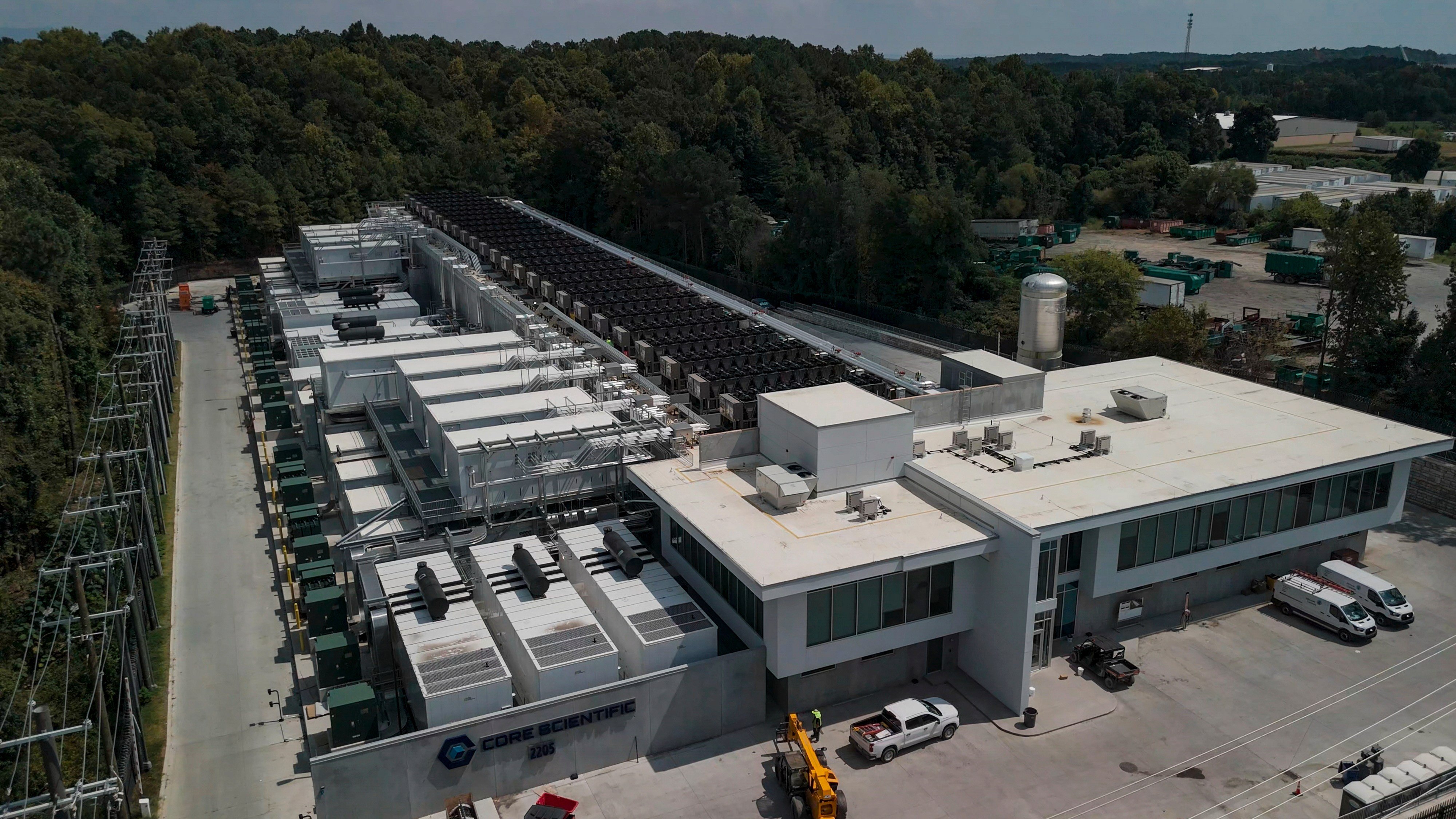
The rapid expansion of artificial intelligence and data centers has sparked a new wave of political anxiety, but a former Colorado congressman argues that much of the concern is being deliberately distorted for ideological ends.
In a recent analysis, Scott Tipton, who represented Colorado's 3rd district from 2011 to 2021 and served on the House Agriculture Committee, acknowledges legitimate questions about water, energy, and land use from farmers and ranchers. However, he contends that an activist faction is using these concerns to push a broader anti-market agenda, masking their opposition to private enterprise and American technological leadership.

Water Use in Perspective
Tipton cites data from Lawrence Berkeley National Laboratory showing U.S. data centers consumed about 66 billion liters of water in 2023—roughly 47.8 million gallons per day. While that number sounds large, it pales in comparison to agricultural irrigation, which the U.S. Geological Survey estimated at 73.2 billion gallons per day in 2015. Data centers use only about 0.065 percent of the water that agriculture does. Moreover, many facilities employ closed-loop systems that minimize continuous water withdrawal, and actual consumption varies by climate and technology.
Energy Demands and New Policies
On the energy front, Tipton acknowledges that data centers require significant power, but he points to a national policy that requires large new electricity consumers to pay for their own infrastructure. The Trump administration's Ratepayer Protection Pledge—now advancing through Congress as the Ratepayer Protection Act, sponsored by Rep. Gabe Evans (R-Colo.)—ensures that tech companies, not households, bear the cost of new grid connections and generation, even if they underuse their contracted capacity.
Beyond the grid, Tipton highlights emerging solutions like modular nuclear reactors, waste heat capture, and advanced batteries, which can support on-site micro-grids and reduce pressure on local utilities.
Land Footprint Minimal
Regarding land use, a large data center (over 1 GW) might occupy 500 to 800 acres, according to real estate firm JLL. With the Department of Energy projecting up to 55 GW of additional capacity by 2030, that translates to roughly 44,000 acres—just 0.005 percent of America's 873.95 million farmland acres.
Economic and Agricultural Benefits
Tipton argues that data centers can be an economic lifeline for rural communities, creating jobs and injecting capital. He also points to a new Council for Agricultural Science and Technology study showing AI's transformative role in agriculture, from precision irrigation and pest detection to livestock health monitoring and yield forecasting.
“For our farmers and ranchers, AI can be indispensable,” Tipton writes, emphasizing that the technology is now foundational to the food system.
The former congressman warns that if the U.S. cedes leadership in AI and data infrastructure, other nations—potentially adversarial ones—will fill the void. He urges Americans to embrace free-market principles and the rule of law, and to reject political narratives that distort the facts.
Related coverage: Congress moves on data center rules and AI development continues at breakneck pace.