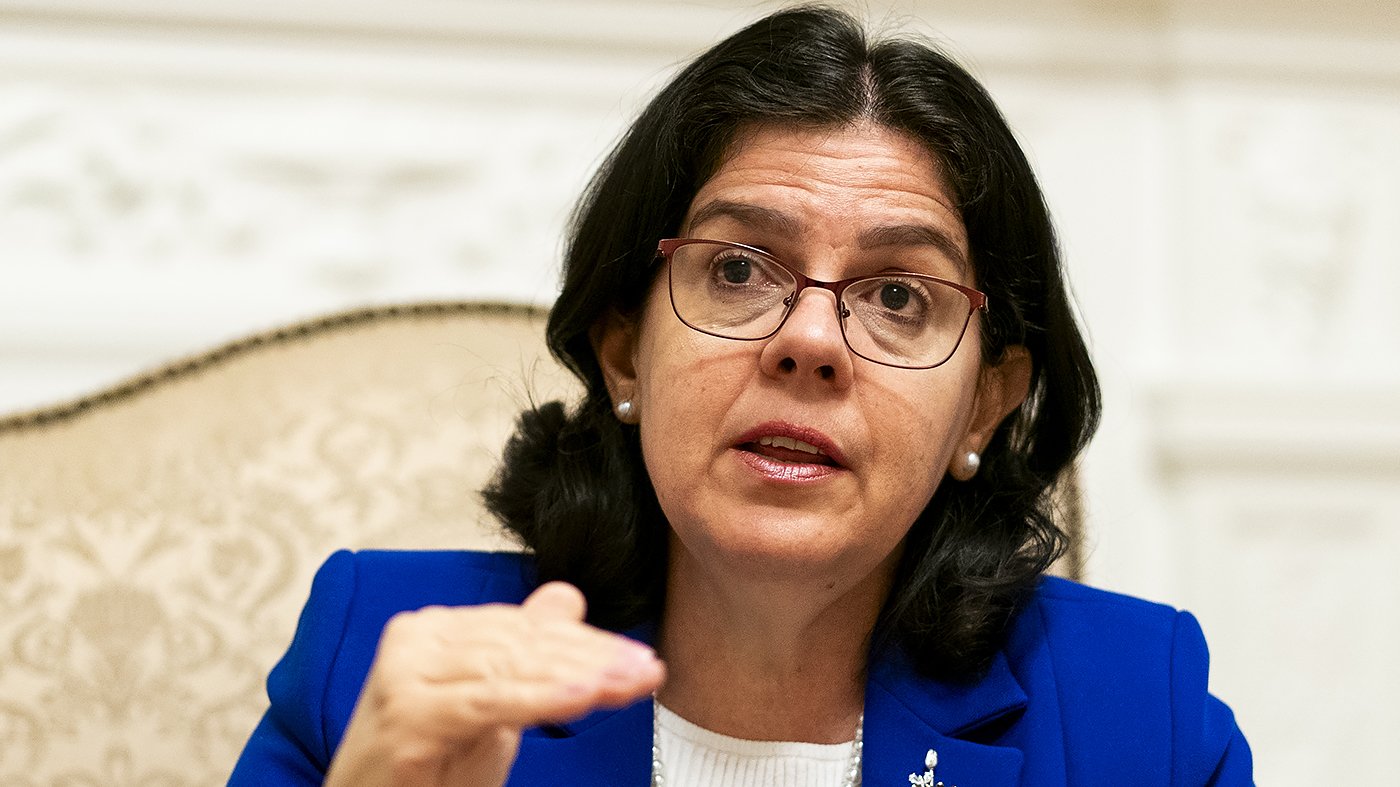
Cuba's top diplomat in the United States delivered a stark warning this week: Havana will not cross its red lines on sovereignty and self-determination, even as the Trump administration ramps up pressure and hints at military action. Ambassador Lianys Torres Rivera, in an exclusive interview with The World Signal, said negotiations have made “no progress” and that Cuba is preparing for the worst.
The interview came at a pivotal moment. On Thursday, Cuba's energy minister announced the country had completely exhausted its fuel supplies due to the US blockade, triggering widespread protests in Havana after weeks of extended blackouts. The US publicly acknowledged it had made “numerous private offers” of $100 million in aid, but Torres Rivera dismissed the overtures as insufficient to address the root crisis.
CIA Director John Ratcliffe visited Cuba on Thursday, meeting with officials and warning that the window for talks “will not stay open indefinitely.” Ratcliffe added that “the Cubans should have no illusions that the president will not enforce redlines.” Torres Rivera countered that Cuba's independence is not up for negotiation. She acknowledged the protests over power outages are understandable but cautioned against reading them as a sign of weakening resolve. “When they are enduring 20 hours of blackouts, they have grievances, and they express it,” she said. “But the US should not mistake that to mean the Cuban people won't defend themselves from US aggression, won't defend our homeland from an invasion.”
Speaking at the Cuban Embassy in Washington, Torres Rivera described the current moment as “one of the most, if not the most difficult times in the bilateral relation.” The Cuban government is running invasion drills, she confirmed, echoing President Miguel Díaz-Canel's recent statement to NBC News that the island “will defend ourselves, and if we need to die, we'll die.” “We are preparing for this,” Torres Rivera told The World Signal. “Now we are doing more than ever. We cannot be naive. We are preparing to defend ourselves. Our minister said it could be a big mistake, a bloodbath. We don't want Cubans dying in Cuba, nor any American soldier.”
The backdrop to this standoff includes a reported plan by the Trump administration to indict former Cuban President Raúl Castro on charges related to the shooting down of planes 30 years ago, a move that mirrors the process used against Venezuela's Nicolás Maduro before his capture. President Trump has floated a “friendly takeover” of what he calls a “failed nation,” while Secretary of State Marco Rubio has demanded that Cuba not only change its economic policies but move away from the current regime, which he labels “incompetent.”
Rubio, during a trip to China, told NBC News: “It's in our national interest to have a prosperous Cuba, not a failed state 90 miles from our shores. We want Cubans not to have to leave that island to be successful. But they can't because the current model is broken. It'll never change as long as the people that are there now are running it.”
Cuba has taken some steps to open its economy, including allowing Cubans abroad to invest and granting small businesses greater autonomy. But these moves have not altered the US stance. Torres Rivera said Cuba remains “discreet” about ongoing negotiations and refused to specify where it might compromise. “The only exception is our sovereignty, independence, and right to self-determination,” she said. She also stressed that Cuba is open to talks on drugs and human trafficking, but not on its political system.
The US has consistently pressed Cuba to release political prisoners, guarantee press freedoms, and hold multi-party elections. The proposed $100 million aid package would include free satellite internet for all Cubans—reportedly via Elon Musk's Starlink for two years—along with other assistance. But Torres Rivera was blunt: “We don't see the need for a war or any military action from the US towards Cuba, simply because we are not a threat to the US in any way. Cuba has done nothing to put in danger the US, your way of life, your businesses, your national security. We are a small island that wants only to be left alone to decide our future.”
As the standoff deepens, the question remains whether Washington will follow through on its threats or find a diplomatic off-ramp. For now, Havana is bracing for the worst, even as it insists it wants peace.