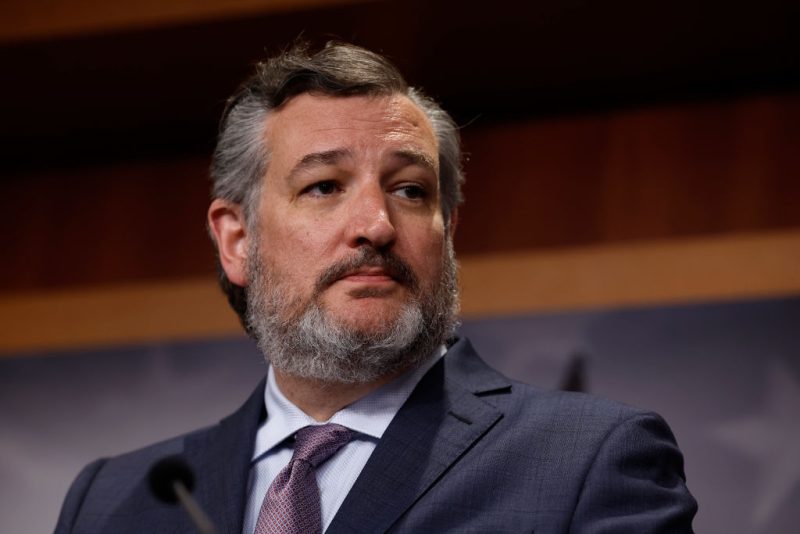
Senator Ted Cruz revealed Wednesday that former President Donald Trump repeatedly and earnestly discussed appointing him to fill Supreme Court vacancies during his first term, but the Texas Republican declined each time, citing his desire to remain in political combat rather than adopt judicial restraint.
Three Declined Offers
During an interview with Wall Street Journal Opinion Live, Cruz stated, "In the first Trump term, the president spoke to me seriously about all three vacancies, and three times I said no." He explained his refusal was rooted in a fundamental preference for the legislative and policy battles of elected office over the more removed role of a federal judge. "I don't want to be out of the arena of the political battle," Cruz said, emphasizing what he sees as a pressing need for fighters in Congress.
Future Vacancies and Trump's Endorsement
The remarks come as speculation grows about potential Supreme Court openings in a second Trump term, should conservative Justices Clarence Thomas or Samuel Alito retire. Trump himself has publicly praised Cruz as a potential nominee. At a February event in Texas, Trump suggested Cruz would receive unanimous Senate confirmation, quipping, "They want to get him out of there," in reference to Democratic senators.
Trump successfully appointed three justices—Neil Gorsuch, Brett Kavanaugh, and Amy Coney Barrett—during his first term and has indicated Cruz fits a similar conservative mold. However, despite a strong legal background that includes serving as Texas Solicitor General and holding positions in the George W. Bush Justice Department, Cruz maintains the bench is not his calling.
Cruz's Rationale: Policy Over Gavel
"I don't want to be a judge. A principled federal judge stays out of policy fights and stays out of political fights. If I were a judge, I would do that. I don't want to do that," Cruz stated unequivocally. He argued his impact is greater as a legislator, pointing to specific policy victories like school choice legislation and so-called "Trump accounts" that he authored and fought to pass. "If I were a judge, neither one of those would exist," he noted.
Cruz positioned himself as a necessary warrior for conservative principles in Congress, stating the institution needs "principled free market conservatives who know how to fight and know how to win." His goal, he said, is to help nominate and confirm "dozens, hundreds of principled constitutionalist judges" rather than become one himself.
Broader Political Context
This disclosure occurs amid a complex political landscape for Trump's agenda. While he reshaped the Supreme Court, parts of his policy platform, such as certain tariff measures and challenges to birthright citizenship, have faced judicial skepticism or been struck down, despite the Court's 6-3 conservative majority. Cruz's comments underscore a strategic division of labor within the Republican coalition, between those who shape policy from Congress and those who interpret law from the bench.
The senator's focus on legislative battles also aligns with ongoing contentious hearings over budget priorities and contrasts with other figures in Trump's orbit who have faced legal consequences for their political actions, such as the recent disbarment of attorney John Eastman. As the political season intensifies, figures like Cruz are calculating where they can be most effective, whether in crafting legislation or potentially ascending to the high court.