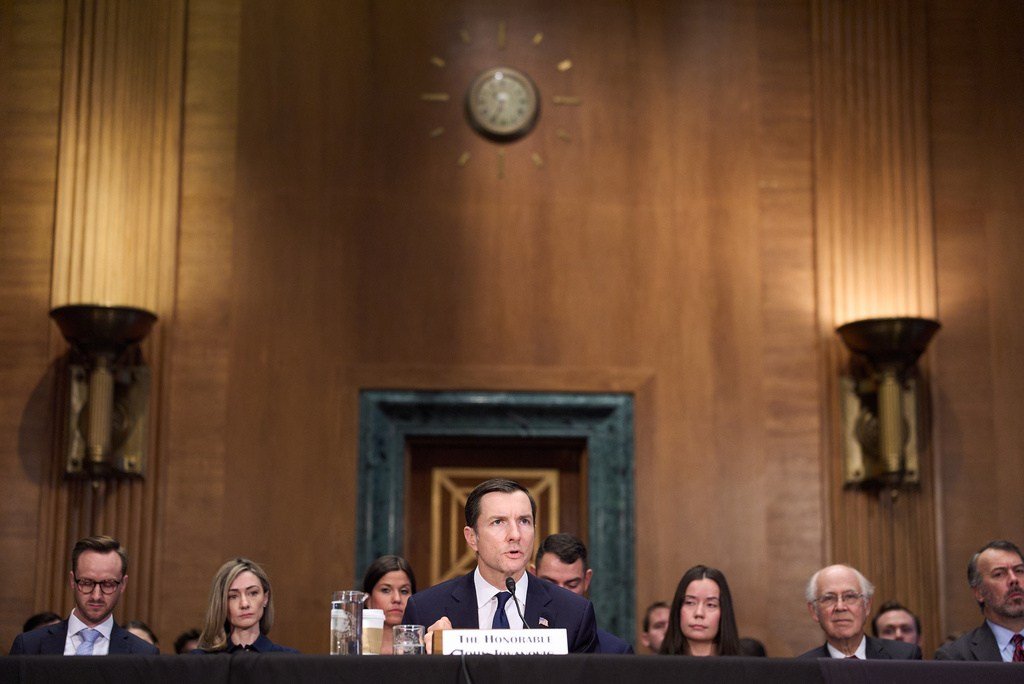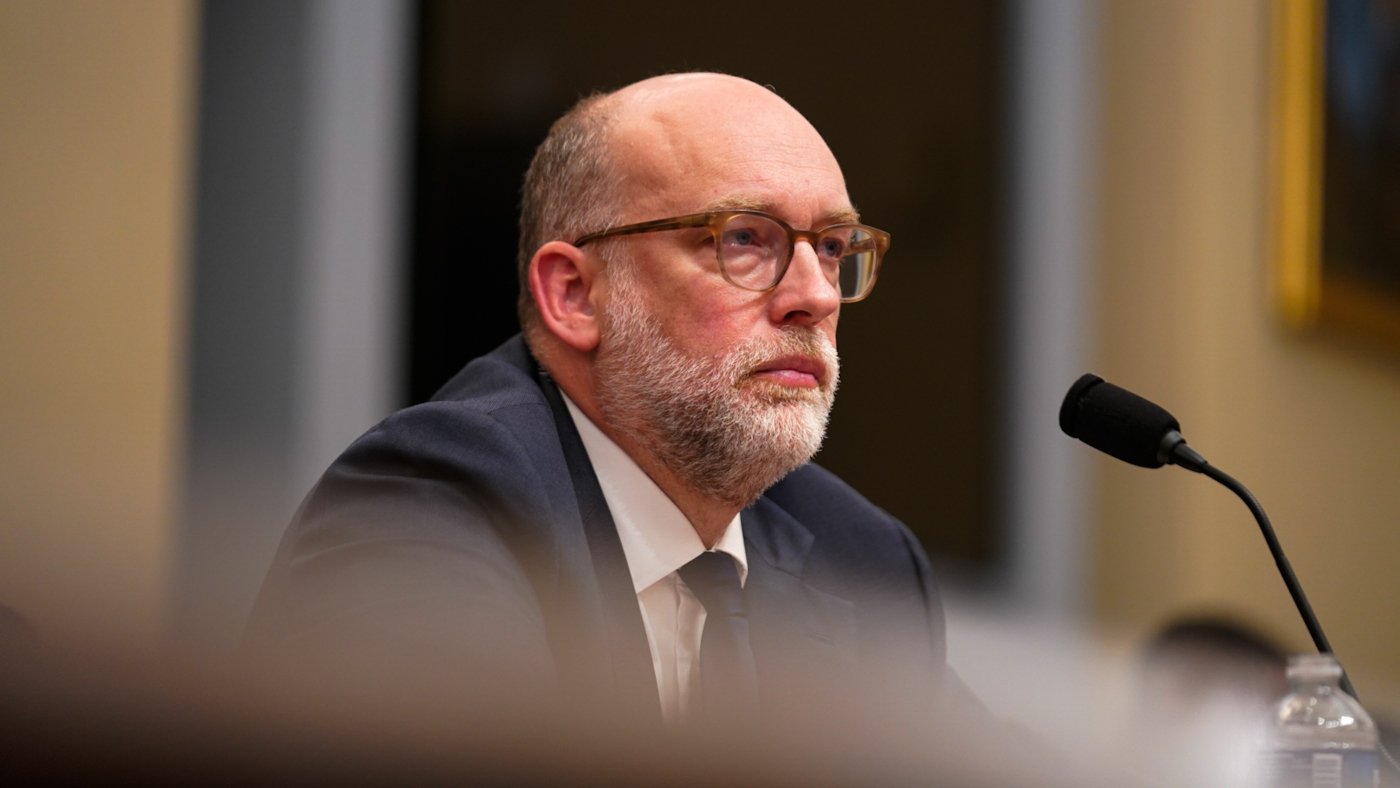
White House Budget Director Russell Vought faced sharp Democratic criticism during a contentious House Budget Committee hearing Wednesday, defending the Trump administration's fiscal priorities amid questions about military spending, domestic cuts, and the economic impact of recent legislation.
The hearing followed the administration's release of its fiscal year 2027 budget proposal, which calls for a 40 percent increase in defense spending alongside a 10 percent reduction in non-defense discretionary programs. Democrats on the committee challenged Vought on multiple fronts, including cuts to social programs and the escalating financial burden of the ongoing conflict with Iran. Republicans uniformly defended the administration's approach, characterizing it as necessary fiscal discipline.
Legacy Legislation Dominates Debate
While nominally focused on the future budget, much of the hearing centered on the sweeping tax and spending package President Trump signed into law last summer. Democrats highlighted Congressional Budget Office projections that the legislation would add $3.4 trillion to the federal deficit through 2034. Ranking Member Brendan Boyle (D-Pa.) asserted the law "eliminates" health coverage for millions, citing CBO estimates that provisions affecting the Affordable Care Act marketplace would leave 2.1 million more Americans uninsured by 2034.
Progressive Representative Pramila Jayapal (D-Wash.) condemned the package as primarily benefiting wealthy Americans and corporations. "It is not beautiful to strip health care for millions of Americans," she stated. This criticism comes as Democrats push for tax reforms targeting high earners.
Republicans presented a starkly different assessment, celebrating the law's tax provisions on what they noted was Tax Day. Representative Marlin Stutzman (R-Ind.) said the average taxpayer in his state was seeing a $3,037 reduction, calling it "real money in their pockets." He praised specific deductions, including for auto loan interest, as particularly significant for his constituents. Representative Addison McDowell (R-N.C.) countered Democratic claims that the law favored billionaires, instead criticizing the Biden-era American Rescue Plan for its projected $1.8 trillion deficit impact.
War Costs Versus Domestic Priorities
Democratic members repeatedly questioned the administration's budgetary trade-offs, particularly the rising cost of military engagement with Iran against proposed reductions in domestic programs. Representative Bonnie Watson Coleman (D-N.J.) accused the administration of prioritizing a "war of choice" over initiatives like economic development and medical research, noting a proposed $5 billion cut to the National Institutes of Health.
Vought rejected the characterization of the conflict, aligning with administration officials who frame it as necessary to prevent Iran from obtaining nuclear weapons. The financial scale is substantial: Pentagon officials recently informed lawmakers the war cost over $11.3 billion in its first six days alone, with the White House reportedly considering an $80 to $100 billion supplemental funding request. Harvard public policy professor Linda Bilmes has projected total costs could reach $1 trillion.
Representative Becca Balint (D-Vt.) highlighted this contrast, questioning why "we can continue to spend money on foreign wars and yet we cannot find a solution to the fact that people can't afford health care." The administration's budget would raise overall defense spending to a record $1.5 trillion, including substantial increases for munitions production.
Broader Political Context
The hearing occurred amid broader political tensions. Vought has been a consistent defender of the administration's fiscal vision, recently articulating the rationale behind the proposed defense surge and domestic reductions. Meanwhile, the administration faces scrutiny on other fronts, including President Trump's stated intention to reshape the Federal Reserve Board and ongoing Justice Department controversies.
Vought is scheduled to appear before the Senate Budget Committee on Thursday, where he will likely face similar lines of questioning. The House hearing underscored the deep partisan divide over federal spending priorities, deficit management, and the long-term economic impact of the administration's signature legislative achievement, setting the stage for continued conflict as the budget process advances.