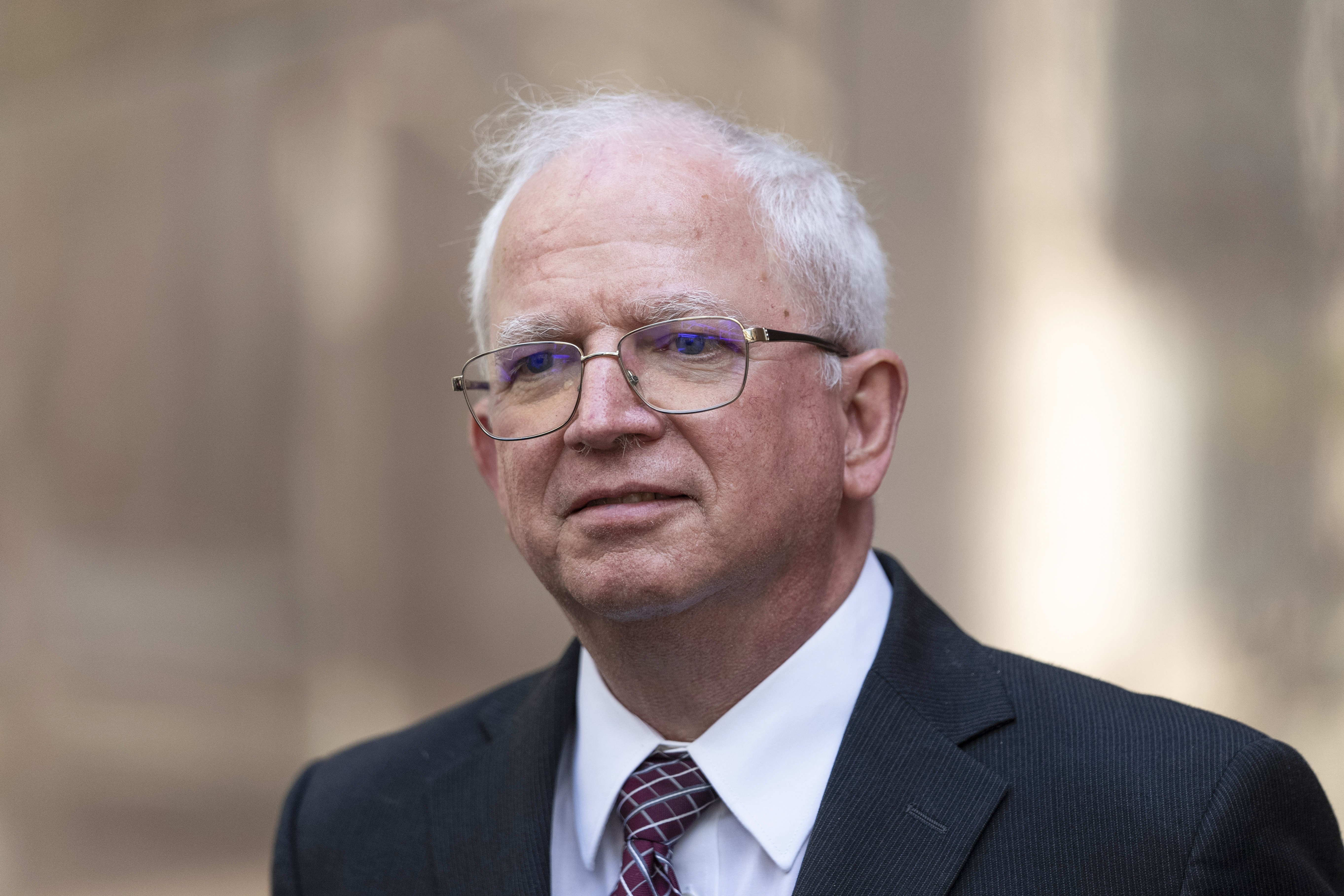
The California Supreme Court has formally disbarred attorney John Eastman, a principal legal architect behind efforts to overturn the 2020 presidential election results in favor of Donald Trump. The court's order, issued Wednesday, marks the definitive end of Eastman's ability to practice law in the state.
Court Rejects Final Appeal
The state's highest court declined to review Eastman's appeal of a lower court's recommendation for disbarment, instead issuing a direct order to strip him of his license. A terse entry on the case docket states: "The court orders that John Charles Eastman...is disbarred from the practice of law in California and that Respondent's name is stricken from the roll of attorneys." The court also imposed a $5,000 sanction payable to the State Bar of California Client Security Fund.
Basis for Disciplinary Action
The California State Bar sought Eastman's disbarment based on findings that he made "false and misleading statements" regarding alleged election fraud in the 2020 contest. His legal strategy, which sought to subvert results in several key states, relied on the use of alternate slates of electors and pressured then-Vice President Mike Pence to reject legitimate electoral votes. Eastman authored memos that fueled this pressure campaign against Pence.
In 2024, State Bar Judge Yvette Roland found Eastman culpable on 10 of 11 disciplinary counts. In her decision, she cited his "lack of remorse and accountability," stating it suggested a likelihood of future unethical conduct. A three-judge review panel of the State Bar Court later upheld that decision. Notably, one count related to a speech he gave on January 6, 2021, which the Bar connected to the subsequent Capitol riot, was dismissed.
Broader Legal and Political Context
Eastman's disbarment occurs against a backdrop of ongoing legal scrutiny for figures involved in post-election maneuvers. While a separate Justice Department effort seeks to overturn certain January 6 sedition convictions, Eastman's discipline is a state administrative matter. He has also faced criminal charges alongside Trump in Georgia—a case now dismissed—and with other allies in Arizona, where proceedings are currently paused.
Last year, Eastman was among a group pardoned by Trump "for certain offenses related to the 2020 presidential election." These pardons, which apply only to federal crimes, were largely symbolic as the recipients had not faced federal charges. The disbarment proceeding, however, operates independently of any criminal case and focuses solely on professional ethics.
Implications for the Legal Profession
The ruling underscores the legal profession's disciplinary mechanisms for attorneys who engage in conduct deemed to undermine democratic processes. The California Supreme Court's action closes the final avenue of appeal in a process that examined the boundaries of advocacy and the ethical duties of lawyers, particularly in politically charged contexts.
Eastman's case is a landmark in the post-2020 election reckoning, demonstrating that state bar associations can and will pursue severe sanctions for conduct they determine violates professional rules. This development arrives as California's political landscape remains active with its own gubernatorial contest taking shape, a reminder that election integrity remains a central theme in state and national politics.
The disbarment is effective immediately, removing a key legal figure from the ranks of licensed practitioners and serving as a consequential footnote to the turbulent post-2020 election period.