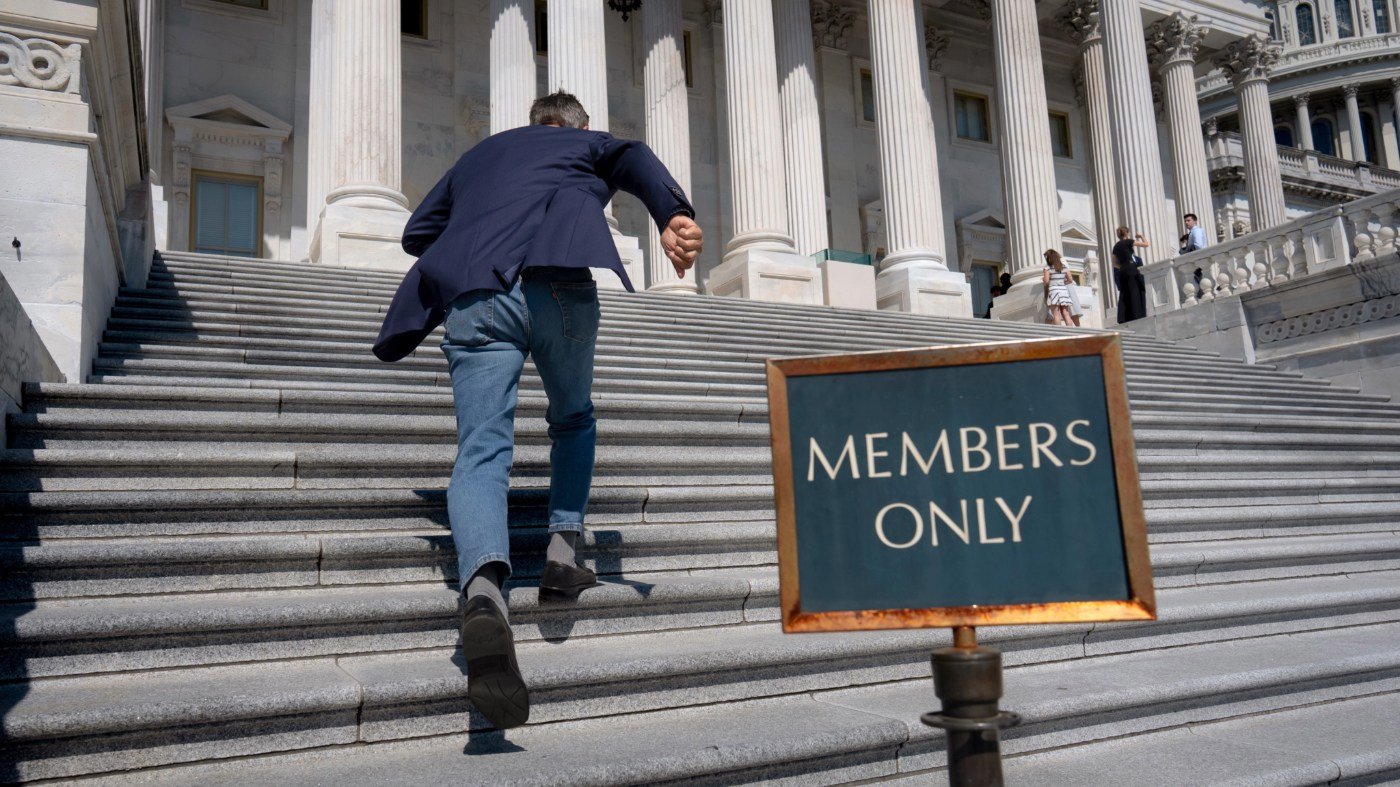
As the nation grapples with soaring gas prices, the ongoing conflict in Iran, and the unregulated rise of artificial intelligence, lawmakers are conspicuously absent from the halls of power. Both chambers of Congress are shuttered, with members scattered across the country fundraising and campaigning for their own political survival rather than addressing the pressing issues of the day.
The public's frustration is palpable, with only 16 percent of Americans approving of Congress's performance. Critics often accuse legislators of prioritizing social media clout and partisan theatrics over substantive governance. But a new report from the American Enterprise Institute and the Stavros Niarchos Foundation Agora Institute at Johns Hopkins suggests this behavior is not irrational—it's a calculated response to the incentives embedded in our electoral system.
The report's authors, Scott Warren and Kevin R. Kosar, argue that lawmakers are strategic actors who respond to the political environment they face. Winning re-election is the primary goal, and the most efficient path is often not through crafting complex policy but through campaigning—claiming credit for popular outcomes like rising median household income and deflecting blame for unpopular ones like high interest rates.
The fundamental problem, they contend, lies in the structure of primary elections. With only about 20 percent of voters participating, primaries are dominated by ideologically extreme, single-issue voters who demand unwavering loyalty on issues like abortion, gun rights, or transgender rights. This dynamic pushes candidates to the fringes, discourages moderates from running, and rewards those who can raise money from deep-pocketed interest groups. Consequently, lawmakers are incentivized to avoid bipartisan compromise for fear of primary challenges.
But the report also turns the mirror on voters. Fewer than half of Americans cast ballots in midterm elections, and those who do are increasingly polarized. A recent poll found that 63 percent of Democrats view Republicans as evil, while 57 percent of Republicans feel the same about Democrats. This animosity, fueled by misperceptions of how divided we actually are, leads voters to punish cooperation and reward confrontation.
The authors point to the dramatic decline in ticket-splitting as evidence of this trend. In the 1970s and 1990s, over 100 congressional districts regularly voted for a president of one party and a House candidate of another. By 2024, that number had fallen to just 16 districts. Voters now align their congressional choices with presidential preferences, making it harder for lawmakers to deviate from party lines.
To break this cycle, Warren and Kosar propose fundamental changes. They advocate for reforming or replacing primary elections with systems that encourage moderation and cooperation, such as ranked-choice voting or open primaries. They also urge citizens to participate more actively in elections and resist the pull of hyper-partisan rhetoric.
The report's findings come at a time when Congress faces a generational turnover, with several conservative stalwarts exiting the House. Meanwhile, primaries are testing incumbents in states like Massachusetts, where generational challenges are reshaping the political landscape.
As the authors conclude, the U.S. is a representative democracy, and ultimately, the Congress we get is the Congress we choose. If we want a legislature that governs effectively, we must change the incentives that drive its members. That starts with the ballot box.