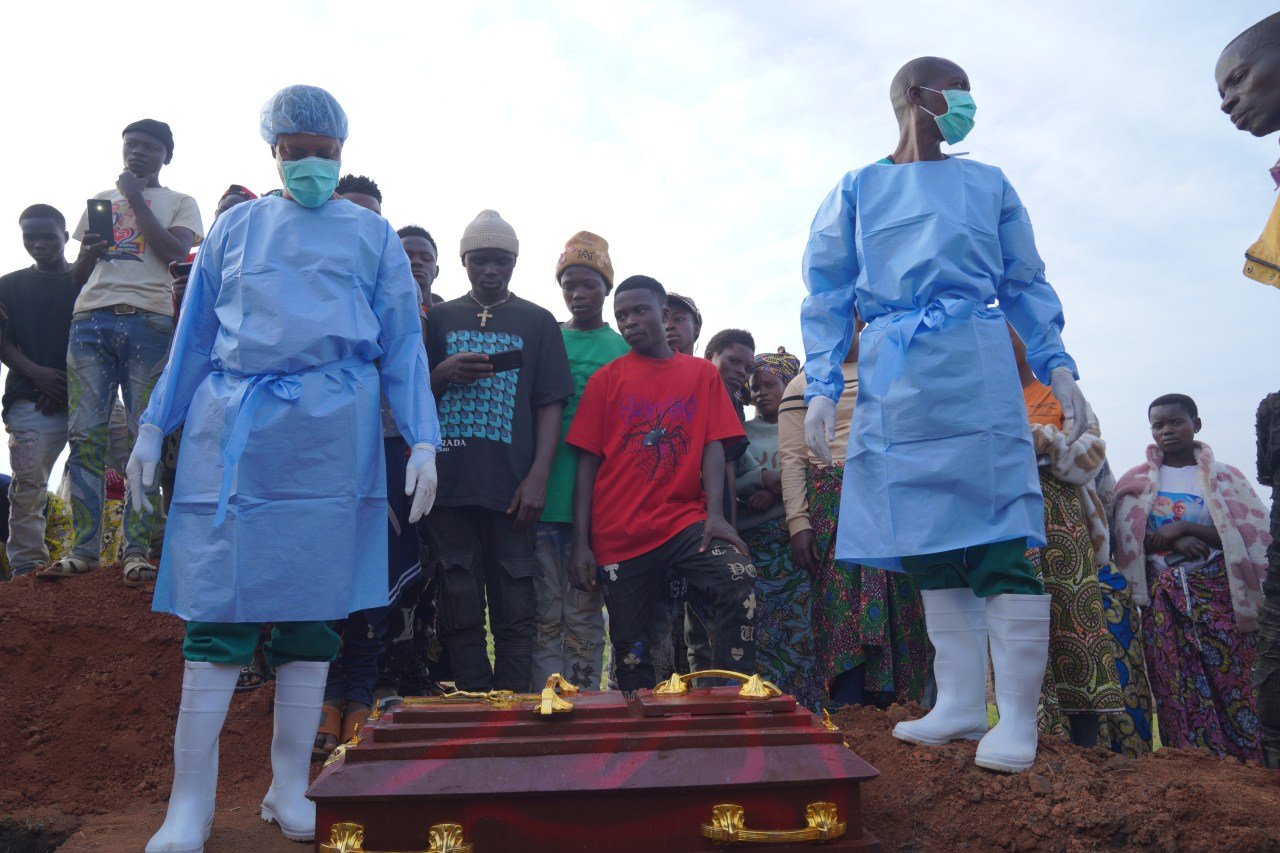
The Ebola outbreak in the Democratic Republic of Congo has now infected more than 5,000 people, according to government figures released Wednesday, as health officials warn that the virus is spreading faster than response teams can contain it, particularly in remote and insecure areas.
Data from the Ministry of Health showed 5,021 confirmed and probable cases as of Sunday, including 2,378 deaths. The outbreak, which began in the eastern provinces of North Kivu and Ituri, has become the second largest in history, trailing only the 2014-2016 West Africa epidemic that killed over 11,000 people.

The World Health Organization (WHO) noted that this outbreak has expanded roughly three times faster than the West Africa one did in its early months. "The epidemic is far from being under control," WHO Director-General Tedros Adhanom Ghebreyesus said Tuesday, adding that the risk of further spread, both within Congo and across borders, remains high.
One of the most troubling aspects is that this outbreak is caused by the Bundibugyo virus, a rarer strain for which no approved vaccine or treatment exists. This has left health workers relying on experimental therapies and supportive care, which are often unavailable in the remote and impoverished communities most affected.
In Ituri province, the hardest hit, health teams are facing not only logistical hurdles but also violent hostility. On Monday, a mob attacked a response team in Aru territory, burning an ambulance and damaging two other vehicles after a suspected case was reported. Michael Wani, president of the Union of Cultural Associations for the Development of Ituri, confirmed the attack, underscoring the dangerous environment for responders.
Health workers are also struggling with poor conditions and pay. Thérèse Anyiya, a nurse in Bunia, the capital of Ituri, said she is exhausted and that some colleagues have gone on strike over unpaid wages. "If the managers don’t take things seriously, we too will end up withdrawing," she told the Associated Press.
Experts say the lack of community engagement is fueling distrust and misinformation. Dr. Martin Cwinyay, involved in the Ituri response, stressed the need to bring services closer to people, especially in rural, mining, and displacement camps. Trish Newport, an emergency coordinator for Doctors Without Borders (MSF), emphasized that communities must be informed about symptoms and how to seek help. "They need to know what the signs and symptoms are and what to do if they get sick," she said.
The outbreak is believed to have been spreading since February, months before it was officially declared on May 15. The virus likely originated in the mining town of Mongbwalu, and has since been fueled by population movements, rebel group activity, and poor infrastructure.
The case fatality rate so far is 47.4%, but in some areas like North Kivu it reaches 70%, reflecting the severe lack of access to care. Many patients delay reporting symptoms or never seek treatment, contributing to higher death rates.
As the response struggles to keep pace, international health organizations are calling for a more coordinated and community-centered approach. The situation remains critical, with the potential to spread further if not contained. For more on the WHO's warnings about the outbreak, and how it compares to other public health emergencies, stay informed.