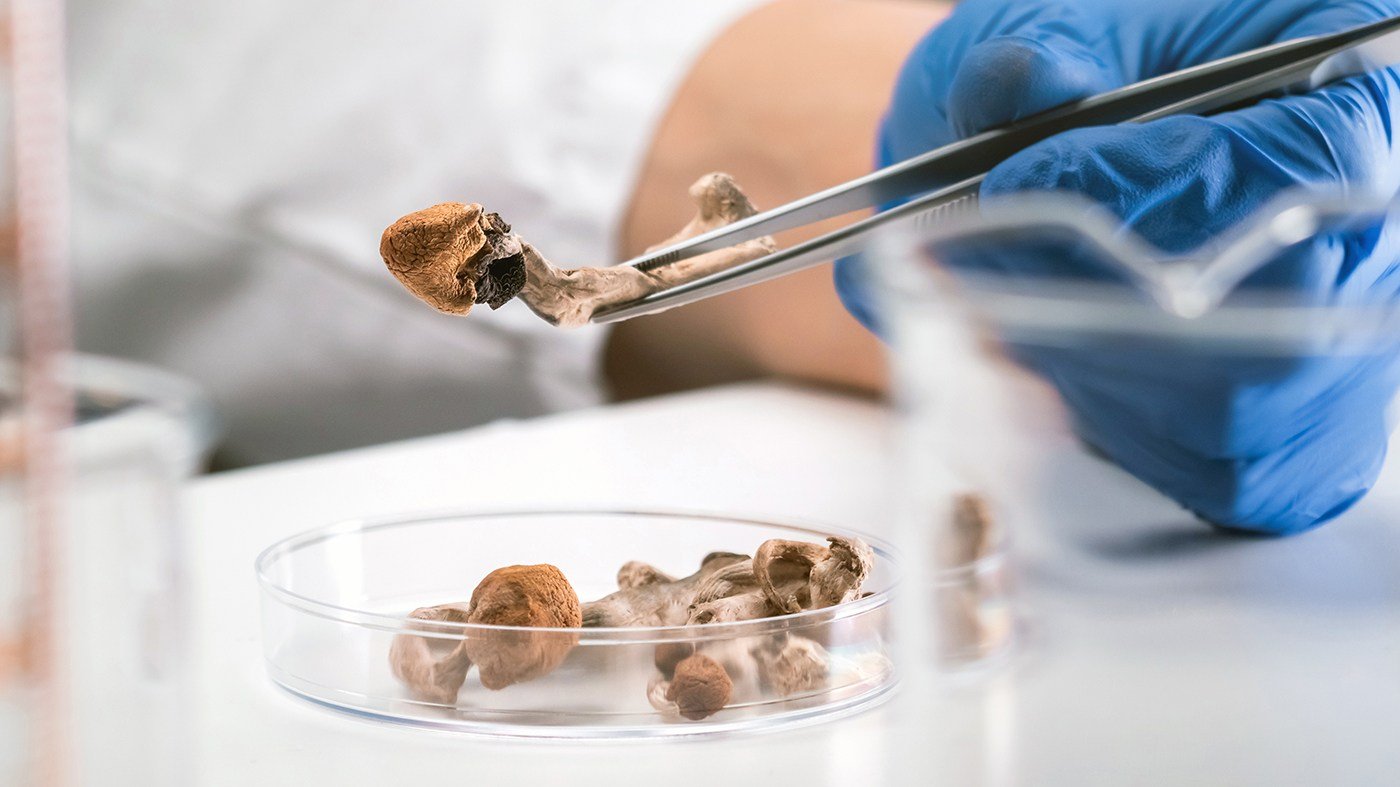
The Trump administration, guided by the Make America Healthy Again (MAHA) coalition, is moving psychedelic substances from the fringes of medical debate to the center of federal health policy. Once dismissed as counterculture relics, compounds like psilocybin, MDMA, and ibogaine are now the focus of serious regulatory and investment interest.
In September, the Food and Drug Administration (FDA) convened a public hearing that drew more than 200 speakers, many of whom urged the agency to embrace psychedelics as tools against PTSD, treatment-resistant depression, and addiction. Among them was Simeon Schnapper, managing partner at JLS Fund and a self-described psychonaut, who told FDA officials that psychedelic research represents the next frontier in medicine. “The agency has done this before three times in my lifetime: biologics, cell and gene therapy, cannabinoid medicines,” he said. “Each began as fringe and became medicine, but only after the agency chose to close the gap between the patients or what patients needed and what they could reach.”
The administration’s openness is not merely rhetorical. Health and Human Services Secretary Robert F. Kennedy Jr., who has spoken publicly about his own decades-long recovery from addiction, has voiced support for psychedelic-assisted therapy, despite his personal reservations about substance use. In a 2024 interview, he credited his son’s positive experience with ayahuasca—which he said improved the young man’s behavior—for shifting his stance on decriminalization.
Executive action and industry momentum
In April, President Trump signed an executive order directing HHS to accelerate access to treatments for serious mental illnesses, a move that prompted the FDA to fast-track research and potential approvals for psychedelic therapies, including ibogaine. The administration’s commitment was on full display at the MAHA Summit in Washington, D.C., in late September, where the first panel of the day focused exclusively on psychedelics. The discussion featured CEOs from three companies developing psychedelic drugs, alongside Matthew Zorn, HHS deputy general counsel.
Executives painted a stark picture of a mental healthcare system that has stagnated. Rob Barrow, CEO of Definium Therapeutics, which is developing LSD as a psychiatric medication, criticized the reliance on SSRIs. “For the last 30 years, we’ve basically lived in an SSRI world where you show up to the primary care physician and say ‘I’m not feeling good, I’m feeling sad everyday,’ and you’re going to get put on Zoloft, Prozac, put on SSRI,” he said. “One of the unfortunate realities is that those products are not particularly effective. They are for some patients but for many they are left far, far underserved and what we have to offer them beyond that is virtually nothing.”
Research landscape and regulatory hurdles
Despite the enthusiasm, psychedelics remain Schedule I substances under the Controlled Substances Act, meaning they are classified alongside heroin and bath salts with no accepted medical use and a high potential for abuse. This legal barrier has long hindered research, but universities and companies are now conducting trials. None have yet won FDA approval, and researchers caution that the evidence, while promising, is still emerging.
Alia Lilienstein, a research physician at the UC Berkeley Center for the Science of Psychedelics, noted that “a lot of the research is still in development, so we’re still learning. But the studies that have been published show promising results for a variety of mental health indications; PTSD if we’re talking about MDMA, and then for psilocybin, major depressive disorder and treatment-resistant depression.” Her own work examines psilocybin’s effects on aging brains in people aged 60 to 85.
David Yaden, an associate professor at Johns Hopkins University School of Medicine and the Roland Griffiths Professor of Psychedelic Research, emphasized that psychedelics are not a monolith. “When we’re talking about something like psilocybin, for example, it’s not necessarily nascent anymore,” he said. “There’s big Phase II and Phase III studies across multiple sponsors with many hundreds of participants.” Safety profiles vary widely: psilocybin has no recorded deaths from toxicity, while ibogaine carries known risks.
The pharmaceutical industry is betting on the potential. In July, Eli Lilly announced the acquisition of AtaiBeckley, a biotechnology firm focused on psychedelic therapies, signaling that mainstream pharma sees a future in these substances. Whether any will ultimately gain FDA approval remains uncertain, but the political and financial winds are shifting.