When Treasury Secretary Scott Bessent recently claimed that the United States and China share common ground on Iran's nuclear program, he overlooked a critical history. Speaking on Newsmax's "Rob Schmitt Tonight," Bessent said, "In terms of China, we have more in common with China on Iran than we disagree on. We both agree that Iran cannot have a nuclear weapon." Yet the evidence suggests otherwise: China has been the primary enabler of Iran's nuclear ambitions, directly and indirectly supplying the technology and materials needed to build a bomb.
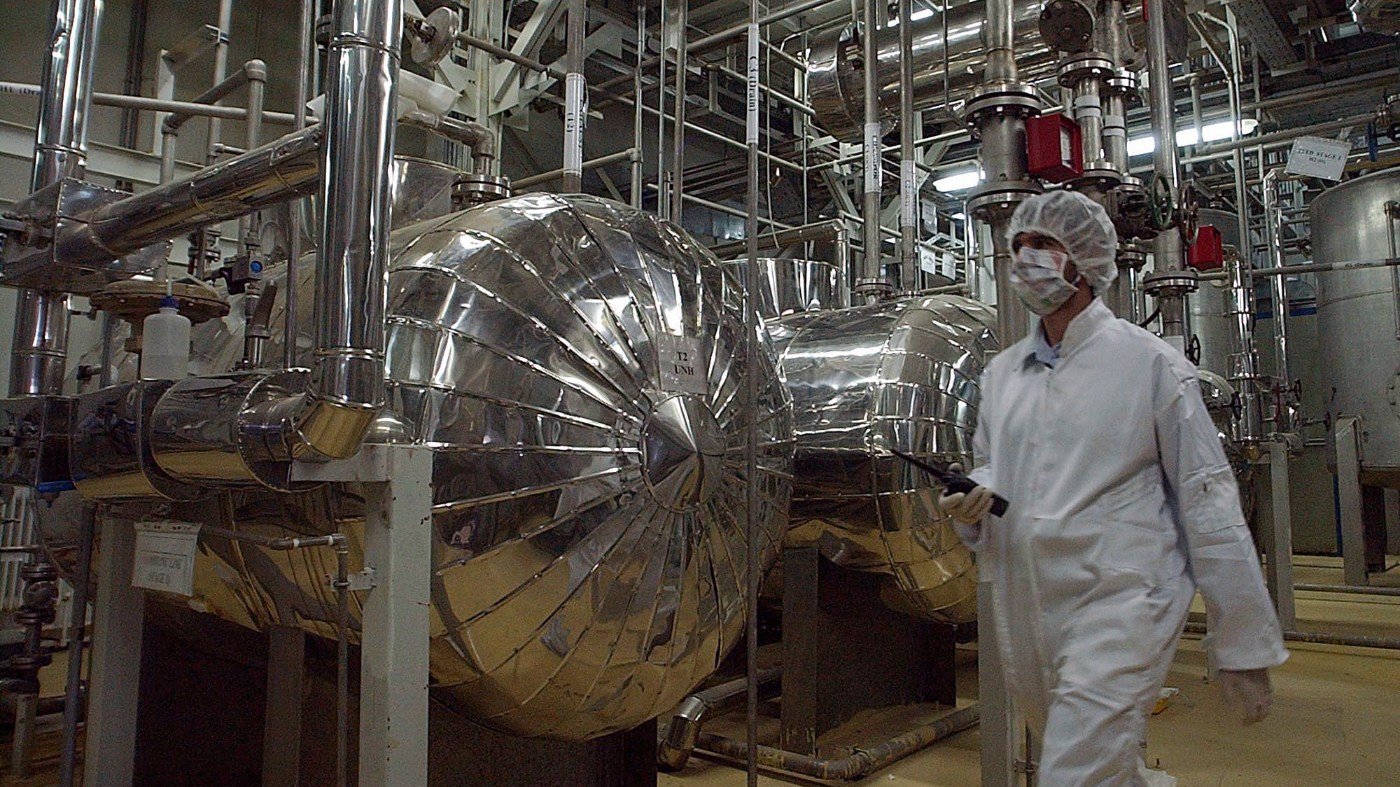
China's involvement dates back decades. It initially transferred nuclear weapons technology to Pakistan, which then acted as a surrogate, distributing know-how across Asia, including to Iran and North Korea. Abdul Qadeer Khan, the architect of Pakistan's bomb, confessed to selling nuclear technology to Iran. Iran's first centrifuges—the high-speed machines essential for enriching uranium to weapons grade—came from Khan's network.
When Khan's network was dismantled in the early 2000s, China adapted. It allowed North Korean scientists and technicians to work in Iran, with hundreds operating across roughly ten nuclear and missile facilities. Reports indicate they even took over an Iranian coastal resort. North Korea also sold Iran bomb-core materials, with one incident in 2002 involving a barrel of uranium that cracked open at Tehran's airport.
Iran's collaboration with North Korea extended to personnel exchanges. In 2012, Iranian defense officials were stationed at a North Korean base near the Chinese border, working on both missile and nuclear programs. North Korea's weapons trade was lucrative, earning an estimated $1.5 to $2 billion annually, with a portion tied to Iran. Mohsen Fakhrizadeh, Iran's top nuclear scientist, reportedly traveled through China to witness North Korea's third nuclear test in 2011, and Chinese territory likely served as a transit point for earlier tests as well.
China also stepped in directly. As the Khan network collapsed, Beijing increased direct transfers of equipment to Tehran, a practice that dates back to at least the late 1990s. In 2003, the International Atomic Energy Agency identified China as a source of Iran's nuclear equipment. Chinese specialists were reportedly working in Iran that year. The National Council of Resistance of Iran, which exposed Iran's covert nuclear sites, charged in 2005 that China had been selling centrifuges to Iran since 2003 and had sent beryllium, a metal used in nuclear triggers.
Formal protests followed. In 2007, the State Department complained to Beijing about Chinese companies exporting items that violated UN Security Council resolutions on Iran. In 2011, Malaysian authorities seized containers from a ship en route from China to Iran, suspected of containing nuclear warhead parts. Chinese state enterprises have been implicated in transferring maraging steel, ring-shaped magnets, and specialized valves—all useful for nuclear weapons production.
Bessent's assertion of US-China alignment on Iran ignores this record. China's actions, not its rhetoric, have made Iran a nuclear threat. The Trump administration would do well to revisit the facts before assuming common ground with Beijing on this critical issue.