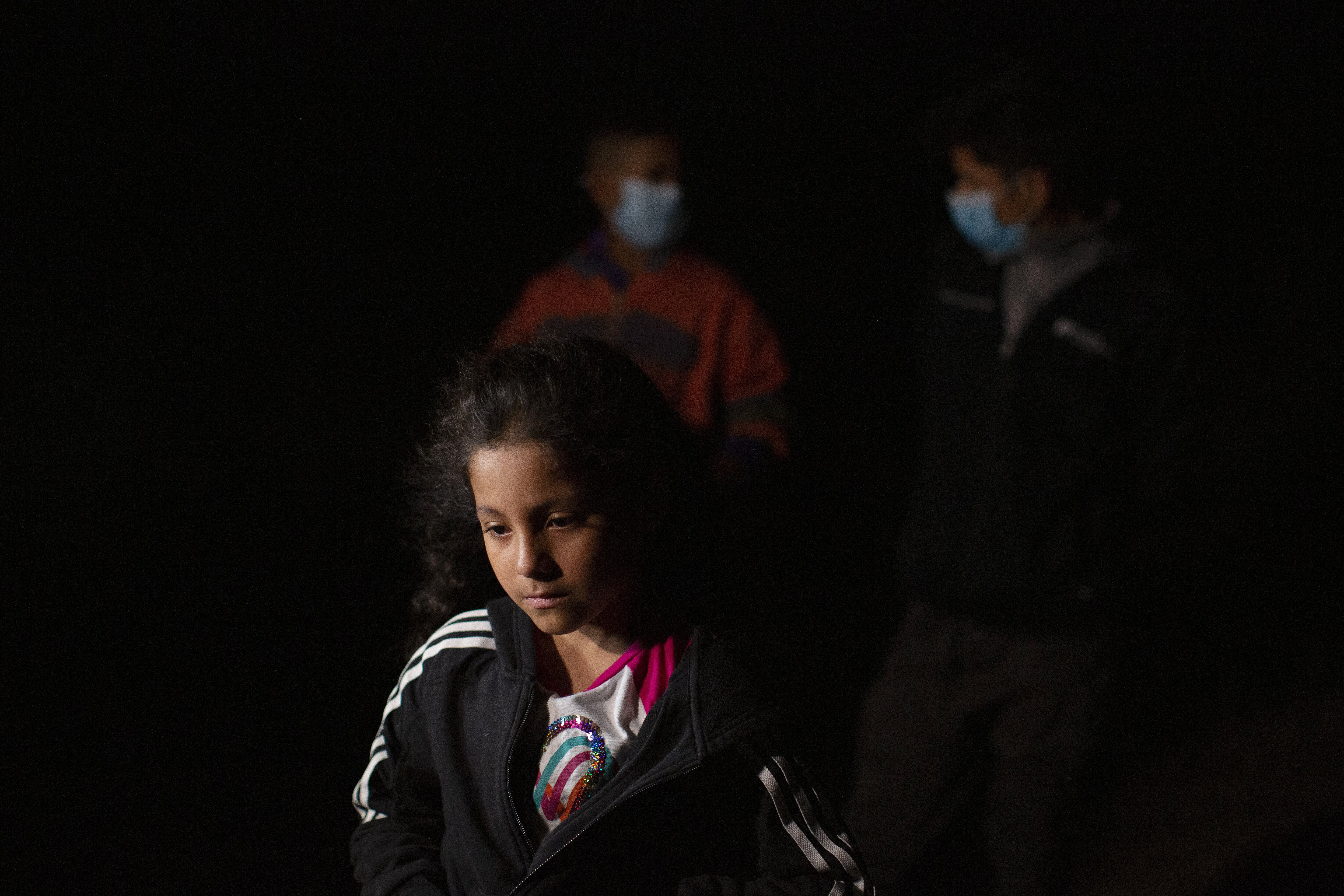
The Trump administration has made significant strides in border security, slashing illegal crossings, ramping up deportations, and nearly halting refugee admissions. But one stubborn loophole remains: the legal framework that makes the U.S. border a magnet for unaccompanied children, exploited by criminal cartels.
At the heart of the issue is Section 235 of the William Wilberforce Trafficking Victims Protection Reauthorization Act of 2008. This well-intentioned law was designed to protect trafficking victims, but it has created a perverse incentive. Cartels now use children as 'golden tickets' to gain entry into the United States, knowing that the law grants them legal shelter.
The statute gives immigration officers just 48 hours to screen children from Mexico and Canada for signs of trafficking or fear of persecution. But children from non-contiguous countries like Guatemala bypass even that minimal check and are directly handed over to the Office of Refugee Resettlement (ORR). Once there, sponsors and nonprofit attorneys quickly file for special immigrant juvenile status, asylum, or T-visas.
Organizations like Kids in Need of Defense (KIND), which was founded alongside Section 235, have profited handsomely from this pipeline. KIND reported $62.5 million in federal funding from ORR in 2024 and actively lobbies for more lawyers and protections. However, as a 2024 HHS Office of the Inspector General report found, ORR has prioritized rapid placement over child safety and thorough vetting of sponsors.
Whistleblowers and experts have told Congress that the system cycles children back into cartel networks. The inspector general report confirmed instances where trafficking indicators were ignored. Cartel affiliates at the border hand children slips of paper with contact details for sponsors, some with criminal records including domestic violence and child molestation. Documented releases to sponsors with confirmed MS-13 gang ties were reported to Congress as early as 2015. Recent investigative reporting even suggests cartels in Juarez abduct pregnant women to traffic their infants for profit.
Todd Bensman, now senior advisor to Border Czar Tom Homan, documented this in his 2019 reporting and 2023 book 'Overrun.' He traced how the differential screening turns every accompanying minor into a prized entry ticket, unlocking speedy release for fraudulent family groups. Once the child is transferred to ORR, the downstream harms continue unchecked.
Child placements exploded under former President Joe Biden, peaking at 128,904 in fiscal 2022. Even under Trump's stricter enforcement, ORR still placed roughly 24,000 unaccompanied children in fiscal 2025. Tens of thousands have vanished from follow-up, their court cases quietly closed when they fail to appear. The system's capacity remains intact, with $4.2 billion appropriated for fiscal 2026, a fiscal 2027 request for $3.4 billion supporting 6,500 beds, and a $225 million transportation task order awarded on April 1.
Half-measures like the Kayla Hamilton Act, which passed the House in December 2025, promise tighter vetting but leave the core Section 235 screening mechanism untouched. The only real solution, experts argue, is to eliminate the screening distinction and promptly return all unaccompanied minors to their countries of origin, as was done before 2008.
The Trump administration's record of zero border releases for eleven months challenges decades of immigration policy assumptions, but the child smuggling loophole remains a glaring exception. While Senate Republicans push for multi-year border funding, the underlying statute continues to fuel a crisis that leaves vulnerable children in the hands of criminals.