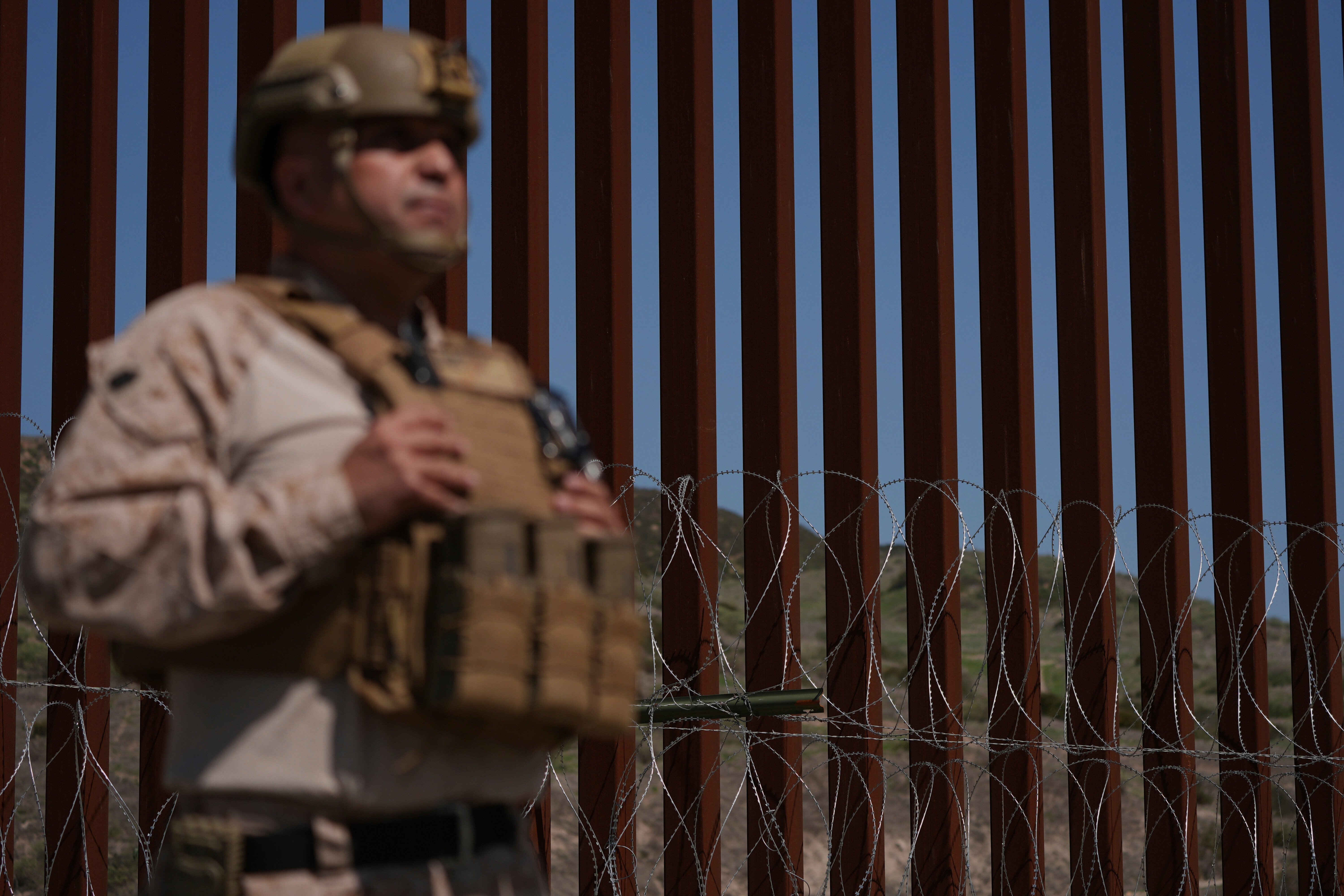
The Department of Homeland Security has confirmed an unprecedented benchmark in U.S. border security: eleven consecutive months without a single illegal alien released into the nation's interior. This sustained enforcement outcome directly challenges decades of political arguments that such control was structurally impossible or inherently cruel.
A Dramatic Statistical Reversal
According to Customs and Border Protection data, Southwest border apprehensions in March 2026 totaled 8,268—representing a staggering 97 percent decline from the peak encountered during the Biden administration. The daily average of 267 encounters stands in stark contrast to the 336 per hour logged during the height of what critics called the "Biden disaster" in December 2023. What previously occurred in one hour now takes more than a full day, marking what proponents describe as the difference between functional governance and political theater.

The drug interdiction numbers present a parallel narrative. CBP seized over 65,000 pounds of narcotics in March alone, including 613 pounds of fentanyl—a 27 percent increase from the same period last year. Fiscal year drug seizures are up 24 percent overall. This enforcement priority targets a crisis that claimed over 70,000 American lives in the most recent reporting year. Analysts suggest these seizure totals reveal how much illicit product previously flowed through security gaps, with cartels now confronting a fortified barrier they had not previously encountered.
Policy Architecture and Consequences
The article argues that the previous administration did not merely fail to stem illegal immigration but constructed a "regulatory and institutional architecture" that enabled it to scale. Every catch-and-release cycle allegedly served as a validated business model for cartel logistics networks, while humanitarian parole slots and sanctuary policies signaled suspended consequences. The resulting toll, according to the analysis, manifested in overdoses, trafficked children, overwhelmed emergency rooms, and communities subjected to federal release decisions without representation.
This enforcement shift occurs amid broader political tensions, including Democratic efforts to target key Trump administration officials and internal Republican dynamics where MAGA movement fractures are becoming increasingly public.
Legislative Response and Sanctuary City Debate
Congressional Republicans are now pushing to institutionalize the current enforcement posture. Senator Lindsey Graham (R-S.C.) and Representative Lance Gooden (R-Texas) have introduced the End Sanctuary Cities Act of 2026, which would impose criminal penalties on local officials who refuse Immigration and Customs Enforcement detainer requests. Data indicates sanctuary jurisdictions blocked over 26,000 such requests between October 2022 and February 2025.
Simultaneously, Representative Tom McClintock's (R-Calif.) End Sanctuary Policies Act, which would defund noncompliant jurisdictions, has cleared the House Judiciary Committee. Advocates argue every federal law enforcement grant should be tied to full ICE cooperation, forcing sanctuary cities to justify to constituents why funding ceased if they "play politics with public safety."
These developments unfold as the administration faces other challenges, including economic approval ratings declining amid geopolitical tensions and ongoing criticism that U.S. drug strategy remains inadequate against evolving synthetic threats.
Fundamental Questions of Sovereignty
The core contention presented is that border security transcends immigration policy, touching fundamental questions of national sovereignty and the rule of law. The eleven-month enforcement record, proponents assert, demonstrates that deterrence operates at scale when authority projects resolve rather than vulnerability. They frame the Biden years as evidence that "soft signals invite hard consequences," while the current period proves "hard enforcement deters at scale."
The political question now shifts to permanence. With eleven months of demonstrated control, pressure builds on Congress to lock in the policy framework. The debate centers on whether this represents the country "we voted for"—one where the government means what it says regarding border security—or whether political opposition will prevent these measures from becoming enduring law.