Prime Minister Signals Strategic Shift Away from U.S. Dependence
In a stark assessment of North American relations, Canadian Prime Minister Mark Carney declared that his nation's deep economic integration with the United States has transformed from a historic strength into a critical vulnerability. The warning, delivered in a Sunday video address, directly attributes this shift to the global uncertainty and protectionist trade policies championed by the administration of U.S. President Donald Trump.
"The world is more dangerous and divided," Carney stated. "The U.S. has fundamentally changed its approach to trade, raising its tariffs to levels last seen during the Great Depression." The former central banker for both Canada and the United Kingdom argued that foundational elements of Canadian prosperity are now liabilities. "Many of our former strengths, based on our close ties to America, have become weaknesses. Weaknesses that we must correct," he said.
A Plan for Economic Sovereignty
Carney outlined a roadmap to reduce Ottawa's reliance on its southern neighbor. His government will prioritize growing domestic investments and merging Canada's provinces and territories into a single, unified national market to enhance its global competitiveness. "We have to take care of ourselves because we can't rely on one foreign partner," Carney asserted. "We can't control the disruption coming from our neighbours. We can't bet our future on the hope that it will suddenly stop."
Instead, the Prime Minister emphasized building internal resilience. "We can control what happens here. We can build a stronger country that can withstand disruptions from abroad, that creates good jobs here at home, that's a leader in this new world, with a vast network of reliable allies." He positioned Canada as a nation rich in resources the world needs, "from energy to education," and a reliable partner in an unstable geopolitical climate.
Renegotiation Looming as Tensions Simmer
The address arrives as Washington, Ottawa, and Mexico prepare for complex negotiations to renew the United States-Mexico-Canada Agreement (USMCA). Carney's stance has already drawn sharp criticism from U.S. officials. Commerce Secretary Howard Lutnick recently condemned Canada's trade strategy, stating it "sucks" and calling for the USMCA to be "reimagined," a sentiment detailed in our report on Lutnick's critique of Canadian trade policy.
Relations have been volatile. While Carney's election in March thawed a frosty period marked by Trump's derisive "51st state" comments, the Prime Minister's active diversification efforts have renewed friction. Earlier this year, Canada secured a trade deal with China, lifting tariffs on Chinese electric vehicles in exchange for better access for Canadian agricultural goods—a move Trump initially welcomed but later attacked, even threatening a key border infrastructure project.
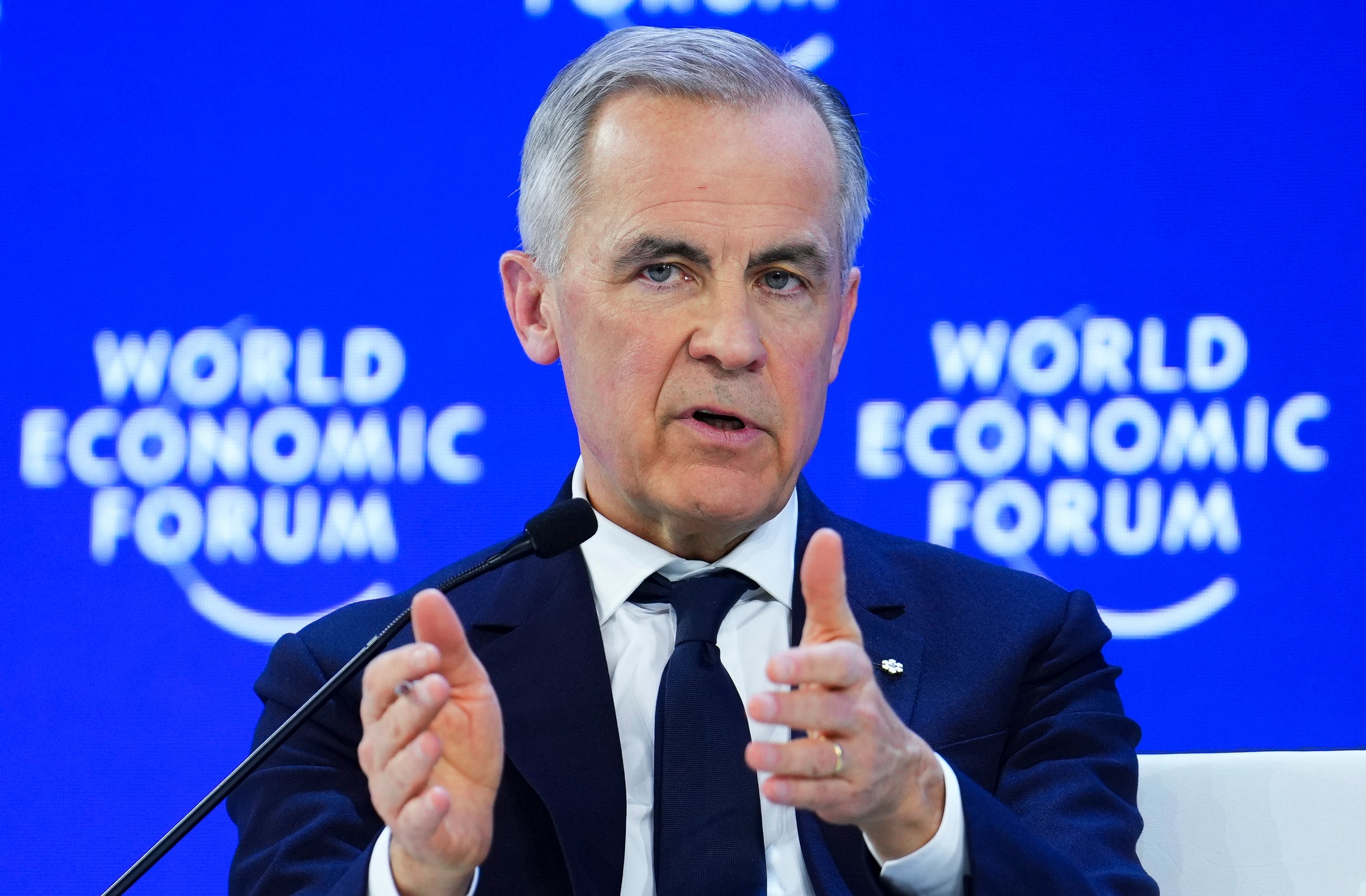
Carney's vision aligns with his call at the World Economic Forum for "middle powers" to unite as a counterweight to dominant nations. His domestic consolidation plan, however, faces its own economic headwinds, mirroring challenges seen in other ambitious policy proposals, such as the struggle to implement a $30 minimum wage amid practical realities.
Broader Global Economic Risks
The Prime Minister's warning underscores a wider climate of economic insecurity driven by geopolitical conflicts and policy shifts. This environment contributes to domestic anxieties, including trends like the sharp decline in Black fertility rates linked to financial instability. Furthermore, as the IMF has warned, escalating conflicts, such as with Iran, threaten broader global recession and economic stability.
Carney concluded his address by framing economic independence as a pillar of national sovereignty, promising investments in security and industry. "We're defending Canadian sovereignty by investing in our security and creating an industry to support it," he said, positioning Canada not as a passive neighbor but as an assertive actor preparing for a more fragmented world order where old alliances are no longer guarantees of prosperity.