Hezbollah on Thursday dismissed the latest ceasefire agreement brokered by the United States between Israel and Lebanon, a deal that envisions the creation of “pilot zones” where Beirut would work to push the militant group out of the region.
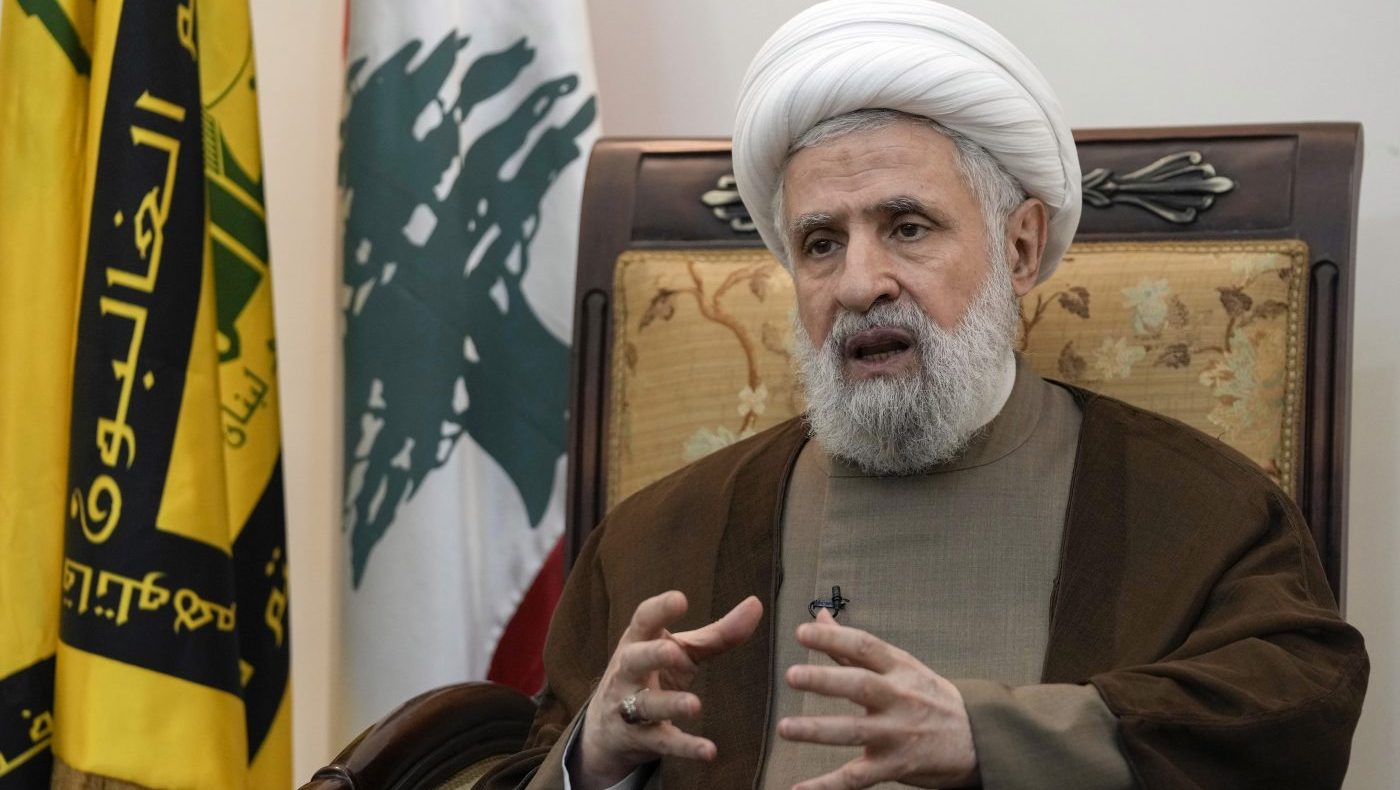
Hezbollah leader Naim Kassem described the truce as “absurd, humiliating, and insulting,” according to the Associated Press, and demanded that Israel withdraw entirely from southern Lebanon. “So long as our villages are not safe and are being bombed and destroyed and our people are killed,” he said in written remarks read on television, northern Israel “will not be safe.”

Lebanese authorities reported that 1.2 million people have been displaced by Israeli strikes, and Reuters noted that five people, including a UN peacekeeper, were killed in attacks on Thursday alone.
The ceasefire text makes no explicit provision for the withdrawal of Israeli forces from Lebanon. Instead, it states that “Israel reaffirmed that its security and respect for its territorial integrity can only be achieved through the disarmament of Hizballah and the dismantlement of its infrastructure throughout Lebanon.”
A State Department release characterized the agreement as a sign that Israel and Lebanon have “no hostile intent toward one another” and are committed to pursuing a comprehensive peace accord.
The deal follows a previous ceasefire in April that failed to stop sporadic clashes along the border. Israeli Prime Minister Benjamin Netanyahu escalated operations this week with strikes on Hezbollah targets in Beirut’s southern suburbs, prompting a sharp response from Tehran.
Iran suspended talks with the US over reopening the Strait of Hormuz, a move that President Trump scrambled to counter by pushing for a new truce in Lebanon. Trump has acknowledged calling Netanyahu “f—ing crazy” for ramping up military operations and said he was “perturbed” by the Israeli offensive.
The political fallout is mounting. Trump’s approval rating continues to slide as the conflict fuels inflation and stirs unease among Republicans ahead of the midterms. It remains unclear whether the latest ceasefire will bring Iran back to the negotiating table. Trump has insisted talks with Iran never stopped and that he feels no pressure to strike a deal.
For deeper analysis, see how Tehran is leveraging the Lebanon truce to drive a wedge between Trump and Netanyahu, and read about Iran war hawks facing a reckoning as Trump seeks a ceasefire.