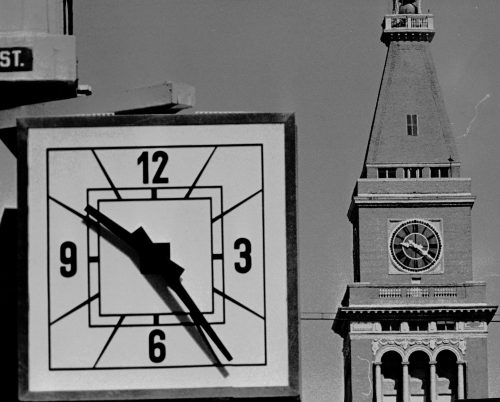
The House voted Tuesday to advance the Sunshine Protection Act, bringing the US closer to year-round daylight saving time for the first time since the early 1970s. If the Senate follows suit and President Donald Trump signs it, Americans would stop turning their clocks back in November—effectively locking in later sunrises and sunsets all winter.
But as lawmakers push forward, the nation's fraught history with permanent daylight saving time offers a cautionary tale. The US has tried this before, and it didn't stick.
A Pattern of Reversal
The US first adopted daylight saving time in 1918 as a wartime energy-saving measure, but it lasted only a year. It returned in 1942 during World War II, but the patchwork of local options created chaos. The Uniform Time Act of 1966 brought order by standardizing the twice-yearly clock changes nationwide.
Then came the 1973 oil embargo. Amid soaring energy costs, Congress enacted year-round daylight saving time in January 1974, hoping to reduce electricity demand. But the policy unraveled quickly. Health experts warned about the effects of dark winter mornings, and parents objected to children heading to school in pitch darkness. By October 1974, the US reverted to standard time for the winter months. The experiment lasted less than a year.
Why It Keeps Failing
Today's push faces similar headwinds. Critics argue that permanent daylight saving time would push winter sunrises past 9 a.m. in many northern states, raising safety and health concerns. For states like Maine, Washington, and Michigan, that could mean morning commutes in darkness for months. The airline industry has also pushed back, warning that a sudden shift would disrupt flight schedules and international coordination. A coalition of carriers has called for a two-year delay to allow for adjustment, as reported by The World Signal.
Opposition isn't limited to logistics. Some lawmakers have proposed an alternative: permanent standard time, which would keep mornings brighter. That bill, introduced as a counter to the Sunshine Protection Act, has gained traction among sleep researchers and educators.
Political Dynamics
The Sunshine Protection Act passed the House with bipartisan support, but its path through the Senate is uncertain. The bill's backers argue that ending clock changes would boost retail and tourism, while detractors point to the failed 1974 experiment as proof that Americans don't actually want permanent daylight time. President Trump has not taken a public position, but his endorsement could tip the balance.
For now, the US stands at a familiar crossroads. The Sunshine Protection Act would make daylight saving time permanent starting in November 2025, but if history is any guide, the road to ending clock changes is littered with good intentions undone by winter darkness.