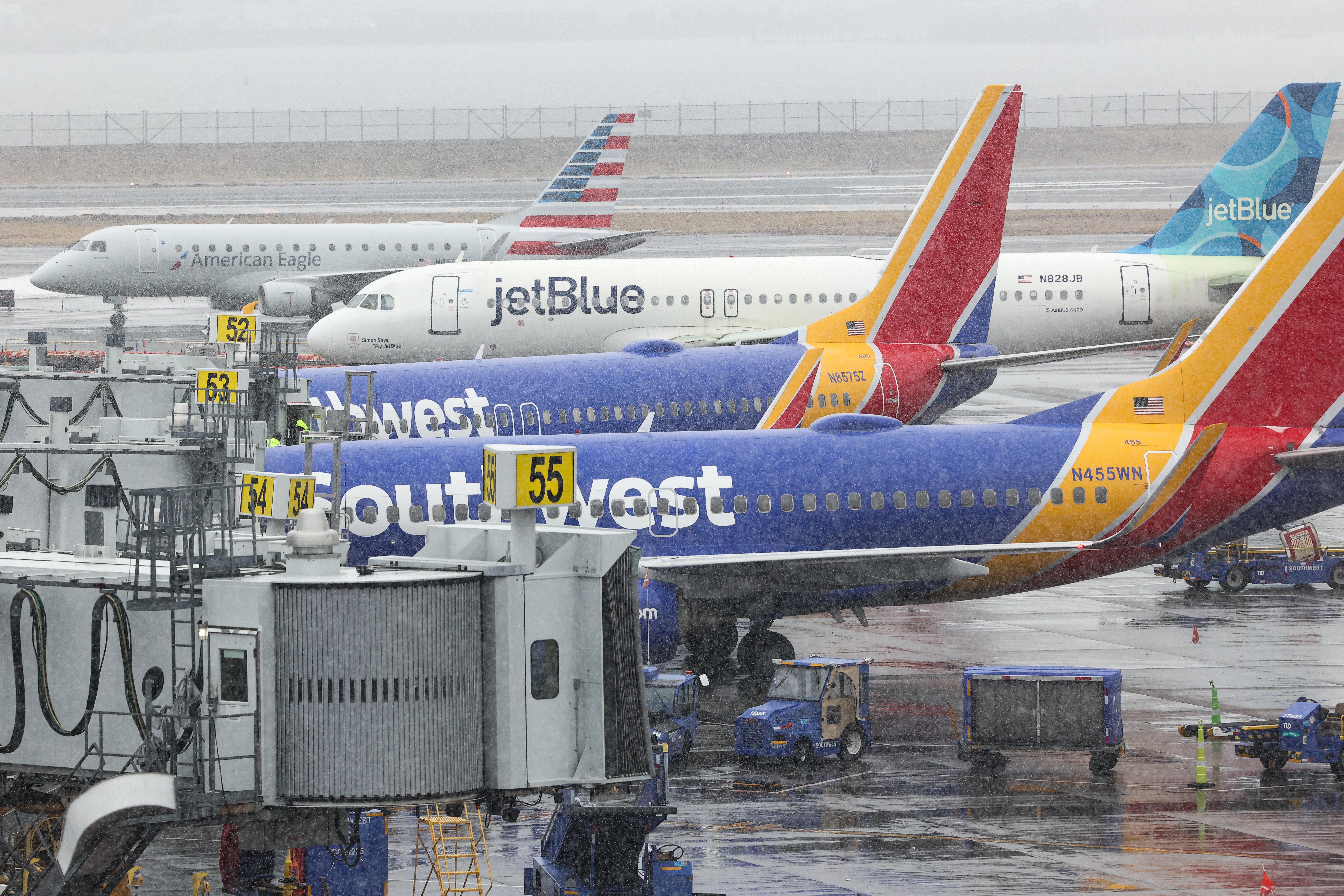
The nation's largest airlines are urging caution on a permanent shift to daylight saving time, warning that such a move would require up to two years of preparation to avoid widespread operational chaos.
Airlines for America, the trade group representing carriers including American, Delta, Southwest, and United, issued a statement this week opposing an immediate switch to year-round daylight saving time. The group argued that any change would have “considerable implications” for flight schedules, crew rotations, and international coordination, and that airlines would need “a minimum of 18-24 months” to adjust.

The opposition came just as the House passed the Sunshine Protection Act on Tuesday, a bill backed by President Trump that would make daylight saving time permanent across the U.S., while allowing states to opt out. The legislation cleared the House with bipartisan support, but still faces an uncertain path in the Senate before it can reach Trump's desk.
The airline group did not outright oppose the concept of permanent daylight saving time, but made clear that a rapid rollout would be unworkable. “We are not taking a position on the policy itself, but the implementation timeline is critical,” a spokesperson said.
Proponents of the bill argue that year-round daylight saving time would give Americans more evening daylight and reduce energy consumption. But the proposal has drawn sharp criticism from multiple quarters. Health experts have warned that disrupting the body's natural circadian rhythms could lead to increased risks of heart attacks, strokes, and sleep disorders. Religious groups have also objected, citing concerns about prayer times and daily routines, while educators note the potential impact on schoolchildren who would travel to school in the dark during winter months.
For airlines, the biggest challenge lies in coordinating schedules across time zones and with international partners. A permanent shift would require renegotiating slot times at airports, adjusting crew scheduling systems, and updating software—all tasks that the industry says cannot be done overnight.
The debate over daylight saving time has intensified in recent years, with several states already passing laws to adopt permanent daylight saving time if Congress allows it. However, the federal government has yet to act, leaving a patchwork of time-zone policies that complicate interstate commerce and travel.
As the Senate takes up the Sunshine Protection Act, the airline industry's stance adds a new layer of complexity to an already contentious issue. Whether lawmakers will heed the call for a delayed implementation—or push ahead with a faster timeline—remains to be seen.