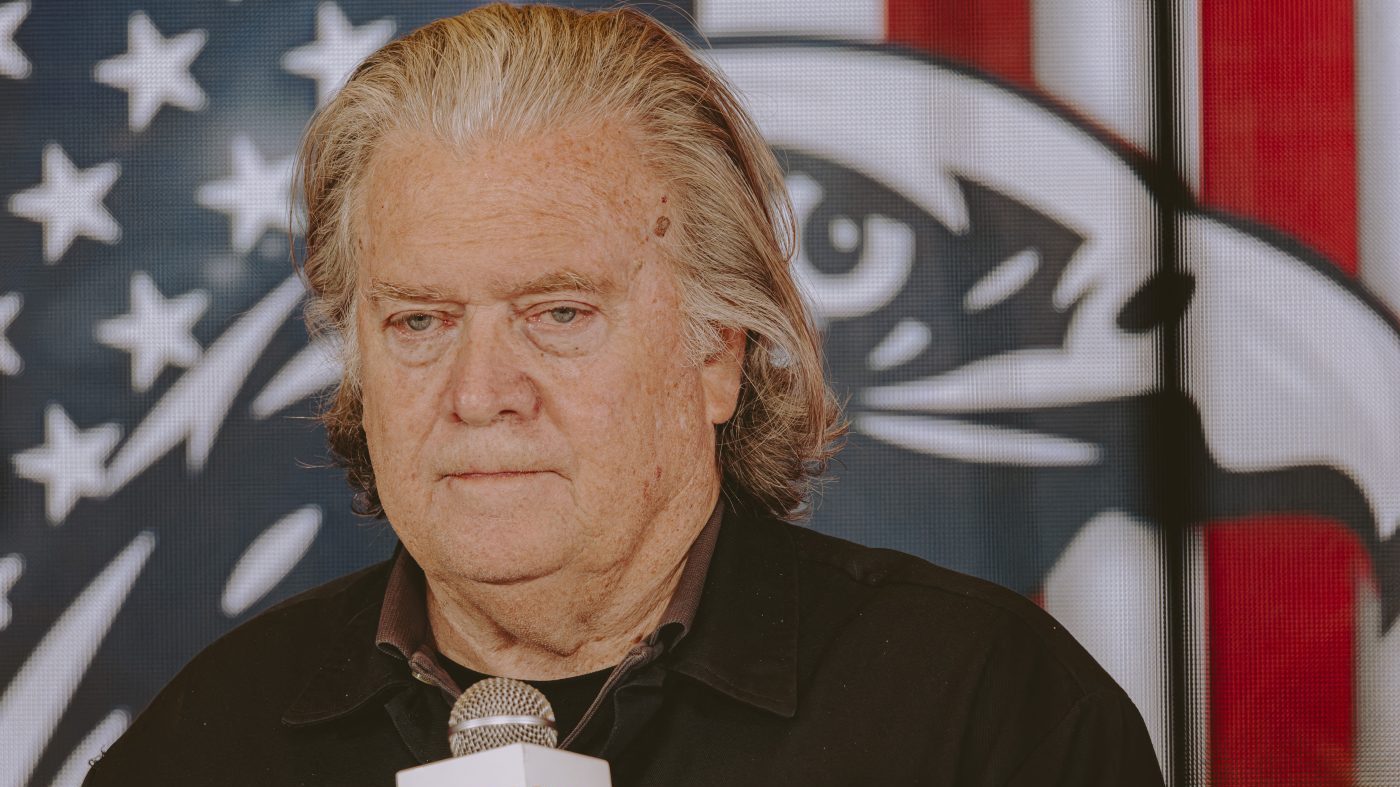
Steve Bannon, who served as a top strategist in the Trump White House, publicly distanced himself from President Trump's endorsement of Israeli Prime Minister Benjamin Netanyahu just days before Israel's election. On his "War Room" podcast Monday, Bannon said he and his team were "not wild" about the president's wholehearted backing of Netanyahu, which came in a Sunday statement praising the Israeli leader as "Strong, Brave, and Brilliant in the face of tremendous opposition."
Bannon's criticism centers on what he sees as a failure to hold Netanyahu accountable for the security failures surrounding the October 7, 2023 Hamas attack, which killed roughly 1,200 Israelis and triggered the ongoing war in Gaza. He pointed to reporting by former Jerusalem Post editor-in-chief Yaakov Katz that suggested Israeli authorities ignored intelligence warnings about an impending assault. "One of the things we've been pushing here is: where is the investigation of the Oct. 7 situation?" Bannon asked, adding that he has long called for a formal inquiry by the Israeli government or its citizens.
The former White House adviser accused Netanyahu's government of blocking any such investigation and argued that the United States should launch its own "massive investigation" into the events leading up to the attack. His remarks reflect a growing rift within conservative circles over the U.S.-Israel relationship, with some figures questioning whether Netanyahu's leadership serves American interests.
The tension over the endorsement comes amid broader political maneuvering. Netanyahu is seeking an unprecedented seventh term as prime minister, having held the office on and off since 1996. He faces ongoing legal troubles, including a corruption trial on fraud and bribery charges, which he denies. Additionally, the International Criminal Court has issued an arrest warrant for Netanyahu, accusing him of war crimes and crimes against humanity in Gaza—charges he also rejects.
Bannon's critique also touches on intelligence failures. Reports from The New York Times and Israeli outlet Haaretz indicated that Emirati President Sheikh Mohammed Bin Zayed warned Netanyahu about a potential major attack before October 2023. Netanyahu has dismissed those reports as "a malicious fabrication with clear political timing" and threatened to sue Haaretz.
The political landscape is further complicated by ongoing violence. Despite a ceasefire agreement last October, Israeli military strikes have continued, and the Hamas-run Gaza Health Ministry reports over 74,000 Palestinian deaths since the war began, including post-ceasefire casualties.
Bannon's comments signal that Trump's endorsement may not be universally welcomed among his allies, potentially reflecting deeper divisions over Middle East policy as the U.S. election cycle heats up. His call for a U.S.-led investigation adds another layer of pressure on Netanyahu, who has denied any wrongdoing in his handling of the war.
As Israel heads to the polls, the endorsement could influence voters, but Bannon's pushback suggests that even within Trump's orbit, support for Netanyahu is not unconditional. The coming days will reveal whether this discord affects the election outcome or shifts U.S. policy toward Israel.