The Education Department's new "Do No Harm" test has a name—and a premise—that should appeal to conservatives. The idea: if graduates of a certificate or college program don't out-earn those with only a high-school diploma, that program is a bad investment, and Washington should stop subsidizing it with student loans.
After decades of soaring tuition and student debt, some accountability is overdue. And for the MAGA base, anything that sticks it to educational institutions broadly painted as liberal, woke, and elite will provoke cathartic glee.
The problem comes when you read the department's own projections: college degree programs pass this test with flying colors, but many of the blue-collar short career programs that have minted generations of small business entrepreneurs—the kinds of people the Trump administration claims to champion—do not.
The good news is that Congress can correct the issue with a single amendment, and it has until 2028 to do so.
McMahon's own story shows the flaw
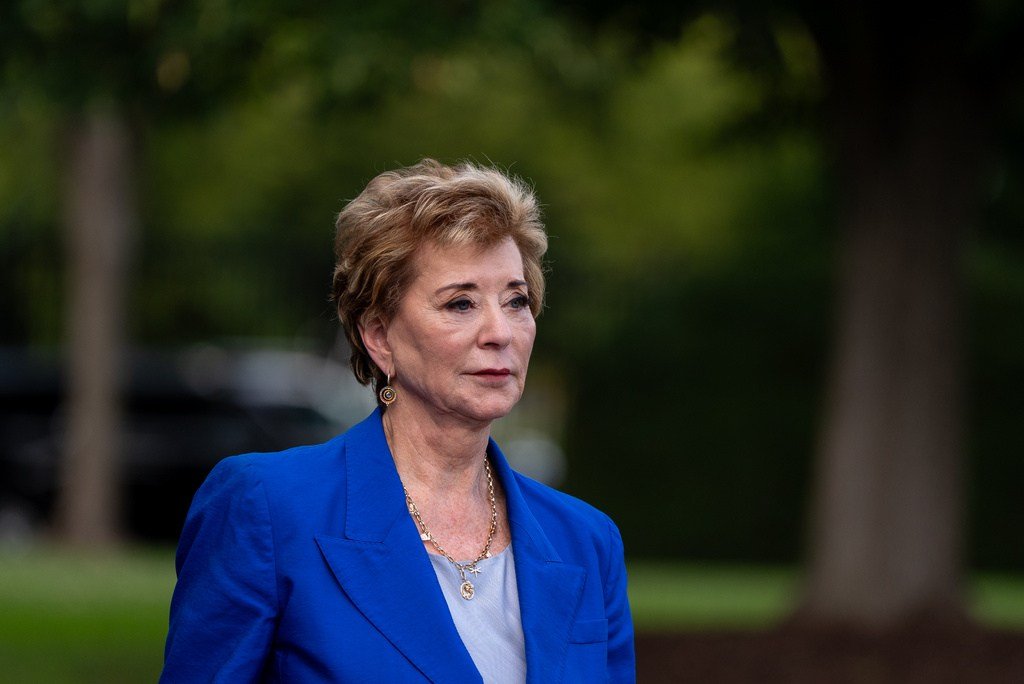
To see how the test breaks down, consider just one entrepreneur whose career Secretary of Education Linda McMahon knows unusually well: Linda McMahon herself.
McMahon graduated from East Carolina University in 1969 with a degree in French and a teaching certificate. She worked as a paralegal to pay the bills while her husband learned the ropes in professional wrestling. It was the prelude to an entrepreneurial journey that would end with her family achieving the American Dream.
But four years after graduation—the point at which her department's rule measures graduates' earnings—there was little in McMahon's paycheck to suggest an economic titan in the making. At one point she was on food stamps. In 1976, she and her husband filed for bankruptcy. Then in 1980, they founded Titan Sports, the company that eventually became WWE, which today generates billions of dollars and employs thousands of Americans.
I run small businesses and invest in others. Many of them take out Small Business Administration loans of the kind McMahon oversaw when she was head of the agency. She would therefore know that in the early years of building or acquiring a company, a responsible owner is often doing exactly the opposite of maximizing personal income. She is preserving working capital, servicing debt, hiring employees, buying equipment, and reinvesting profits. The real value comes from the appreciation of the business itself and the dividends it pays investors—neither of which the "Do No Harm" formula captures.
Career programs at risk
In fact, the credential programs that create the greatest number of entrepreneurs—culinary services, massage therapy, cosmetology, arts and design—are the ones at greatest risk of failure under the new rule. In the case of cosmetology, a program that stylists are required by law to complete to enter the profession, more than 90 percent of programs are projected to fail and perhaps close, creating an existential crisis for the profession. That's obviously not fair to the workers, or to the consumers who cannot hand off their haircuts to AI agents.
But why would a worker pursue a certificate program that doesn't help them earn a higher wage? It's a question one could post to those in post-graduate degree programs that may be also clobbered by this legislation: ministers and teachers. As anyone who stands before a congregation bearing witness to faith, or in front of young people inspiring them to learn, there is more to life than the accumulation of money, more to service than what appears on a tax return, and more to a career than stacking cardboard boxes for Amazon.
Putting aside the value of a fulfilling and enjoyable career at a time when AI urgently asks us what purpose future generations may derive from employment, why should federal loans help people pursue careers that don't maximize the number of dollars earned in a week? Answer: because they directly support the administration's pro-natal agenda.
Both President Trump and Vice President JD Vance have said they want Americans to have more babies. The solopreneurs who come out of these programs are mostly women, and these careers allow them to set their own hours, which is crucial for raising a family when the burden of childcare disproportionately falls on mothers.
As a parent of young children, I feel the pressure that our current childcare crisis has on limiting the growth of working families. This rule will make it worse. Early-childhood educators earn a national median near $27,000. The department's own data projects that 77 percent of students in human-development certificate programs attend programs that would fail. This is as Kafkaesque as it is cruel: the state requires a worker to earn a credential, determines their wages through subsidy formulas and minimum staffing requirements, then punishes their schools for producing someone who accepts the wage. The net: as childcare dries up, more couples will wonder if they can afford to have families at all.
Congress can fix the rule and avoid these problems by creating a safe harbor for programs whose graduates carry modest debt—under $20,000 at the median, federal and private combined—and have a track record of repaying it. Such programs should still disclose data on the earnings of its graduates in the interest of transparency, but modest earnings combined with modest, successfully repaid debt should not trigger a federal lending ban.
This is not a new idea, as the department previously used a debt-to-earnings test. After all, as any entrepreneur knows, one cannot truly measure "return on investment" without looking at both the return and the investment.
Conservatives above all should understand that the "Do No Harm" rule, as written, would harm the very workers and small businesses they claim to champion. The administration has already faced Democratic oversight efforts over its education policies, and this rule could become another flashpoint. With approval ratings sliding across key departments, the administration may not want to pick this fight. But the clock is ticking: unless Congress acts by 2028, the rule could shutter programs that are vital to the economy and to family life.