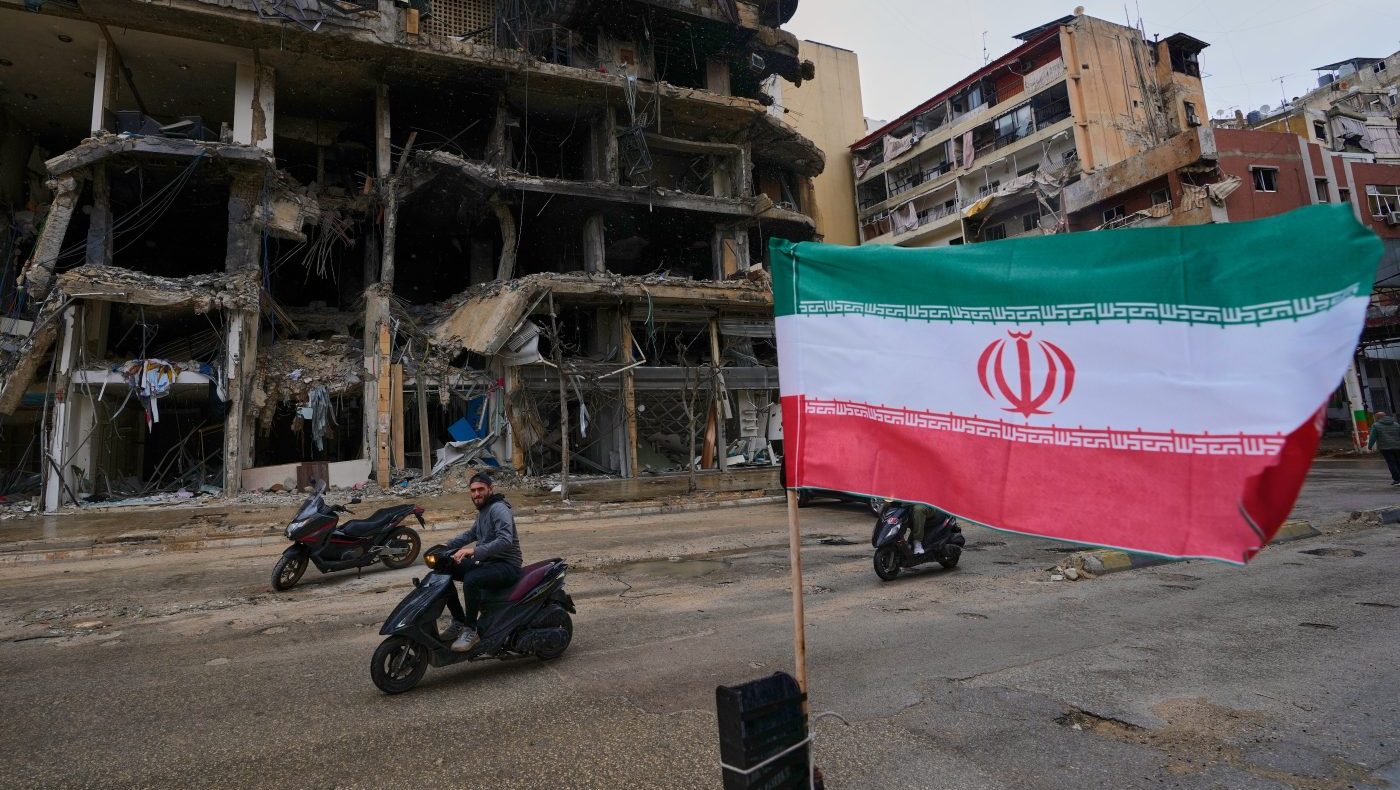
Iran is leveraging the situation in Lebanon to gain leverage in its negotiations with the United States, deliberately driving a wedge between President Trump and Israeli Prime Minister Benjamin Netanyahu. According to sources familiar with the discussions, Trump placed two profanity-laced calls to Netanyahu earlier this week, demanding that Israel pull back from a major offensive in Beirut targeting Iranian-backed Hezbollah.
Trump confirmed the tense exchange in an interview with the New York Post, saying he was “perturbed” by Netanyahu’s continued fighting in Lebanon. “I wouldn’t say angry, I was a little bit perturbed at his constantly fighting with Lebanon, at some point I said, Bibi we gotta stop this, you gotta stop it,” Trump said. The calls, first reported by Axios, underscore the growing rift between the two allies over how to handle the Iran-backed militia.
The White House has been pushing for a separate peace track between Israel and Lebanon, hoping to empower the Lebanese Armed Forces to disarm Hezbollah. But Tehran has conditioned its own ceasefire with Washington on a halt to Israeli operations against Hezbollah in Beirut. That linkage has effectively handed Iran a diplomatic win, as Israeli forces have now pulled back from the capital.
Despite the truce brokered by Trump, tensions remain high. On Wednesday, Israeli Ambassador to the U.S. Yechiel Leiter posted footage on X of what he described as a Hezbollah rocket attack on the northern Israeli city of Kiryat Shmona. “It should be remembered that Israel agreed to refrain from striking Hezbollah command centers in Beirut on the condition that Hezbollah would stop attacking Israeli towns and villages,” Leiter wrote. “This morning’s attack is yet another blatant violation of that understanding.”
The U.S. has publicly backed Israel’s right to self-defense against Hezbollah, while trying to separate the Lebanon file from broader nuclear talks with Iran. Secretary of State Marco Rubio told lawmakers during a Senate hearing on Tuesday, “We are trying to view the Lebanon-Israeli talks as separate and distinct from Iran, and what Iran wants to do is mix it all together.”
Trump appears willing to sideline tough negotiations over Iran’s nuclear ambitions in favor of a narrower deal to reopen the Strait of Hormuz, through which a fifth of the world’s oil and gas flows. The closure of the strait has driven up U.S. gas prices, forced developing nations into emergency energy planning, and worsened food shortages in some of the world’s worst humanitarian crises. But even that limited agreement remains elusive unless Trump can rein in Netanyahu in Lebanon.
Sarit Zehavi, president of the Alma Research and Education Center in northern Israel, warned that the U.S. demand for an Israeli retreat has only strengthened Hezbollah and weakened the Lebanese government. “If the U.S. truly wants to help the Lebanese government, it should give Israel freedom of operation in Lebanon against Hezbollah,” Zehavi told The Hill on Tuesday. She added that Washington could simultaneously support the Lebanese security system to act against the group and ensure only the government provides humanitarian aid to displaced civilians.
Netanyahu faces intense domestic political pressure to strike Hezbollah hard, particularly as he heads into a fall election where he has cast himself as Israel’s strongest defender. Iran has poured resources into building Hezbollah into one of its most formidable proxy forces, a persistent threat on Israel’s northern border. Yet Israel dealt severe blows to the group after the Oct. 7, 2023, Hamas attacks—another Iranian proxy. In September 2024, Israel achieved a major psychological victory by detonating pagers among some 1,500 Hezbollah operatives, then assassinated the group’s long-serving leader, Hassan Nasrallah.
Hezbollah’s current leader, Naim Qassem, is seen as less effective, according to Fadi Nicholas Nassar, a Senior Fellow at the Middle East Institute. “All signs point to Tehran and the IRGC taking increasing decision-making control in regrouping, reorganizing and shaping the behavior of Hezbollah,” Nassar said. The IRGC, the paramilitary arm of Iran’s supreme leader, oversees foreign operations.
The U.S. has invested heavily in diplomatic efforts to strengthen the central Lebanese government and isolate Hezbollah from Iran. It has brokered unprecedented face-to-face talks between Beirut and Jerusalem and aims to empower the Lebanese military to disarm the militia. “It’s one of the most ironic situations in the world, the Lebanese government and the Israeli government could do a peace deal tomorrow,” Rubio told lawmakers Tuesday, as Israeli and Lebanese officials met at the State Department. “The impediment in Lebanon is the fact that Hezbollah has embedded itself into that country and is the reason for all the suffering that’s happening there right now, and all the suffering that’s historically happened, entirely funded, entirely controlled by Iran.”