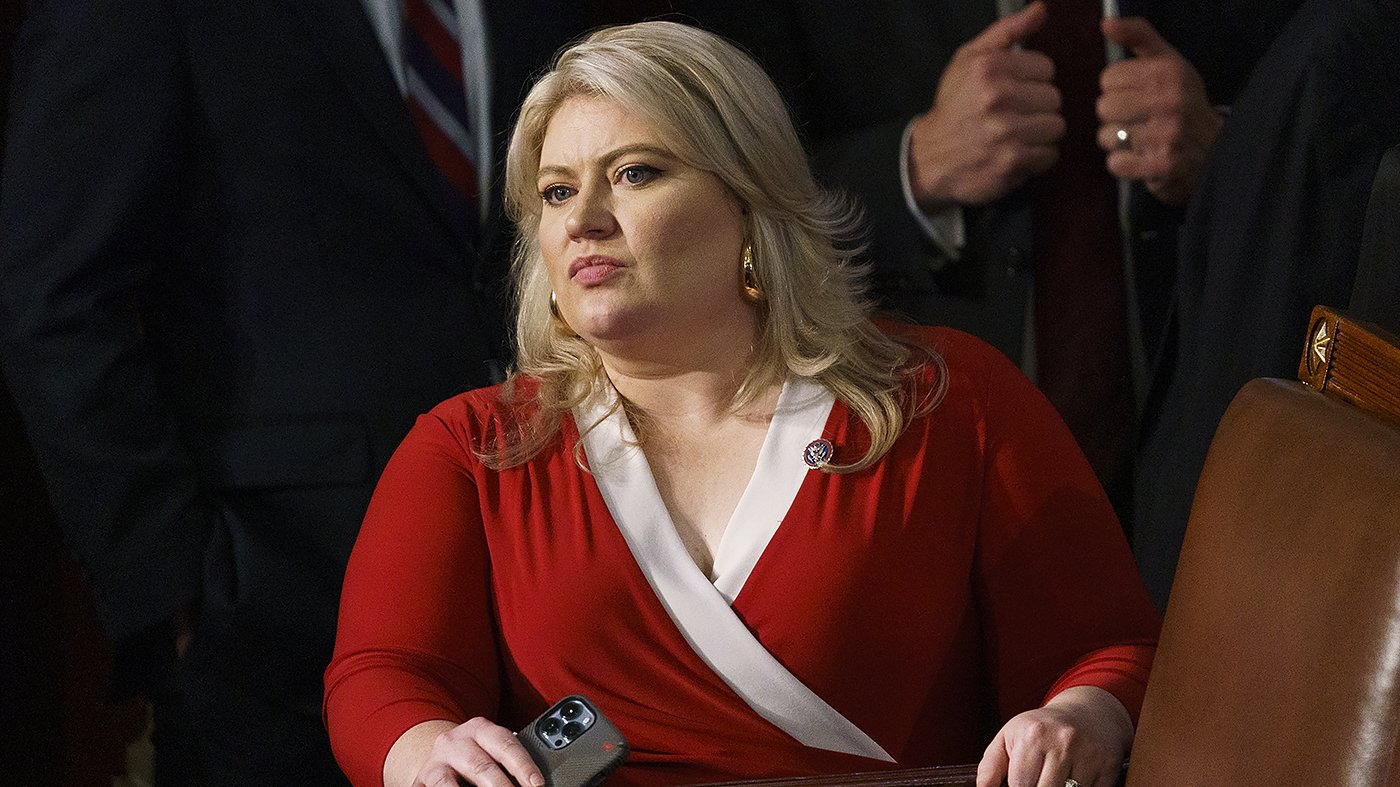
A significant rift over foreign policy has emerged among congressional Republicans, with one House member calling for a prominent senator to be sidelined from White House deliberations. Representative Kat Cammack of Florida stated that Senator Lindsey Graham of South Carolina should have his access to the Oval Office restricted due to his hawkish advocacy for military action against Iran.
"I absolutely think he should have his Oval Office credentials revoked," Cammack told a reporter as she left the Capitol building on Wednesday. Her remarks highlight growing unease within the GOP about figures seen as pushing the United States toward another major conflict in the Middle East.

The Hawk at the Center
Senator Graham, a longtime foreign policy hardliner and close ally of former President Donald Trump, has been a vocal proponent of aggressive measures against Iran. He is a frequent visitor to the White House and often accompanies Trump on trips. His influence was on display recently when he met with the former president and then-Homeland Security Secretary nominee Markwayne Mullin before Mullin's confirmation was finalized.
Graham's advocacy extends beyond private meetings. He has made multiple visits to Israel, where he reportedly advised Prime Minister Benjamin Netanyahu on strategies to persuade the U.S. administration to support strikes against Iran. He has also publicly called for regime change in Cuba and Venezuela, and suggested on Fox News that the U.S. should seize Iran's Kharg Island, a vital oil terminal, comparing the potential operation to the World War II battle of Iwo Jima.
Republican Backlash Grows
The senator's rhetoric has sparked a backlash that crosses party lines, drawing criticism from Democrats and a faction of Republicans who oppose further military entanglements. Representative Nancy Mace of South Carolina, who represents part of Graham's home state, has been particularly vocal. She recently denounced what she called "Washington's war machine" on social media, explicitly naming Graham as its embodiment and warning against being dragged into a conflict with Iran reminiscent of the Iraq War.
This internal GOP conflict over Iran strategy comes amid other legislative tensions, such as when House Republicans resisted a Senate plan to decouple immigration enforcement funding from broader legislation. Graham himself has been active on multiple fronts, pushing for a reconciliation bill that would combine funding for Immigration and Customs Enforcement with resources for potential conflict with Iran, a move that has met GOP resistance.
The debate also unfolds against a backdrop of domestic challenges, including a critical staffing crisis at major airports and calls from a union leader for lawmakers to cancel recess until Transportation Security Administration officers are paid.
A Party Divided on National Security
The public clash between Cammack, Mace, and Graham reveals a deepening divide within the Republican Party over national security doctrine. While an interventionist wing, led by figures like Graham, continues to advocate for assertive military postures, a growing contingent is expressing skepticism toward foreign engagements, favoring a more restrained approach. This split echoes past debates but is gaining new intensity as the prospect of direct confrontation with Iran looms.
The call to revoke a senior senator's access to presidential counsel is a stark political maneuver, underscoring how seriously the dissenting Republicans view the stakes. As Cammack's demand illustrates, the fight is no longer just about policy but about proximity to power and who shapes the nation's most critical decisions on war and peace.