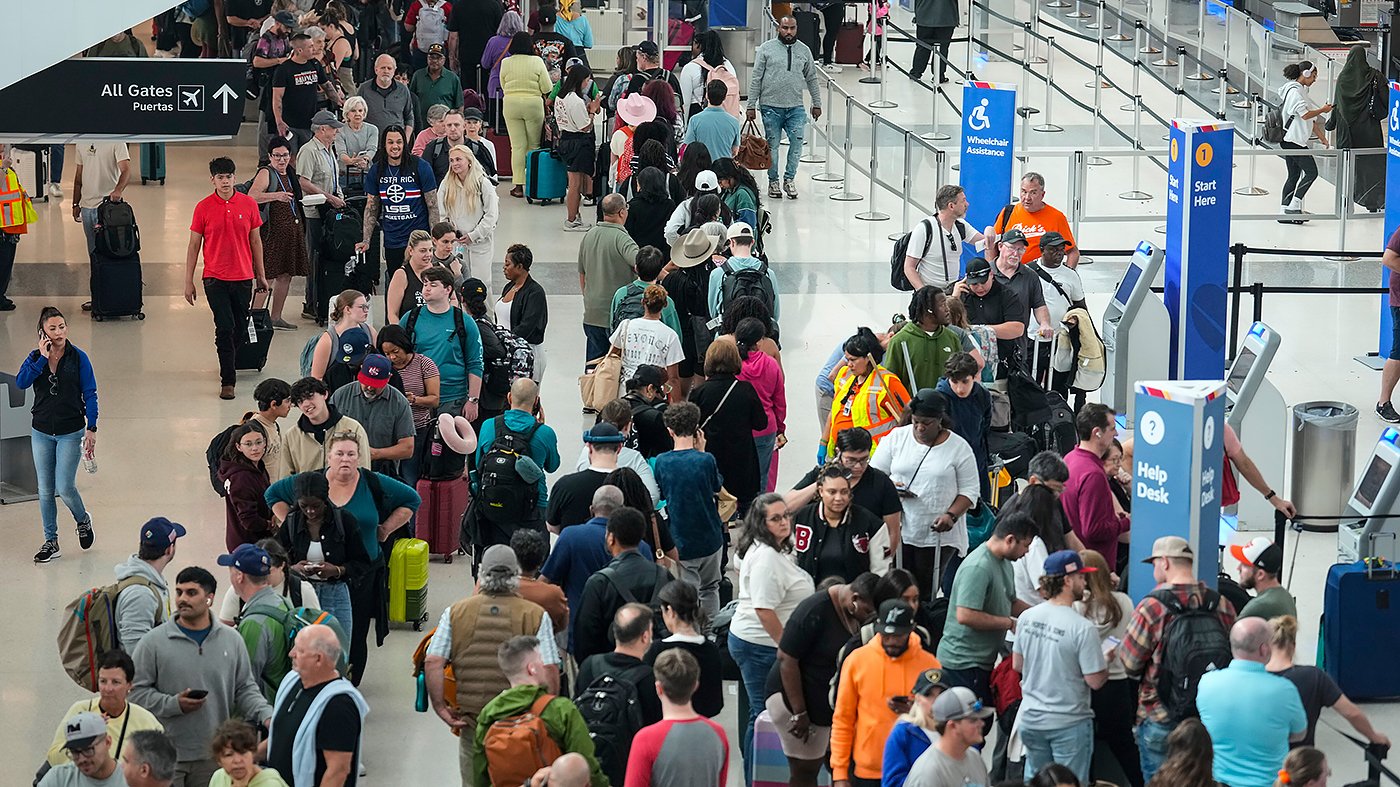
The ongoing partial shutdown of the Department of Homeland Security is creating a stark divide in airport security operations across the country, with the nation's largest travel hubs experiencing a staffing crisis as unpaid Transportation Security Administration officers increasingly stay home.
While the national TSA callout rate has climbed from a pre-shutdown average of 4% to over 11%, the situation at major airports is dramatically worse. Data from this week shows absentee rates approaching 40% at critical facilities. Houston's two airports saw rates of 43% and 39.8%, while John F. Kennedy International in New York recorded 36.8% and Atlanta's Hartsfield-Jackson reached 36.6%. This has resulted in the widespread, hours-long security wait times that have become emblematic of the shutdown's impact on travel.

The Metropolitan Cost Crunch
Union leaders point to economic pressures in major metropolitan areas as a primary driver of the disparity. "Most officers cannot afford to live in Atlanta, so they're living an hour, sometimes an hour and a half away, to commute to work," said Aaron Barker, president of the American Federation of Government Employees Local 554. He explained that TSA salaries, which have gone unpaid during the record-breaking funding lapse, do not cover the high costs of living near major hubs, making the financial strain of commuting without pay unsustainable.
Johnny Jones, an AFGE leader covering Texas airports, highlighted the geographic challenge in spread-out cities like Houston, where commutes can span 80 to 100 miles. "It may be difficult for employees to deal with the economical impacts of fuel costs and other daily costs," Jones noted, describing how the shutdown is pushing essential agencies toward a breaking point.
Community Support in Smaller Hubs
In contrast, smaller regional airports have largely avoided the severe operational disruptions seen at major hubs, though their TSA officers face the same pay interruption. Union officials attribute this to stronger community ties and different workforce demographics. "Some of the airports have received excessive amounts of donations for the employees, because these people know them on a first-name basis when they fly through," Jones said, citing one location where 14 employees received over $5,000 in community donations.
Rebecca Wolf, president of an AFGE local covering several western states, confirmed that smaller communities have rallied with food and gas card donations. However, she stressed the universal emotional toll. "People come to work crying. Some can't come to work. It's affecting them mentally and emotionally," Wolf said, emphasizing that the crisis extends beyond finances.
Structural Differences in the Workforce
Another factor is the prevalence of part-time officers at smaller airports, who may have supplemental income streams. "They already have supplemental income, so you wouldn't have the same struggle as if you lived in a bigger city where the cost of living is much more expensive," Barker explained. Yet he was quick to add, "That doesn't take away from the fact that those officers are still going without pay and experiencing the same strain."
The growing staffing emergency has prompted political responses, including a legislative proposal for a 10% bonus for unpaid TSA workers. Meanwhile, the administration's deployment of ICE officers to airports has been criticized by union leaders as an ineffective measure that fails to address the core problem of unpaid essential personnel.
As the shutdown enters its fifth week with no congressional resolution in sight, the situation at major airports serves as the most visible indicator of the strain on federal workers. The disproportionate impact on large hubs underscores how geographic economics and workforce structure intersect with political impasse, creating security vulnerabilities at the nation's busiest travel gateways while DHS officials prepare to detail the escalating fallout to lawmakers.