A fragile bipartisan agreement to restore funding for the Department of Homeland Security and end a 40-day partial shutdown collapsed on Tuesday, facing immediate and intense opposition from both Democratic and conservative Republican lawmakers. The deal, which had gained tentative White House support, now leaves the record-breaking shutdown on track to extend into mid-April, exacerbating travel disruptions nationwide.
Framework Faces Immediate Rejection
The proposed framework would have funded nearly all of DHS through standard appropriations, while segregating additional money for U.S. Immigration and Customs Enforcement into a separate reconciliation bill—a procedural tool allowing passage with only Republican votes. Senate Democrats swiftly rejected this structure, maintaining their weeks-long demand for substantive changes to ICE enforcement authority as a non-negotiable condition for any deal.
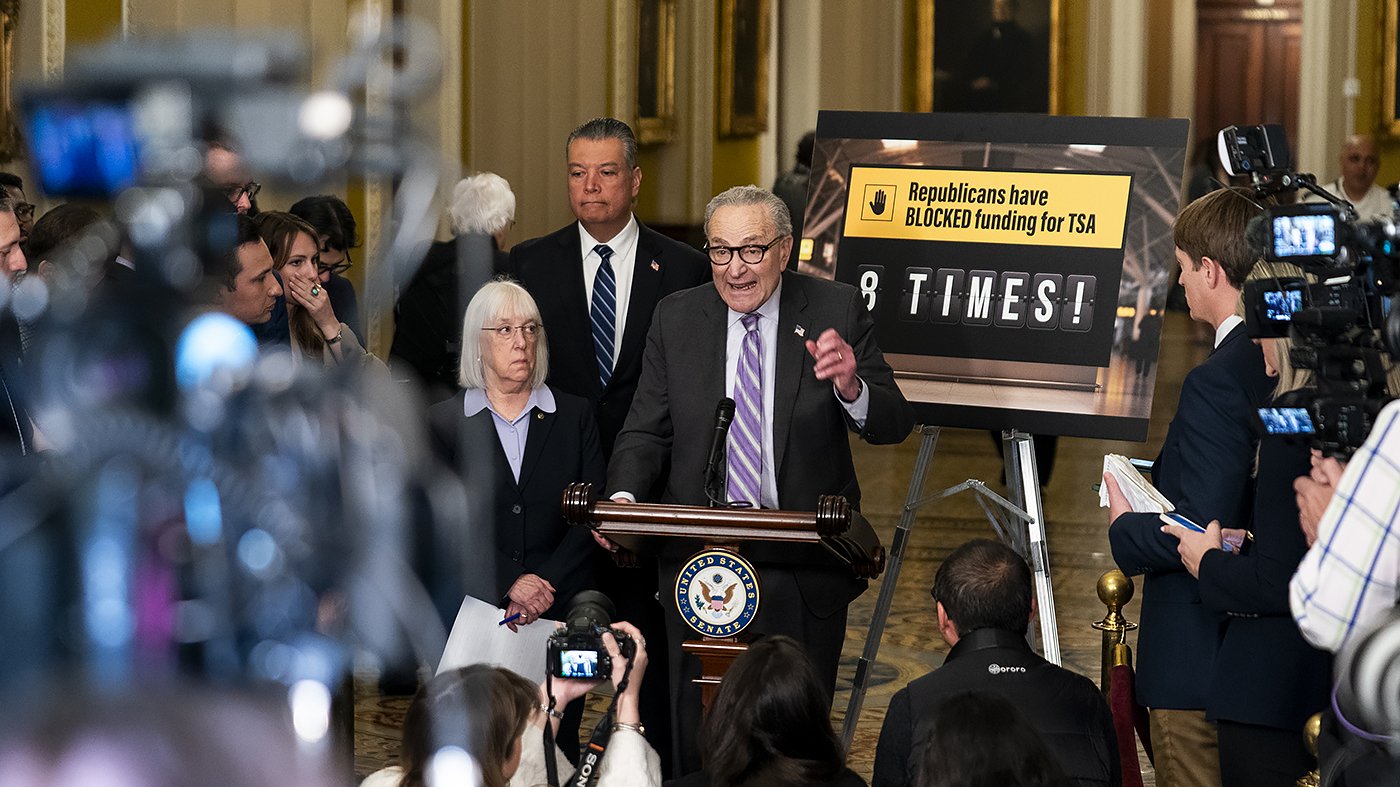
"Every one of my colleagues believes we should be unified, and we need reforms of ICE—every single one," Senate Minority Leader Chuck Schumer (D-N.Y.) stated after a party meeting. He indicated Democrats would prepare a counteroffer but affirmed their core demand to "rein in" the agency, a position GOP leaders have repeatedly refused.
Conservative Skepticism and House Resistance
Simultaneously, conservative Republicans expressed deep skepticism, questioning the viability of passing a reconciliation bill in a narrowly divided Congress and criticizing the plan's division of DHS funding. House Speaker Mike Johnson (R-La.) echoed this resistance, telling reporters, "The House has funded DHS twice. We're prepared to do it again. Completely fund the entire department. That is the responsible way to do this thing."
Further complicating the proposal was a plan to include elements of President Trump's SAVE America Act, a voting and election security measure, within the reconciliation package. Members of the House Freedom Caucus raised parliamentary concerns, doubting whether such provisions could survive the strict rules governing the reconciliation process.
Shutdown Impacts Worsen at Critical Juncture
The breakdown arrives as the shutdown is set to become the longest in U.S. history this weekend. With Congress scheduled to begin a two-week Easter recess after Friday, failure to reach an accord this week guarantees the closure continues through at least mid-April. This places immediate pressure on newly confirmed Homeland Security Secretary Markwayne Mullin and intensifies operational crises at the nation's airports.
Transportation Security Administration staffing shortages have reached critical levels, with the national absence rate exceeding 10% again on Monday. Major hubs like Houston, Atlanta, and New Orleans reported call-out rates approaching 40%, while airports in New York City, Baltimore, and Pittsburgh saw rates surpass 25%. In response, the administration has deployed ICE officers to assist at 14 major airports, a move that has further inflamed Democratic opposition.
Broader Political Context
The DHS funding stalemate occurs alongside other significant legislative battles, including a bipartisan legal effort to counter executive overreach in election administration. The political fallout is immediate, leaving approximately 240,000 DHS employees, including TSA officers, without pay and threatening to paralyze air travel networks further. Union leaders have implored lawmakers not to depart for recess without resolving the pay issue.
With the deal effectively dead, negotiations appear to have reset entirely. The impasse underscores the deep ideological divides over immigration enforcement that have consistently thwarted congressional action, now manifesting in a prolonged administrative shutdown with tangible consequences for national security and travel infrastructure.