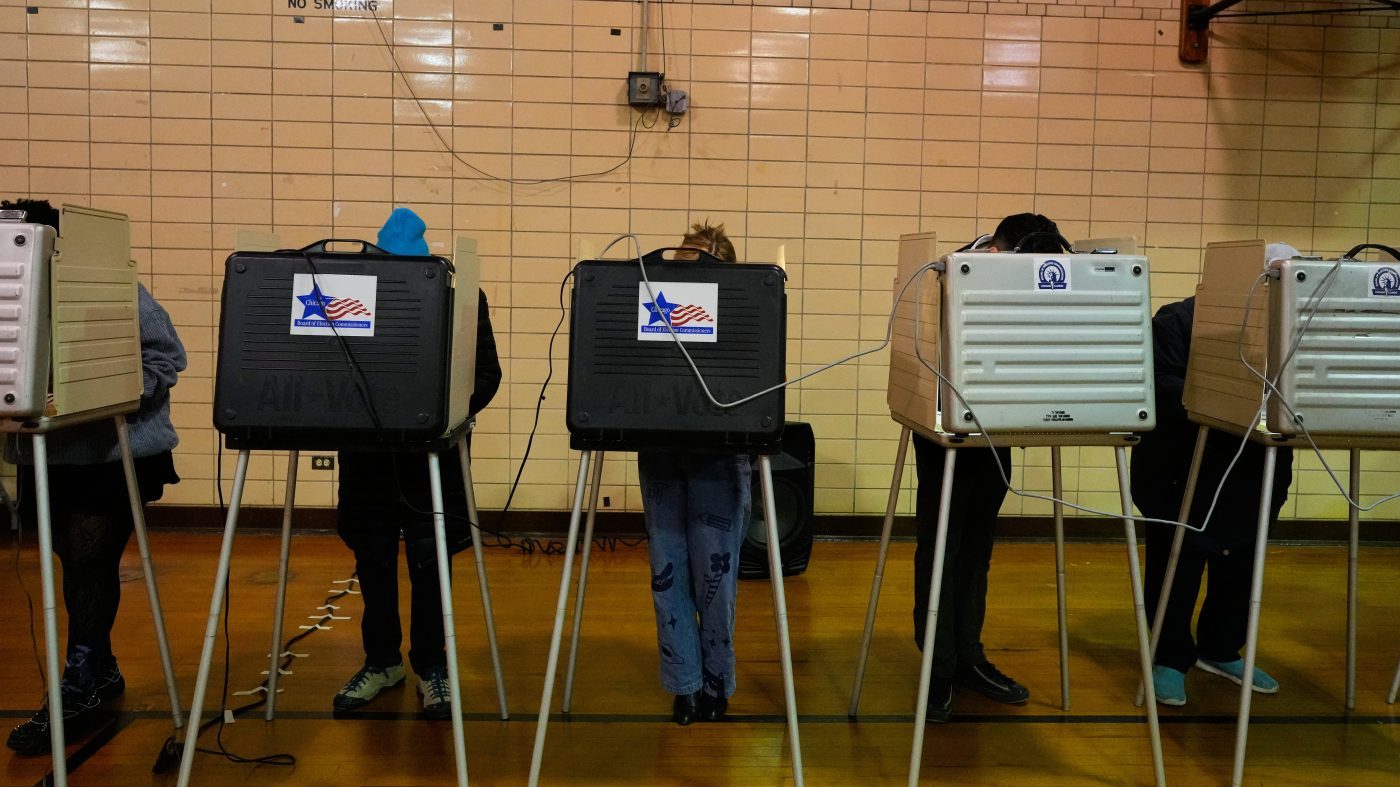
A new bipartisan legal organization launched Monday with the explicit mission of defending the decentralized, state-run American election system, positioning itself as a direct counterweight to former President Donald Trump's recent push to nationalize election administration. The Bipartisan American Election Project (BAEP) is spearheaded by Bob Bauer, former White House counsel to President Obama, and Ben Ginsberg, who served as national counsel for the Bush-Cheney campaigns.
Legal Firepower from Both Parties
The organization's leadership and advisory board represent a rare confluence of top legal talent from Democratic and Republican administrations. Bauer previously served as general counsel for the Democratic National Committee, while Ginsberg has been a vocal critic of Trump's efforts to overturn the 2020 election results. The board includes Dana Remus, White House counsel under President Biden, and Donald Verrilli, solicitor general under Obama. Republican representation includes Michael Carvin, a Justice Department official under President Reagan.
In a statement, BAEP said it is "dedicated to defending the constitutional principles and democratic norms essential to the conduct of free and fair elections in the United States and to public confidence in the results." The group's formation follows a series of moves by the Trump administration to increase federal scrutiny of state election procedures, including the controversial deployment of federal agents during the government shutdown, a tactic seen by critics as an escalation of federal election involvement.
Responding to Trump's Federalization Call
The project's launch comes one month after Trump publicly called for transferring control of election administration from states to the federal government. "I want to see elections be honest, and if a state can't run an election, I think the people behind me should do something about it," Trump said in the Oval Office, surrounded by Republican lawmakers. He specifically criticized election administration in Detroit, Philadelphia, and Atlanta, calling it "horrible corruption."
Trump has also strongly endorsed the Safeguard American Voter Eligibility (SAVE America) Act, which would require proof of citizenship for federal voter registration and mandate ID presentation at polling places. The House passed the bill earlier this month, but it faces unified Democratic opposition in the Senate, where a marathon debate continues. This legislative push mirrors other Trump-era policy shifts, such as the administration's move from regime change to deal-making with Iran, which represented a significant strategic pivot.
Immediate Legal Action
Concurrent with its launch, BAEP filed amicus briefs in federal court opposing the Trump administration's requests for comprehensive voter roll data from Georgia and Massachusetts. The 26-page Georgia brief argues that "the Constitution divides power between the state and federal governments to secure Americans' liberty. It entrusts States with the primary responsibility for administering elections because state governments are closer to the people and more responsive to their needs."
This legal action challenges the Justice Department's acquisition of full voter files from at least ten states since February, according to the Brennan Center for Justice. The move reflects ongoing tensions between state autonomy and federal oversight that have characterized multiple policy areas during the Trump presidency, from immigration enforcement to disaster management.
Constitutional and Political Context
The U.S. Constitution grants states authority over the "times, places and manner" of holding elections, while allowing Congress to "make or alter such Regulations." BAEP's formation represents a defensive coalition of establishment legal figures from both parties who view Trump's federalization rhetoric as a threat to this constitutional balance. Their effort emerges alongside persistent public demonstrations targeting Trump policies, including the massive 'No Kings' protests that have focused on immigration and Iran.
The organization's bipartisan composition is notable given the deeply polarized environment surrounding election administration since 2020. Its launch signals that concerns about centralizing election control extend beyond typical partisan lines, uniting former adversaries who have historically operated within the traditional framework of state-run elections with federal oversight. This development occurs as the administration continues to navigate complex international negotiations, such as potential US-Iran talks that Pakistan has offered to host.