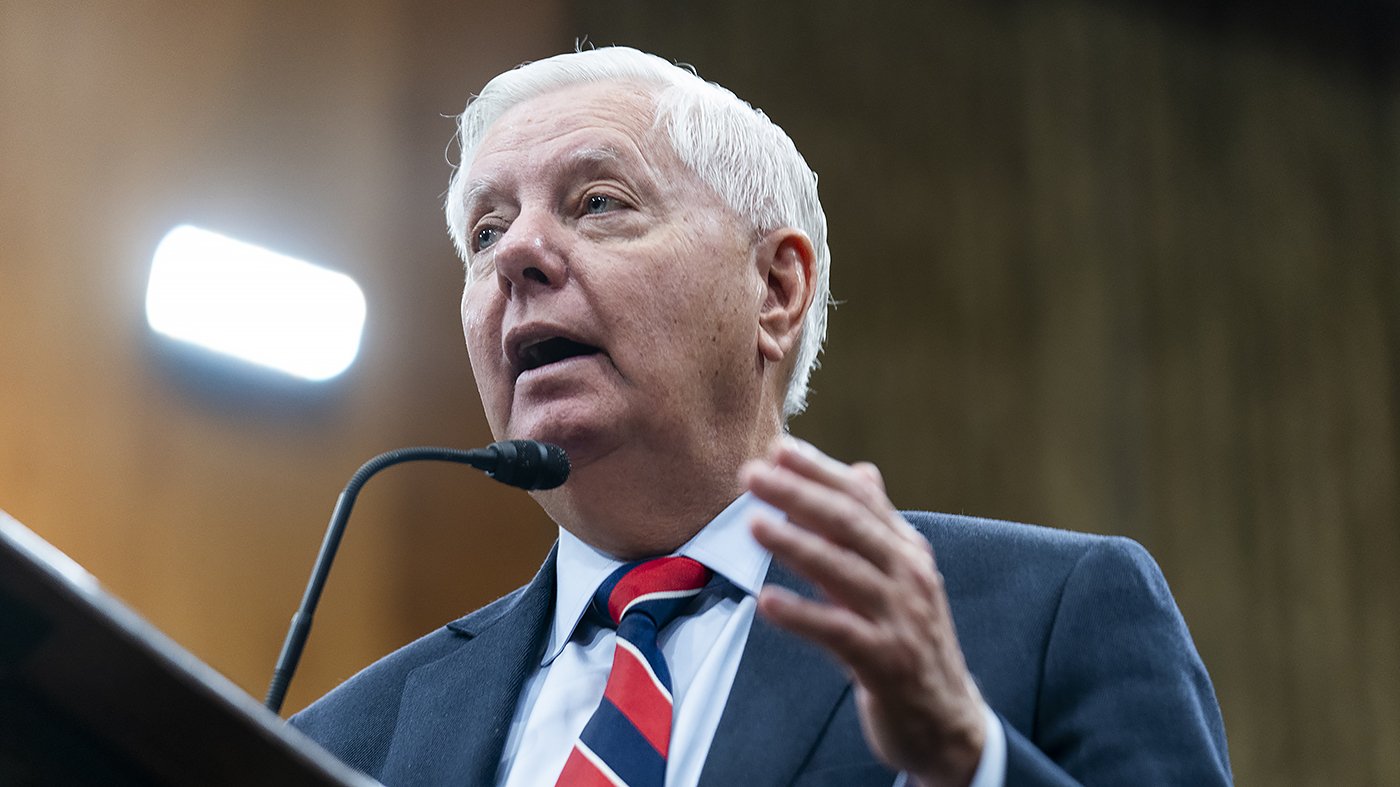
Senate Budget Committee Chairman Lindsey Graham announced plans to rapidly draft a second budget reconciliation package aimed at funding Immigration and Customs Enforcement removal operations, providing money for the ongoing conflict in Iran, and implementing key elements of Republican voting reform legislation. The South Carolina Republican stated he has received approval from former President Donald Trump and Senate Majority Leader John Thune to proceed with the procedural maneuver, which would allow passage with a simple majority and circumvent a Democratic filibuster.
Strategic Shift on Homeland Security Funding
Graham, alongside Senate Homeland Security Appropriations Subcommittee Chair Katie Britt, presented a strategy to White House officials to separate ICE's Emergency Removal Operations funding from the broader Department of Homeland Security appropriations bill. This move is designed to ease passage of the DHS funding measure while shifting more contentious immigration enforcement money to the reconciliation process. The plan also incorporates aspects of the SAVE America Act, a voting integrity bill currently stalled on the Senate floor.
"After consulting with President Trump and his team and Leader Thune, the Senate Budget Committee will expeditiously move toward creating a second budget reconciliation bill," Graham said in a formal statement. "The purpose is to make sure there is adequate funding to secure our homeland and to support our men and women in the military who are fighting so bravely." He added that reconciliation presents "many opportunities to improve voter integrity."
Internal Republican Skepticism
The proposal is meeting substantial resistance from within Republican ranks, casting doubt on its viability. Senator Rick Scott of Florida, a prominent Trump ally, dismissed the plan as a "pipe dream" in a CNBC interview, arguing that a reconciliation bill could not be completed. He contended that reconciliation rules are designed for mandatory spending programs, not the discretionary funding that typically supports DHS operations, a point that highlights the ongoing congressional deadlock over homeland security appropriations.
Senator Mike Lee of Utah, a leading advocate for the SAVE America Act, expressed even deeper pessimism. "It's hard to imagine how the SAVE America Act could be passed through reconciliation. And by 'hard' I mean 'essentially impossible,'" Lee posted on social media platform X. He suggested that major revisions to the voting bill would likely be necessary, undermining the core strategy Graham is promoting.
Procedural Hurdles and Political Risks
Pursuing a second reconciliation package would trigger a complex and politically fraught legislative process. It would require both chambers of Congress to first pass a concurrent budget resolution, necessitating a marathon "vote-a-rama" session in the Senate where Republicans would face a barrage of Democratic amendments. A subsequent reconciliation bill would demand another such session, giving Democrats numerous opportunities to force politically difficult votes that could be weaponized in upcoming campaign ads.
This comes as a TSA staffing crisis worsens travel delays amid the DHS funding impasse, highlighting the practical consequences of the budgetary stalemate. The Republican conference has recent experience with the arduous reconciliation process, having spent months last year passing the "One Big Beautiful Bill Act," which extended the 2017 tax cuts and enacted new tax relief alongside cuts to Medicaid and SNAP benefits.
Broader Context and Implications
The push for a reconciliation bill intersects with several other volatile political issues. The inclusion of funding for military operations in Iran follows recent policy shifts on Iran sanctions that critics compare to the Afghanistan withdrawal. Furthermore, the attempt to advance a partisan agenda through reconciliation occurs in a climate where Trump's unscripted remarks continue to challenge GOP message discipline, complicating unified party strategy.
With Senators Steve Daines and Bernie Morena also attending the White House meeting, the proposal has notable supporters. However, the significant procedural obstacles and vocal internal opposition suggest Graham faces a steep climb. The plan underscores the persistent Republican effort to leverage the reconciliation process for policy priorities that lack bipartisan support, even as it exposes deepening fissures within the party over legislative strategy and the limits of parliamentary tactics.