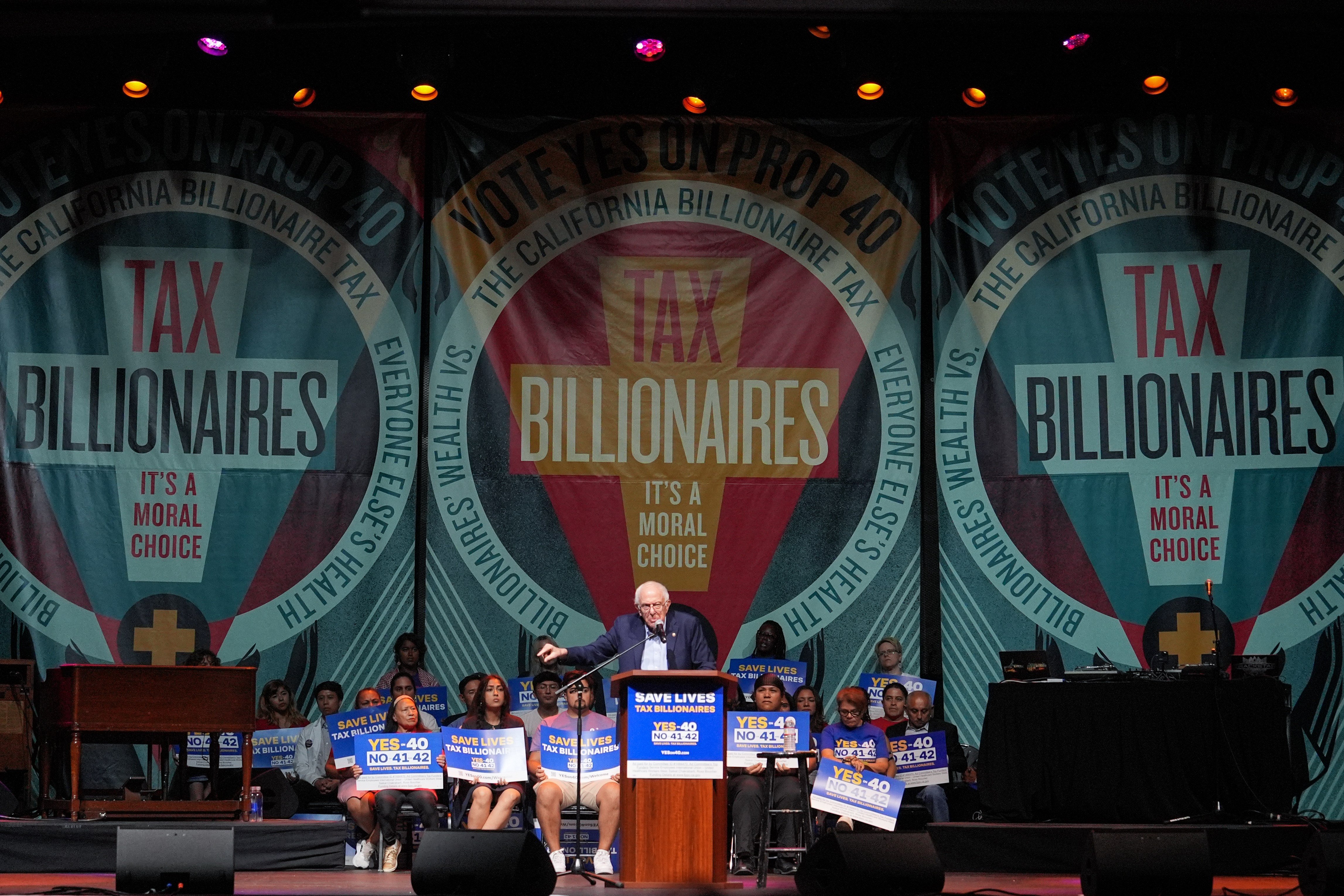
The defeat of California's billionaire asset tax earlier this month has left many scratching their heads. But the real mystery isn't why voters rejected it—it's why the state needed such a measure in the first place. The answer lies not in the machinations of wealthy individuals, but in a broken global corporate tax system that has been quietly undermining public finances for decades.
As voters across the country delivered a sharp rebuke to a party perceived as cozy with wealthy insiders, Californians opted to shield tech moguls from a one-time levy on their vast holdings. This came even as deep-red Texas elected Democrats by surprising margins, highlighting a stark contrast in priorities. The conventional explanation for California's rejection points to the massive spending by billionaires like Sergey Brin, who poured over $100 million into defeating the measure. But money alone doesn't always win elections—just look at Elon Musk's failed attempt to boost Republican Ken Paxton in Texas, who lost by double digits despite heavy financial backing.
The real issue, as argued by Boston University law professor Steven Dean, is that the billionaire tax was a response to a deeper problem: a global tax architecture that allows multinational corporations to avoid paying their fair share. This system, built over decades through the Organisation for Economic Co-operation and Development (OECD), has created a labyrinth of treaties that reduce or eliminate taxes on cross-border profits. These agreements, dating back to the 1960s, have made it nearly impossible for countries—especially poorer ones—to tax corporations that operate within their borders without a physical presence.
Take the infamous "double Irish Dutch sandwich" technique, used by tech giants like Apple and Google. This strategy routed profits through Irish and Dutch subsidiaries, exploiting loopholes in international tax treaties to slash tax bills to near zero. Such maneuvers wouldn't be possible without the very treaties that were supposed to facilitate fair taxation. As a result, corporations can earn billions in a country while paying nothing there, and the burden shifts to ordinary taxpayers.
Senator Bernie Sanders has proposed a novel solution: tax the equity of large AI companies rather than chasing billionaires after they've amassed fortunes. This approach, while revolutionary, is essentially a call to reinvigorate the corporate tax. We already have a corporate tax, but it's been hollowed out by these international agreements. The challenge is that corporations, unlike individuals, can't simply move across state lines to escape federal taxes—but they can shift profits overseas through legal but abusive structures.
The failure of California's tax should be a wake-up call. Instead of mourning its defeat, we should focus on dismantling the hidden mechanisms that made it necessary. As Dean suggests, we might be better off taxing corporations directly rather than their entitled owners. The funds needed for health care, education, and other urgent priorities could be unlocked by simply closing the loopholes that allow billionaires to avoid the corporate tax we already have.
This isn't just about California; it's about the broader fight for tax fairness. The landmark rejection in California underscores the need for systemic reform. And with Democrats vowing aggressive corporate oversight in the new Congress, there's an opportunity to address these issues. The GOP's midterm rout shows that voters are hungry for change, and Warren's corporate crackdown could be a step in the right direction.
Ultimately, the billionaire tax failure is a symptom of a larger disease. The international tax system, designed to prevent double taxation, has become a shield for corporate tax avoidance. Fixing it won't be easy, but it's a necessary step toward a fairer economy. As Dean puts it, we should stop protecting billionaires from the corporate tax and start collecting what's owed.