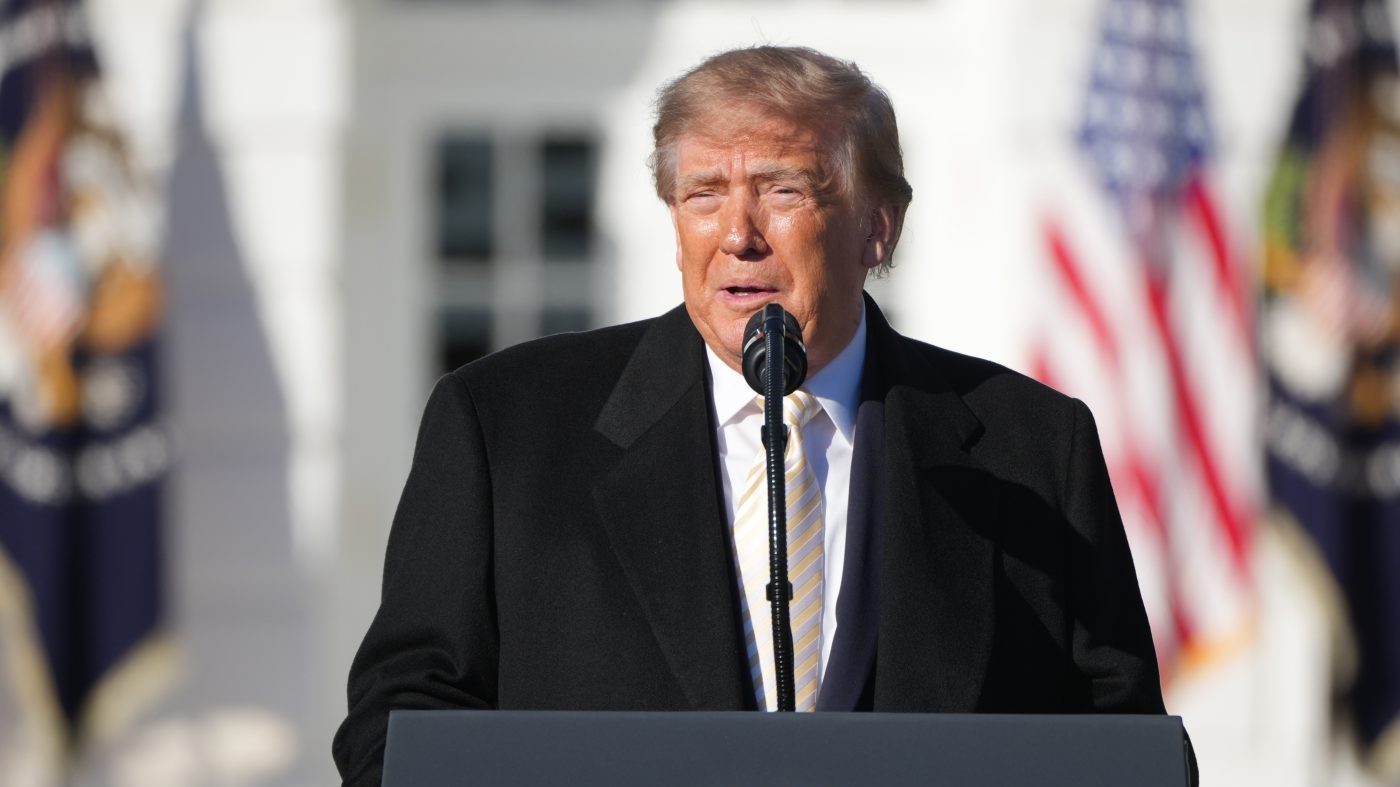
President Trump on Thursday demanded an investigation into the government's revised economic growth figures, alleging that the initial numbers released before the midterm elections were deliberately manipulated. In a Thanksgiving Day post on his Truth Social platform, Trump claimed the upward revision of third-quarter GDP was a "massive, and purposeful, error," though he provided no evidence to support the accusation.
The Commerce Department's Bureau of Economic Analysis (BEA) reported Wednesday that the U.S. economy expanded at a 4.3% annualized rate from July through September, a significant upgrade from the 3.4% pace initially estimated. Trump questioned why the "correct number" wasn't issued before the elections, suggesting the discrepancy was intentional.
"Why wasn't the correct number issued before the Election? I am asking for an immediate investigation of this situation," Trump wrote. "This is not a small error, this is a massive, and purposeful, error." He added that the economy under his administration is "doing FAR BETTER than the good numbers already released."
Economists note that GDP estimates are routinely revised as more complete data becomes available. The BEA is scheduled to release another estimate next month, a standard practice that often results in adjustments.
The president's demand comes after a bruising midterm cycle for Republicans, who lost control of both the House and Senate. Democrats successfully made affordability a central campaign theme, capitalizing on voter frustration over persistently high prices. The economy was a top concern for voters, with many citing the impact of Trump's sweeping tariffs and the economic fallout from the ongoing conflict with Iran.
Despite the upward revision, inflation remains a stubborn challenge. Separate data released Wednesday showed the personal consumption expenditures (PCE) price index—the Federal Reserve's preferred inflation gauge—rose 3.8% annually in October, well above the central bank's 2% target. This has fueled expectations that the Fed could raise interest rates at its December meeting after holding them steady in October.
The GDP revision has also reignited political debate over the reliability of government economic data. Critics of Trump's demand point to the long-standing practice of revising figures and note that the BEA operates with a degree of independence from the White House. Supporters, however, argue that the timing of the initial release—just days before the election—was suspicious.
This is not the first time Trump has questioned economic data. He has previously accused the Bureau of Labor Statistics of manipulating unemployment numbers during his first term. The latest controversy adds to a growing list of disputes between the president and federal agencies, including a recent court ruling blocking his birthright citizenship order.
The BEA has not commented on Trump's allegations, but officials have emphasized that the revision process is transparent and based on additional data. The next GDP estimate is due in December, which may provide further clarity—and potentially more political ammunition.