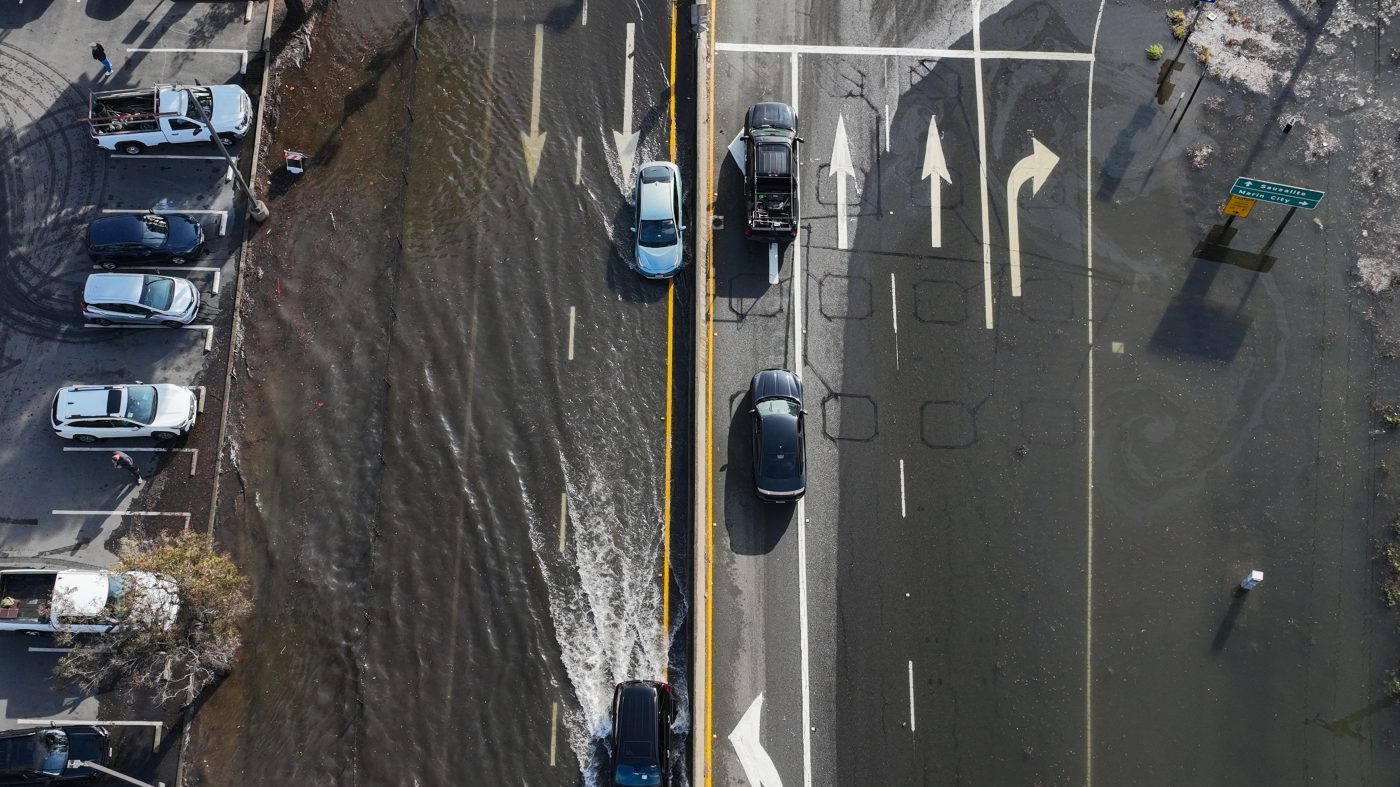
Severe weather on both the Pacific Northwest and East Coasts threw Thanksgiving travel and celebrations into disarray this week, as heavy rain, flooding, and high winds hit major population centers.
The National Weather Service (NWS) warned in a Thursday forecast that a low-pressure system moving up from the Southeast would bring torrential rain to New England, with the risk of flash flooding and isolated thunderstorms in the Southeast extending into the weekend. Forecasters also predicted rainfall and some higher-elevation snow for parts of the Pacific Northwest.
Governors in two key Northeast states took emergency action. New York Governor Kathy Hochul and New Jersey Governor Mikie Sherrill both declared states of emergency in response to the fierce weather. Hochul's order, which she issued ahead of the storm, covered New York City and its suburbs, as reported earlier.
The storm's impact on air travel was significant. FlightAware data showed roughly 500 flights into, within, or out of the U.S. were delayed, with another 365 canceled. Transportation Secretary Sean Duffy attributed most of the delays to weather, though recent system outages at several airlines have also drawn scrutiny. Airports in Baltimore, Fort Lauderdale, Miami, Chicago, and Washington, D.C., reported the highest numbers of delayed or canceled flights by Thursday morning.
The severity of the storm even forced the iconic Macy's Thanksgiving Day Parade to be postponed. Organizers announced Wednesday that the annual event, traditionally held on Thanksgiving morning in New York City, would be pushed back to Saturday. The decision came as the region braced for the worst of the weather.
On the West Coast, the storm brought dangerous coastal conditions. King tides, some exceeding eight feet, swept through California and Oregon, causing a pier to partially collapse and leading to serious flooding. The National Weather Service office in Portland issued a coastal flood warning that remained in effect through Friday.
The travel disruptions come at one of the busiest times of the year for American transportation networks. Concerns about the aging air traffic control system have been raised amid record holiday travel numbers. Additionally, rising gas prices have added to the financial strain on holiday travelers.
As the storm system continues to move through the region, officials are urging residents and travelers to exercise caution and stay updated on local warnings.