In 1965, President Lyndon B. Johnson signed the Hart-Cellar Act and the Voting Rights Act, measures that together constituted what many historians consider the third great revolution in American history, following the Revolutionary and Civil Wars. These laws dismantled the restrictive immigration quotas of 1924 and dismantled Jim Crow voting barriers in the South.
The Hart-Cellar Act abolished the national origins quota system that had severely limited immigration from non-European countries. President John F. Kennedy had called those quotas "without basis in either logic or reason," and Johnson, who assumed office after Kennedy's assassination, made it his mission to pass the bill. Under the gaze of the Statue of Liberty, Johnson signed the legislation, ushering in a wave of immigrants larger than any in U.S. history. Today, there are 53.3 million foreign-born residents in the country, with 11 million arriving between 2020 and 2025.
The Voting Rights Act was the other pillar of Johnson's revolution. It required Southern states to obtain federal pre-clearance before changing voting laws or redistricting, and it empowered federal examiners to register Black voters. Within five years, Black voter registration in six Southern states had increased dramatically, and Black representation in Congress grew exponentially. Johnson famously told his press secretary, Bill Moyers, "We may have lost the South for your lifetime—and mine." He was right: Johnson died in 1973, and Moyers in 2025.
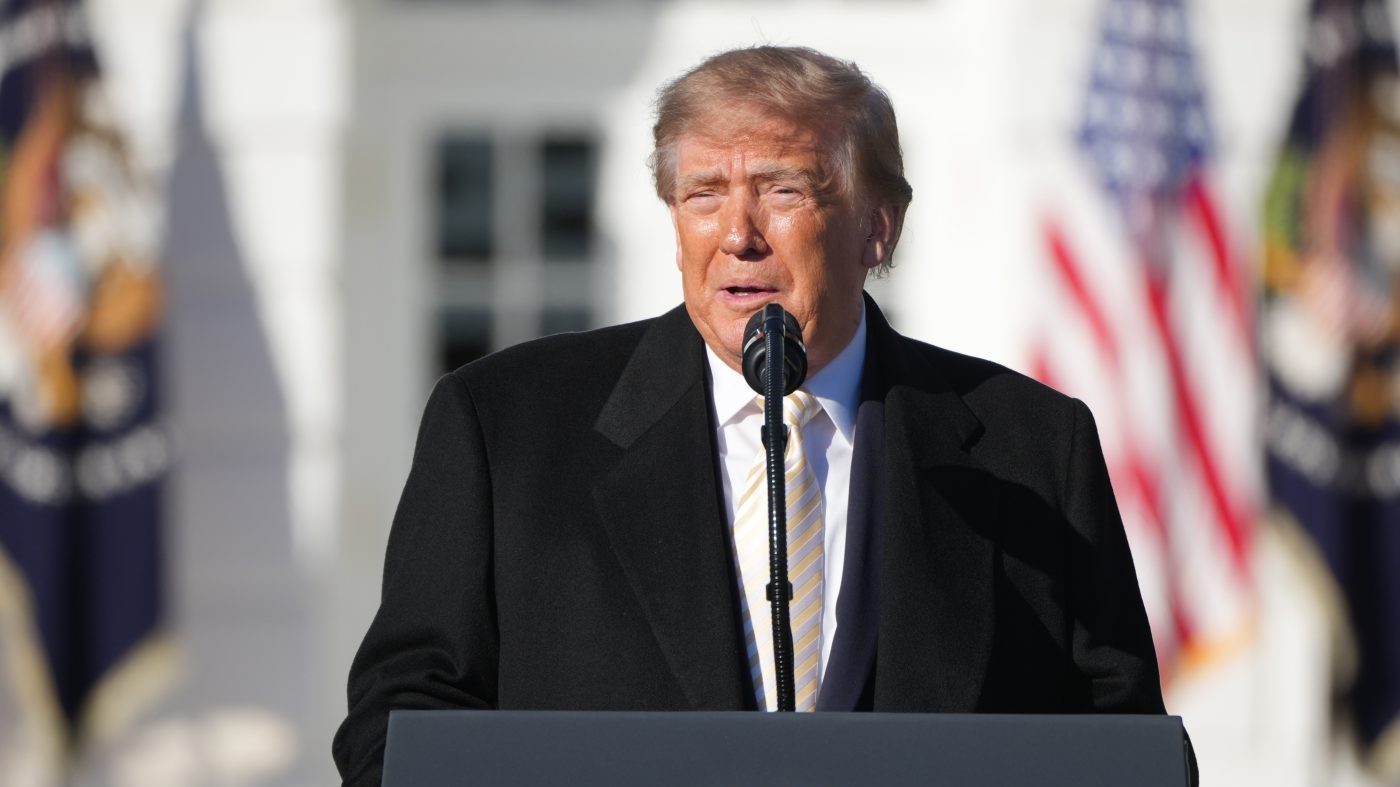
Donald Trump came to office determined to dismantle this legacy. He echoed the 1924 Republicans' preference for immigrants from "nice countries like Denmark or Switzerland," and he decried the influx of non-white migrants as "poisoning the blood of the country." He also targeted the Voting Rights Act, which Johnson had described as correcting a wrong "which no American, in his heart, can justify."
With three Trump-appointed Supreme Court justices, the Court's decision in Louisiana v. Callais declared majority-Black congressional districts to be unlawful racial gerrymanders. Southern states quickly began redrawing maps to eliminate Black representation, with Louisiana leading the way.
But in 2026, voters resuscitated Johnson's revolution. Turnout in majority-minority counties protected by the Voting Rights Act surged 10 percent higher than in 2022. Mississippi elected its first Black senator since Reconstruction. Democrat Keisha Lance Bottoms became Georgia's first African American woman governor, and Democrats David Crowley and Aaron Ford won gubernatorial races in Wisconsin and Nevada, respectively. Wes Moore was easily reelected in Maryland, and Byron Donalds, a Republican, became Florida's first Black governor.
Hispanic turnout also reached record levels. In California, the Hispanic share of the electorate jumped from 28 percent in 2022 to 41 percent in 2026, helping Xavier Becerra become the state's first Hispanic governor in over 150 years. In Texas, majority-Hispanic border communities ousted several Republican congressmen, and Gina Hinojosa became the first Democrat to win the governorship since 1990, as well as the state's first Latina governor. Nationwide, there was a 33-point shift of Hispanic non-college voters toward the Democrats.
In a January interview with The New York Times, Trump denounced Johnson's civil rights legislation as an era in which "white people were very badly treated." His promise to "Make America Great Again" was, critics argue, a call to restore a time when whites were the overwhelming majority, Blacks were subjugated in the South, and Hispanics were a small minority. Those who felt most threatened by Johnson's revolution rallied to Trump's banner.
When Johnson signed the Voting Rights Act, he told Congress: "It is difficult to fight for freedom. But I also know how difficult it can be to bend long years of habit and custom to grant it." Despite setbacks and Trump's determined efforts to restore those habits, the fight for freedom appears to have taken a decisive turn. The 2026 elections suggest that Johnson's dream of a multi-cultural, multi-racial America is on the precipice of a final victory.