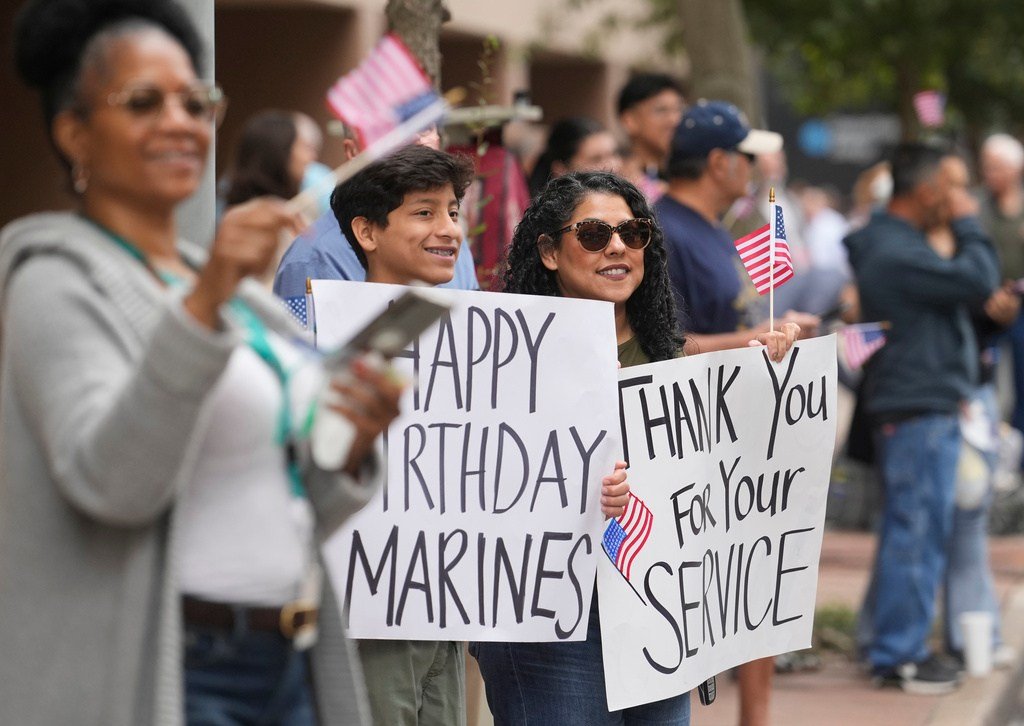
On Veterans Day, Americans paused to honor those who served, with parades, free meals, and airport handshakes. But retired Marine Lt. Col. Kevin M. Schmiegel argues that such symbolic appreciation, while genuine, fades quickly and fails to address the persistent gap between the military and civilian society.
Writing in a new essay, Schmiegel revisits a refrain from the post-9/11 era: “We’re at war. America’s at the mall.” Despite renewed combat deployments this year, he contends the line remains painfully accurate. The civilian-military divide, he warns, is not closing—it is widening, with serious implications for national security.
Citing the 2025 Reagan National Defense Survey, Schmiegel notes that only 49% of Americans express great confidence in the military, a 21-point drop since 2018. Pew Research similarly found that just one-third of adults under 30 have an immediate family member who served. The Department of Defense has repeatedly flagged this disconnect as a threat, because young people rarely aspire to a life they have never seen up close.
Schmiegel, who has spent three years in working sessions with veterans, employers, mayors, and installation commanders, insists that awareness without action is meaningless. “We’re comfortable getting loud about it for a little while,” he writes, “but when it comes time to take that problem off its pedestal and really put our hands on it, the crowd goes quiet.”
His key insight: the divide is local, and so is the fix. What works for a transitioning Marine in San Diego differs from what a Guard family needs in Nashville. Communities making real progress, he says, have stopped waiting for Washington and written their own plans—who hires, who trains, who mentors, and how success is measured.
Schmiegel also urges retiring the “broken veteran” narrative. When communities view service members and spouses as problems to be fixed, they create programs. When they see them as students, employees, entrepreneurs, and civic leaders, they design economies. The goal, he says, is veterans and families who thrive because of their service, not in spite of it.
Thriving, he adds, is about more than a job. It requires meaningful work, purpose, community, health, and practical tools—get one wrong and families move on. Get them right together, and they put down roots.
Schmiegel’s call to action: every member of Congress, mayor, CEO, college president, and installation commander should be able to answer what their community’s plan is to help those who serve thrive. If the only answer is a Veterans Day parade, it’s time to convene the people who can write a better one—and to let veterans and military spouses lead the effort, not just be its beneficiaries.
“America doesn’t have to be at the mall,” he concludes. “It can be on Main Street.”