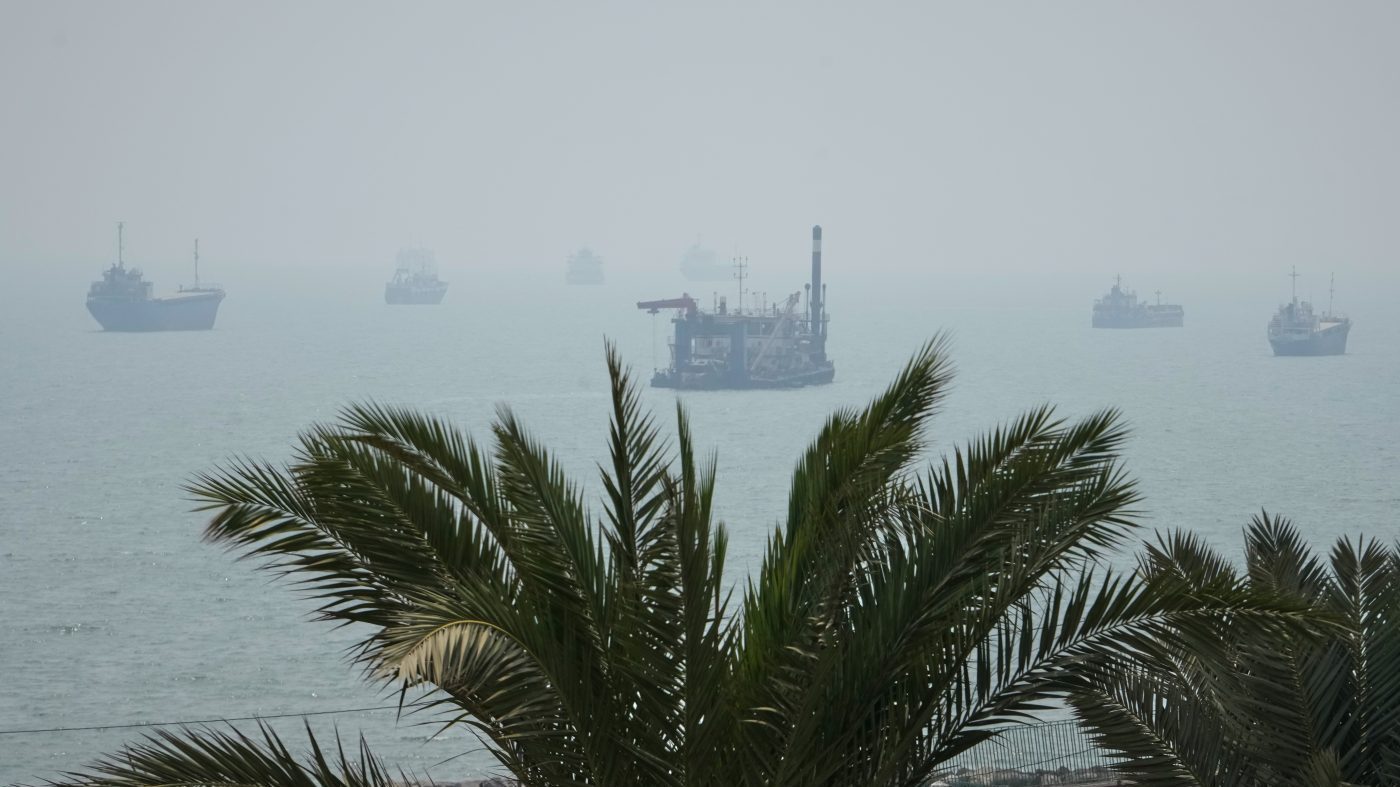
Iran's military has stepped up its oversight of the Strait of Hormuz, with an army spokesperson stating that forces are on heightened alert and that vessels must coordinate their passage with Iranian authorities to ensure safety. The announcement, carried by Iran's Tasnim News Agency on Wednesday, signals a further tightening of Tehran's grip on the strategic waterway, through which about a fifth of global oil supply passes.
Army spokesperson Mohammad Akrami-Nia said Iran has improved its monitoring capabilities by deploying new systems and upgrading existing ones. He also accused the United States and Israel of harboring undisclosed aims in their military campaign against Iran, beyond merely shutting down the country's nuclear program. The remarks come amid an ongoing conflict that has seen tit-for-tat strikes between Washington and Tehran since November, following a brief lull.

The warning follows an incident earlier this week when Iran's Islamic Revolutionary Guard Corps (IRGC) reported that three oil tankers escorted through the strait were struck by underwater mines, despite a U.S. military air escort. The IRGC has issued a stern statement, declaring that any transit through unauthorized routes or disregard for communicated warnings would be considered a violation and cooperation with aggressor forces. Such actions, the IRGC said, would be met with a firm response in line with previously announced regulations.
Just last week, Iran attacked three other tankers in or near the strait, with two of them hit as they were exiting the Persian Gulf. These attacks have heightened concerns about the safety of maritime traffic in the region and the potential for broader disruption to global energy supplies.
The Trump administration's war against Iran, now nearly nine months old, shows no signs of resolution as peace talks remain stalled. The conflict has seen Iran target a U.S. air base in Kuwait and American forces most recently strike Iran's Qeshm Island, located in the Strait of Hormuz. The recent activity marks an end to an unofficial quiet period that lasted roughly two months.
On Tuesday, IRGC commander in chief Maj. Gen. Ahmad Vahidi warned that any future fighting between Iran and the U.S. might not be limited to the Middle East and could expand to other regions if necessary. This threat underscores the potential for the conflict to escalate beyond its current scope.
In response to the heightened tensions, the United States has bolstered its naval presence in the region. The USS Theodore Roosevelt aircraft carrier has joined the USS George H.W. Bush and the USS George Washington in the Persian Gulf, a show of force aimed at deterring further Iranian aggression and reassuring allies.
The situation remains fluid, with both sides signaling readiness for further confrontation. The international community watches closely as the risk of miscalculation and wider conflict looms over one of the world's most critical maritime chokepoints. For more on the broader geopolitical implications, see our analysis of shifts in global strategic dynamics and the political fallout in Washington as the conflict continues.