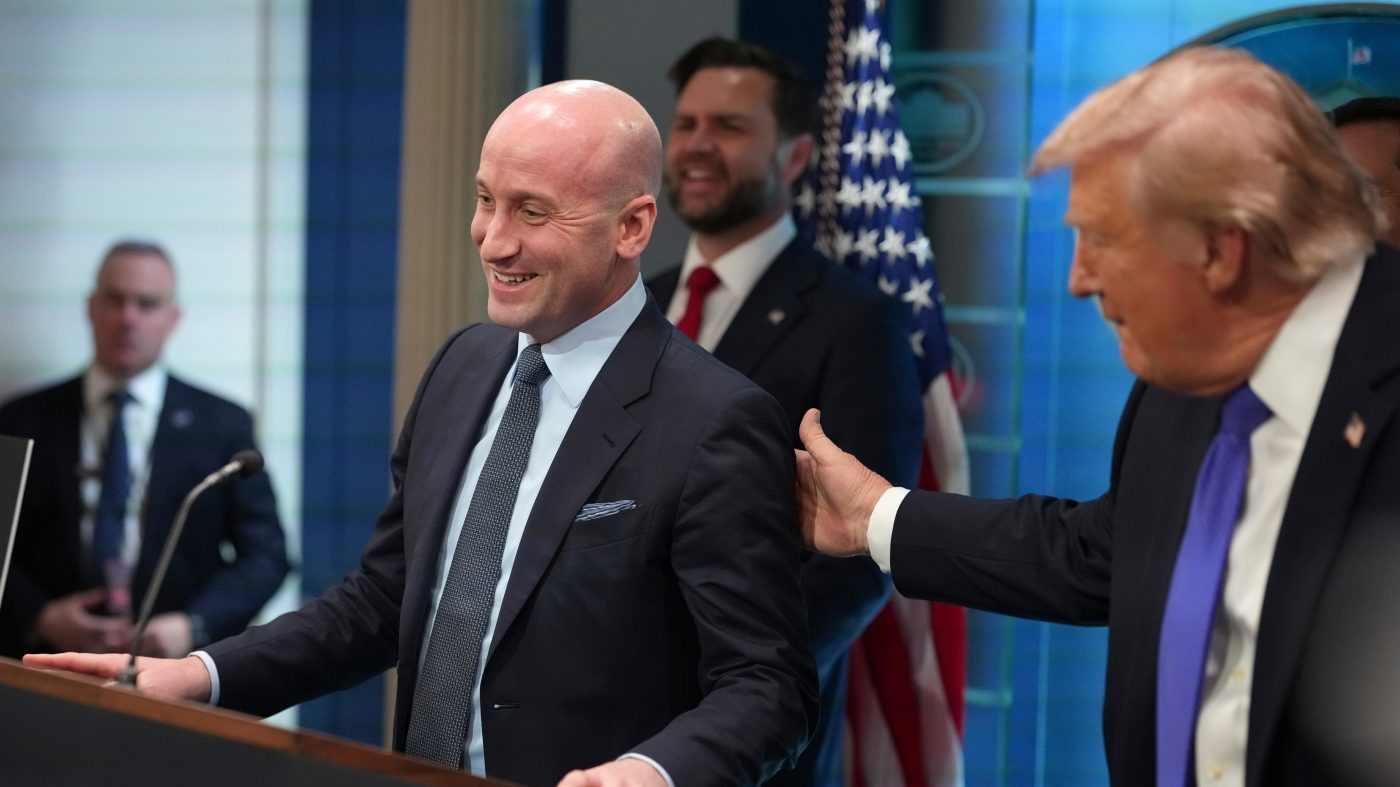
White House chief of staff Stephen Miller on Wednesday celebrated the U.S. Army's controlled detonation of lead-based munitions in Iowa as a triumph for the Trump administration, pointing to early environmental readings that suggest the spread of lead pollution was more contained than initially feared.
In a lengthy post on X, Miller credited the operation's success to meticulous planning and the Army's technical expertise. "Every single extraordinary mitigation measure put into place far exceeded expectations, and the technical mastery of the army technicians in directing the controlled blast downward into the earth … demonstrates that the U.S. Military's engineering prowess is truly second to none," he wrote.
The detonation targeted decades-old munitions containing lead azide, a compound that becomes increasingly volatile as it crystallizes. The Army had grown concerned that natural weathering could trigger an accidental explosion, releasing toxic lead into the air. To mitigate that risk, officials employed a "water wall" and other measures to suppress airborne particulates.
Acting Army Secretary Adam Telle reported on Wednesday that Environmental Protection Agency sensors detected no lead in the air nearly an hour after the blast. However, the long-term environmental impact remains under scrutiny, with some experts noting that lead contamination can settle into soil and water sources over time.
Miller used the moment to deflect criticism toward the Obama administration, which had overseen the storage of the munitions at the Iowa Army Ammunition Plant in 2009. He argued that the current crisis was a direct result of prior inaction, while praising President Trump's leadership in coordinating the response.
"President Trump's leadership team leapt into action and, through intricate planning and immense technical skill, not only saved Iowa and the surrounding states from such an uncontrolled detonation, but achieved a marvel of physical engineering and timing to seamlessly eliminate this threat to public health," Miller wrote.
He also thanked Iowa Gov. Kim Reynolds (R) and Gov.-elect Rob Sand (D) for their cooperation, calling the operation "a tremendous display of unity of effort, purpose and action led by President Trump."
Sand, however, struck a more cautious tone. While he praised the on-the-ground officials, he criticized the lead-up to the detonation as "chaotic and unclear," and demanded transparency about how the munitions were allowed to deteriorate to such a dangerous state. "Iowans across the state are understandably alarmed and scared. There must be immediate transparency to understand how and why this situation became what it did," Sand wrote on X. "Any Iowans who have been impacted in any way must be taken care of fully, right away."
The operation forced evacuations and shelter-in-place orders for many residents near the plant. As the Army prepares to brief the press on the details of the blast, questions are mounting about the long-term health monitoring for those in the affected areas. The upcoming Army briefing is expected to address these concerns.
Meanwhile, the political fallout is already taking shape, with Miller's praise of the Trump administration clashing with Sand's calls for accountability. The Army chief's report of no airborne lead has become a key talking point for the administration, though critics argue that the absence of immediate airborne readings does not rule out long-term contamination.
As the situation develops, the USDA has expanded food safety monitoring in the region, a move that underscores the potential agricultural impact. The full scope of the environmental and health consequences may not be known for years, but the political battle over who is responsible has already begun.