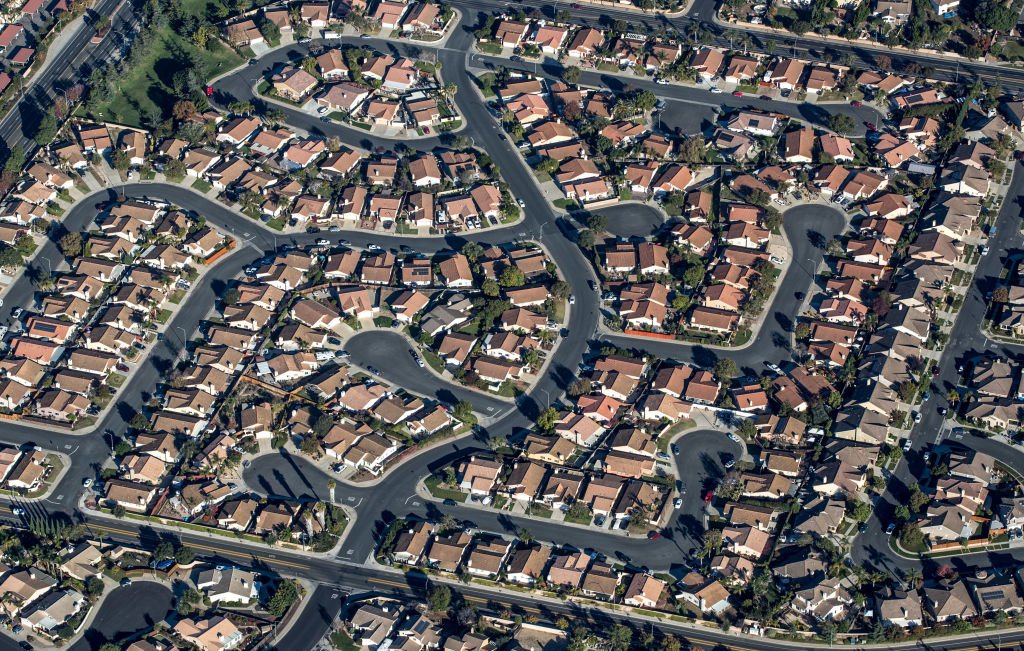
As the spring home-buying season kicks into gear, a new analysis from financial platform MoneyLion identifies the U.S. metropolitan areas where sellers are asking the most over market value. The study examined the 200 largest housing markets, comparing Zillow’s average home value data with median list prices to pinpoint where homes are most egregiously overpriced.
Topping the list is Santa Maria, California, where the median list price of $1.69 million towers over the average home value of $1.06 million—a gap of roughly $634,000. Other California metros like Salinas also made the top ten, reflecting the state’s chronic affordability crisis.

Texas Dominates the Overpriced Rankings
Texas claims six of the top 20 slots, more than any other state. Markets such as Corpus Christi, Brownsville, Longview, McAllen, Tyler, and El Paso all feature prominently. In Corpus Christi, the median list price of $318,666 is nearly $100,000 above the average home value of $220,504—a 44% premium. The concentration of overpriced listings in Texas underscores how even relatively affordable Sun Belt markets are seeing sellers test the upper limits of buyer tolerance.
The South is also heavily represented, with Florida, Alabama, Louisiana, Arkansas, Tennessee, North Carolina, and Mississippi all appearing on the list. Crestview, Florida, ranks second nationally, with a median list price of $647,445 versus an average value of $408,006—a 59% markup. Naples and Cape Coral also made the cut, highlighting Florida’s persistent price pressures.
National Housing Market Still in the Doldrums
The overpricing trend comes against a backdrop of sluggish sales. The National Association of Realtors reported that existing home sales edged up just 0.2% in April from March to a seasonally adjusted annual rate of 4.02 million units. Sales have hovered near the 4-million mark since 2023, well below the historic norm of roughly 5.2 million. Meanwhile, the U.S. median sales price rose 0.9% year-over-year in April to $417,700—an all-time high for that month. Home prices have now climbed on an annual basis for 34 consecutive months.
While income growth has recently outpaced home price increases, affordability remains a major barrier. Years of soaring prices, especially during the low-mortgage-rate frenzy of the early 2020s, have locked many potential buyers out of the market. A chronic shortage of homes for sale—exacerbated by years of below-average new construction—has kept prices elevated even as sales have slumped.
How to Spot an Overpriced Home
For buyers navigating this challenging landscape, Rocket Mortgage offers practical advice. First, check how long a property has been on the market; extended listing times often signal an inflated asking price. Second, research comparable homes in the neighborhood to gauge fair value. Finally, tour the property and assess its condition relative to the list price—a fixer-upper priced like a move-in ready home is a red flag.
The broader political and policy implications are significant. As Trump's SAVE Act demand complicates GOP's housing and FISA push, lawmakers are grappling with how to address housing affordability. Meanwhile, House GOP defies Trump on a housing bill set for a floor vote next week, signaling internal party divisions over the best path forward. The intersection of housing policy and broader economic anxiety is also fueling deeper societal tensions, as a recent arson protest in Los Angeles exposed deepening class rage.
With the peak buying season underway, the overpriced markets identified by MoneyLion serve as a warning for buyers: in many parts of the country, sellers are still betting on a market that has yet to fully adjust to the new normal of higher interest rates and constrained demand.