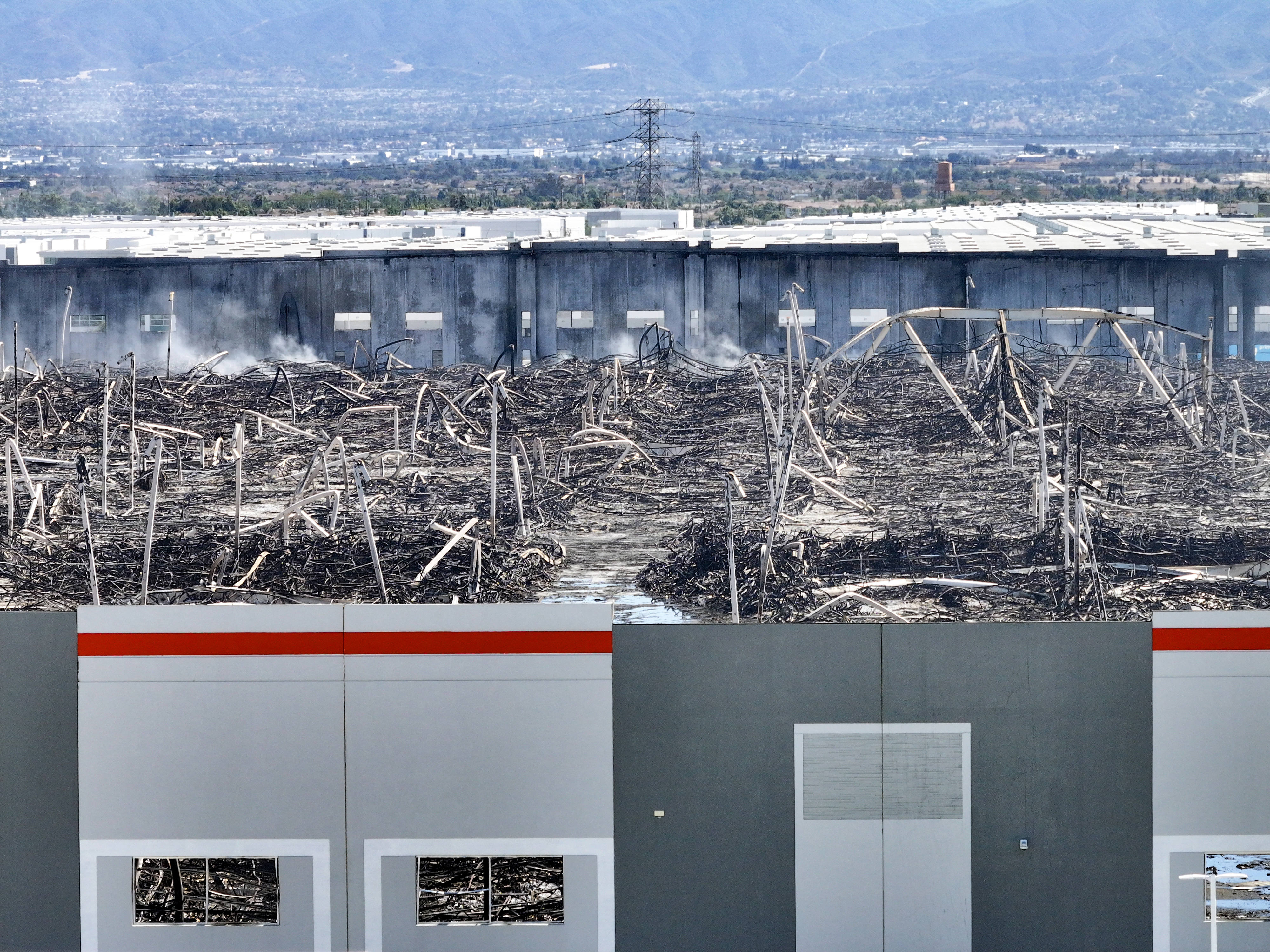
In 1982, Harvard professor Seymour Martin Lipset told the American Political Science Association that the U.S. was uniquely immune to the working-class radicalism plaguing Europe. He credited America's egalitarian ideals, social mobility, and individualism for fostering a middle-class mindset among workers. But the arson in Los Angeles last month suggests that immunity may be wearing thin.
On April 8, Chamel Abdulkarim, a warehouse worker, set fire to a facility owned by a major corporation and livestreamed the act. “If you are not going to pay us enough to live, at least pay us enough not to do this,” he said as the flames consumed inventory. “There goes your inventory,” he added triumphantly. The incident is the most visceral expression of class resentment since Luigi Mangione allegedly murdered a UnitedHealthcare executive in New York City in 2024, scrawling “Delay, Deny, Depose” on bullet casings—a phrase that resonated with millions who have suffered under insurance company practices.
The arsonist's message, broadcast on social media, echoes Mangione's defiance. Both acts tap into a well of frustration over stagnant wages, unaffordable housing, and the erosion of economic security. According to the American Communities Project, the “Affordability Crisis” has been building for decades, with the cost of living rising far faster than incomes for many workers.
Political leaders have been slow to respond. New York City Mayor Zohran Mamdani has signaled awareness, but at the national level, the administration's priorities lie elsewhere. President Trump told a White House gathering on April 5 that he had instructed budget director Russell Vought to halt federal funding for daycare, arguing that such programs—along with Medicaid and Medicare—are state responsibilities. “We have to take care of one thing: military protection,” Trump said, as reported by NBC.
The president's signature tax cut bill has already stripped healthcare from millions, cut nutrition assistance, and made higher education less affordable. The House Budget Committee concluded that the legislation “worsens inequality, gives the ultra-rich a historic tax break, and makes working people worse off.”
The economic pressures facing workers like Abdulkarim are intensifying. Surveys show rising rates of hopelessness and depression among 47 million Americans. The collapse of steady manufacturing jobs, once the backbone of the working class, has left many without purpose or stability. The rise of artificial intelligence threatens to accelerate this trend; 71% of respondents to a national survey fear AI will permanently displace too many workers. OpenAI CEO Sam Altman has predicted “one-person billion-dollar companies” enabled by AI, while companies like Meta, Amazon, and UnitedHealth have framed layoffs as efficiency gains from automation.
Inequality has soared while social mobility has stalled. Commentator Stephen Smith captured the mood: “If my ass was broke and I couldn't pay bills, I might rob your ass. Desperate times, desperate measures.” The arson in Los Angeles is a wake-up call—one that political leaders, especially those focused on tax cuts for the wealthy, ignore at the nation's peril. As the political fallout from ignoring working-class anger becomes clearer, the question is whether anyone in Washington is listening.